

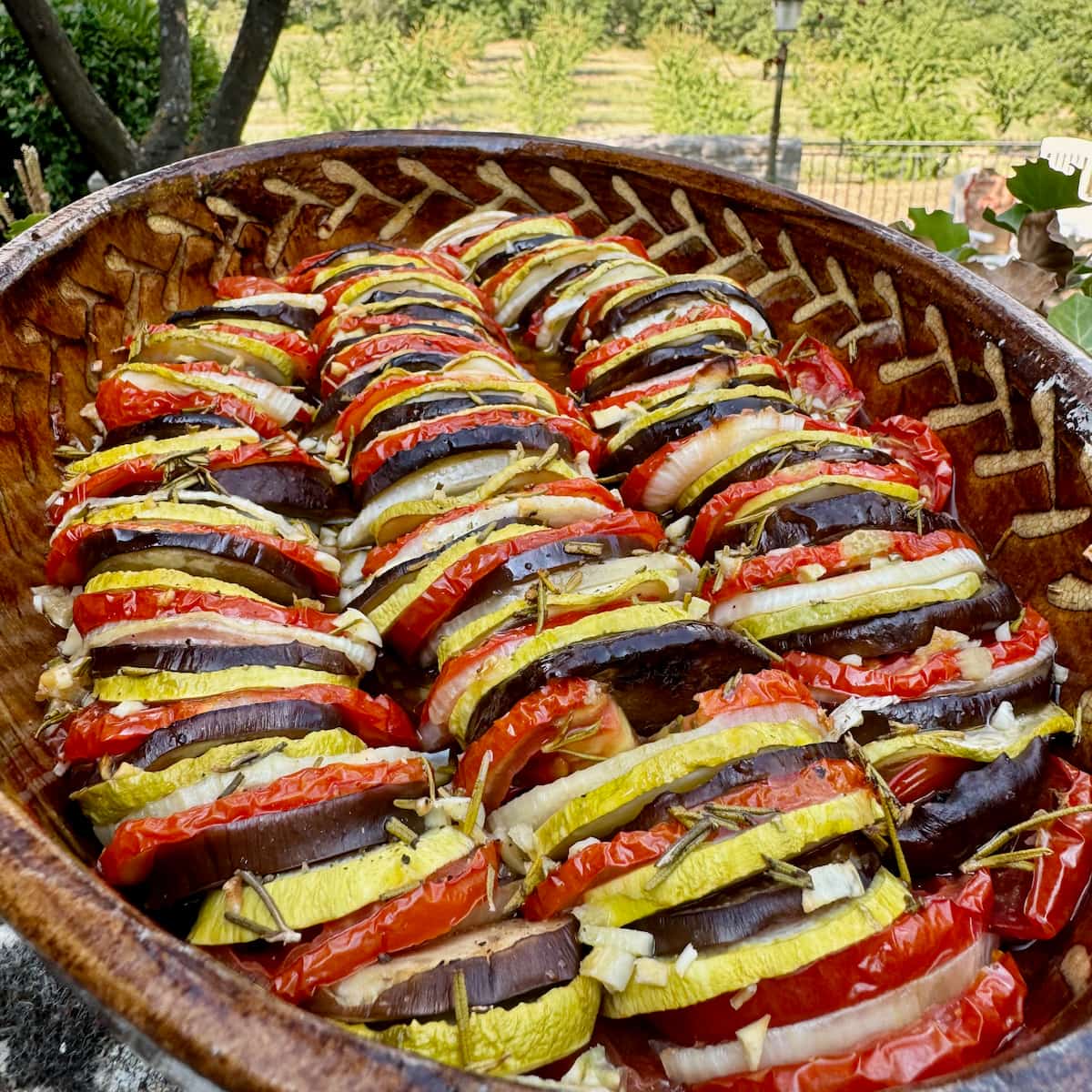
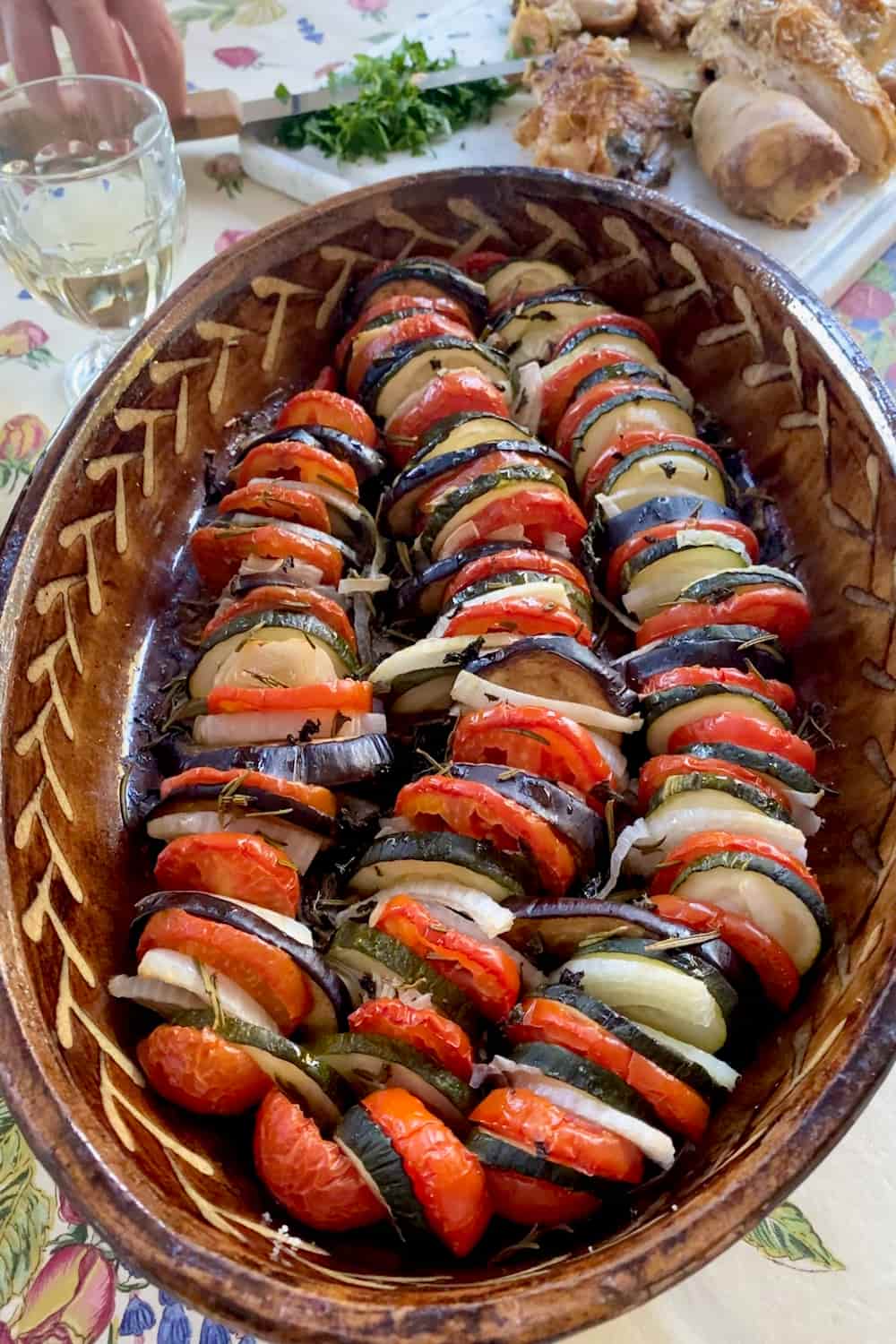
A French tian (tian de légumes) is one of Provence's classic summer dishes. A tian is the glazed ceramic baking dish itself, but the name also refers to the layered vegetable bake cooked inside it. Unlike ratatouille, which is a vegetable stew, a tian is baked in the oven and traditionally served as a French side dish with a main course.
Tian vs Ratatouille: What's the Difference?
Many readers arrive here looking for ratatouille, and it's easy to understand why.
Both dishes come from the South of France and use similar Mediterranean vegetables. However, they're prepared very differently.
- Tian - is a baked vegetable dish. Vegetables are sliced thinly, layered upright in a ceramic dish, drizzled with olive oil and roasted slowly in the oven.
- Ratatouille - a rustic vegetable stew from Nice. The vegetables cook slowly on the stovetop until soft, tender and slightly saucy.
Why the Confusion?
The vegetable dish featured in Disney's Ratatouille resembles a Provençal tian much more than a traditional ratatouille. Inspired by chef Thomas Keller's version of confit byaldi, it has created some confusion between both dishes. That's why many recipes and photographs labelled "ratatouille" online actually look closer to a tian.
What is a French Tian?
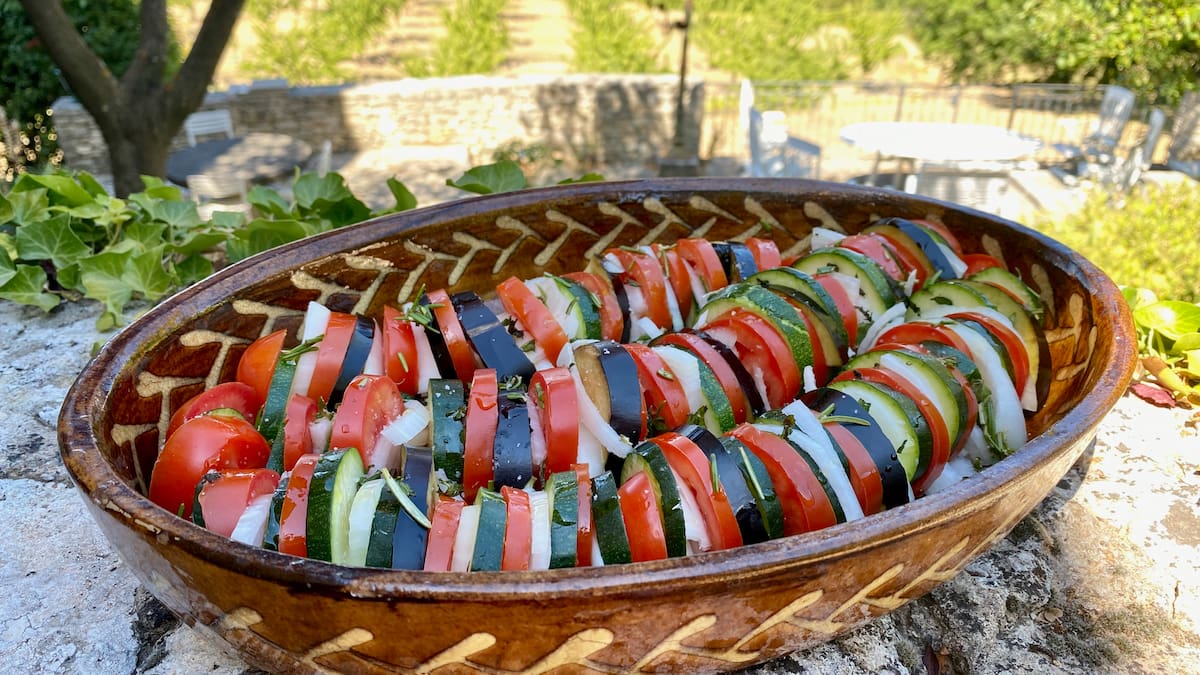
In Provence, a tian originally referred to the glazed ceramic or terracotta baking dish used for cooking. Over time, the word also came to describe the food cooked inside it.
A vegetable tian is one of Provence's classic French dishes: layers of sliced summer vegetables baked slowly with olive oil and herbs until tender and full of flavour.
What Vegetables are Used?
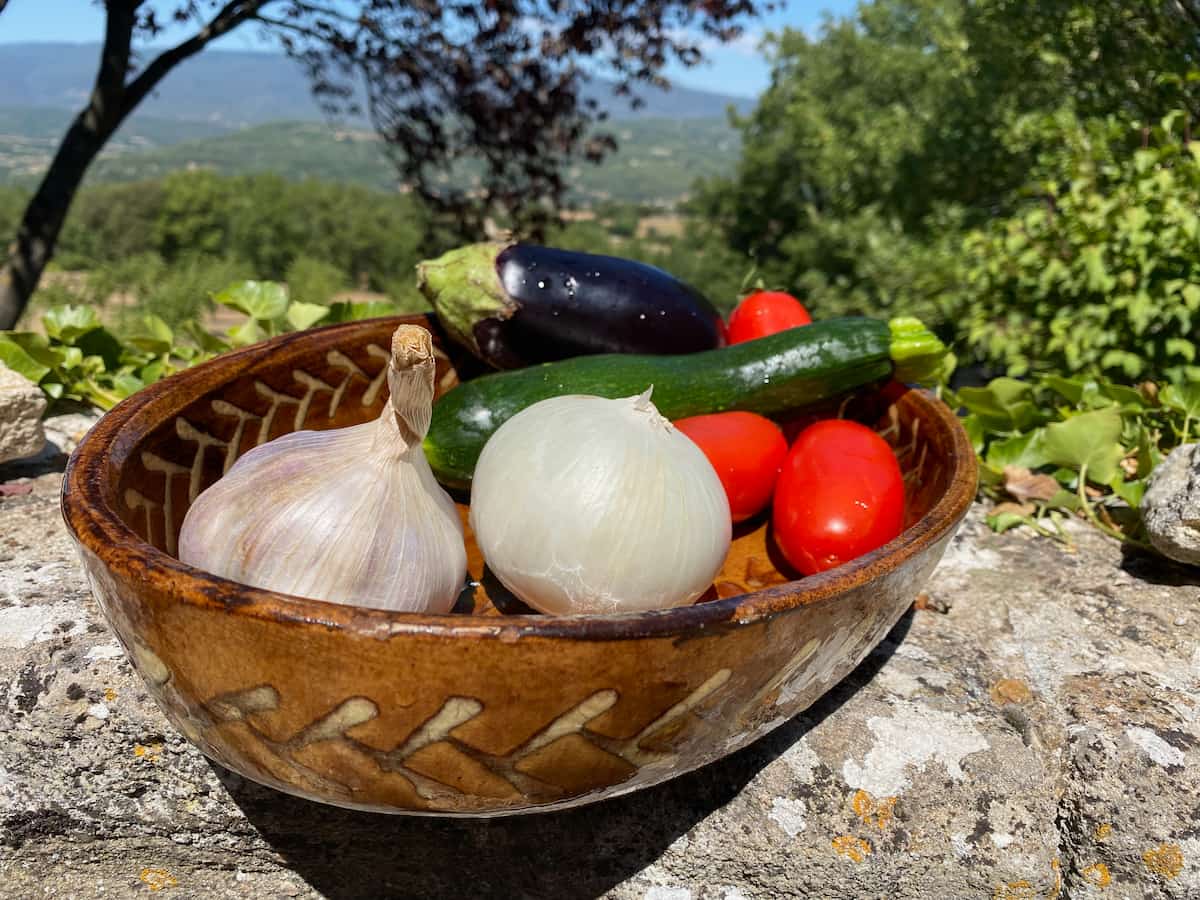
Traditionally, a tian de légumes includes tomatoes (not cherry tomatoes), courgettes (zucchini), aubergines (eggplant), onions, garlic, thyme, bay leaves and olive oil. So you won't normally find carrots in an authentic Provençal tian (according to Larousse Gastronomique and Gaudry's On Va Déguster la France).
Red peppers are common in many Provençal versions, although plenty of families leave them out entirely.
There are also countless variations. In Recettes en Provence, Andrée Maureau includes tians made with lamb, pork, fish, anchovies, spinach and cod. Here in the Luberon, you'll also find versions with potatoes, onions and cheese.
Every family has its own version too. My mother-in-law, Madeleine insists that onions, courgettes and tomatoes are the only essentials and that everything else is optional. After spending many summers in Provence, I've learned not to argue.
How do you pronounce Tian? Say it quickly: "tee-ong".
The hardest part of making a tian? Slicing all the vegetables to roughly the same size and thickness!
How to Make a French Tian
Making a French tian is surprisingly simple. Thinly slice the vegetables, arrange them alternately and tightly in a ceramic baking dish, season with garlic, olive oil and herbs, then bake until tender and lightly caramelised.
Unlike ratatouille, where the vegetables cook together in a stew, a tian keeps each layer distinct. The slow roasting concentrates the flavours while preserving the beautiful pattern of the vegetables.
For exact quantities and timings, see the recipe card below.
Make a French Tian Ahead
One reason I love making a tian is that it's perfect for entertaining.
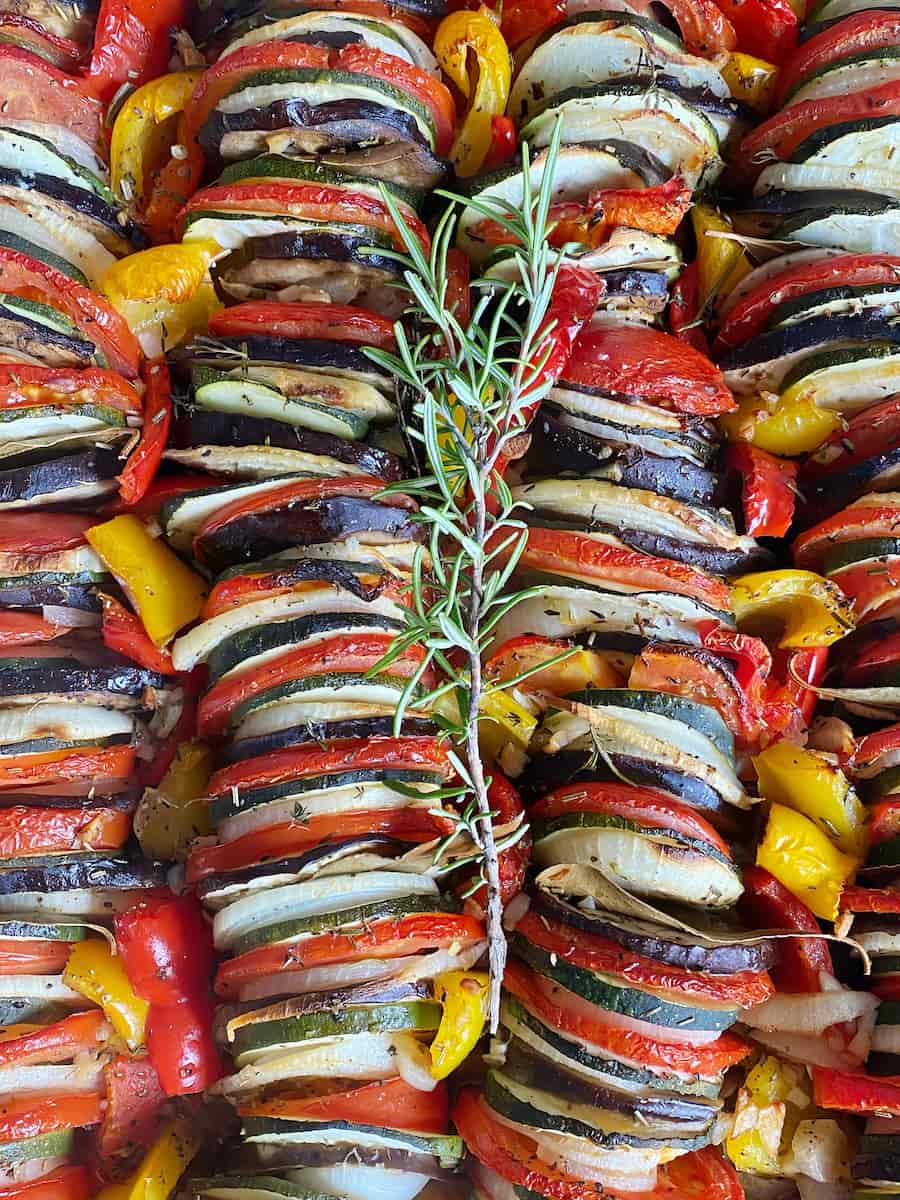
During the Provençal summer, temperatures often climb well above 30°C. Like many local families, I prepare the tian earlier in the day before the heat builds, then gently reheat it just before serving.
The flavour improves as it rests, making it one of the easiest make-ahead French dishes for summer gatherings. Any leftovers taste even better the next day.

Classic Provençal Herbs for Tian
Traditional Provençal flavours are wonderfully simple. The most common herbs are the ones found in a bouquet garni: thyme, rosemary and bay leaves.
Some families also add a little oregano, although thyme is usually the dominant flavour. If you don't have fresh herbs, a teaspoon of Herbes de Provence works beautifully.
Finish with a generous pinch of fleur de sel sea salt and good-quality olive oil. Since a tian relies on so few ingredients, the quality of the olive oil makes all the difference.
For more, see my guide to fresh aromatic herbs
What to Serve with a French Tian
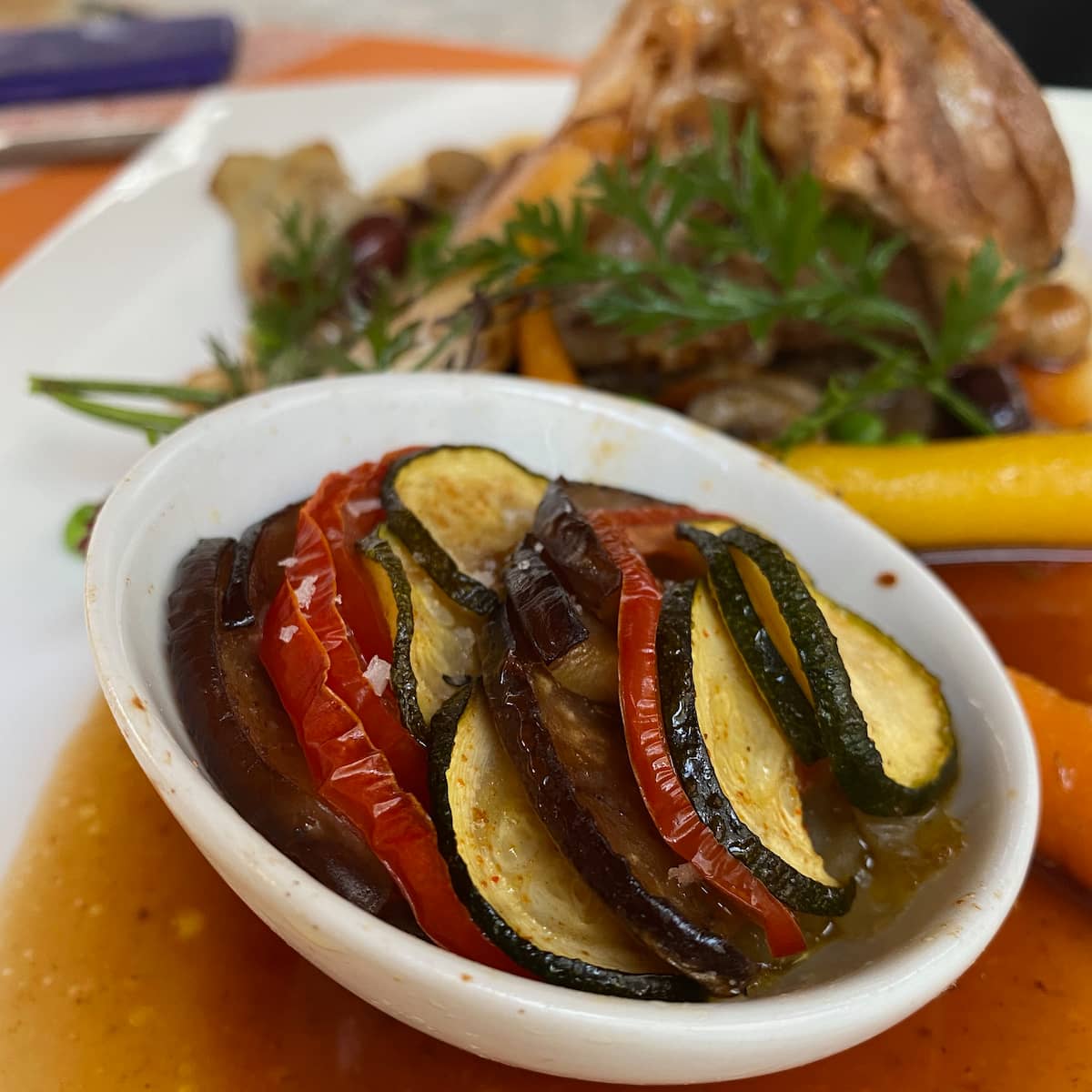
In France, a tian is rarely considered a main course on its own. It's normally served directly from the baking dish as a vegetable side. It pairs beautifully with:
- roast chicken or baked BBQ chicken drumsticks
- grilled sea bass or sea bream
- lamb chops
- barbecue meats like grilled sausages
For a vegetarian main course, serve it with fresh bread and goat's cheese.
For summer entertaining, individual ceramic dishes also make an elegant presentation.
Family Tips for a Juicy Tian
I often pre-cook the onions and garlic in olive oil before layering, which makes it extra juicy. But, after years of making tians, I often skip that step and scatter chopped garlic directly in the dish, then pack the sliced vegetables tightly on top.
The secret to a juicy tian? Bake for about 45 minutes - long enough to concentrate the juices, but not so long that the vegetables shrivel. If you find they're browning, cover with aluminium foil.

More Provençal Recipes
If you love baked vegetables like this, try these for a taste of the Mediterranean:
- Oven roasted tomatoes with mozzarella
- Stuffed courgettes with ricotta
- Slow roasted tomatoes with herbs and garlic (tomates à la Provençale).
Plus for a typical Provençal summer lunch, make this classic Niçoise salad.
French Tian de Légumes (Provençal Vegetable Bake)

Equipment
- 1 baking dish traditional ceramic or non-stick roasting tin
Ingredients
- 2 courgettes (zucchini) sliced diagonally
- 1 small aubergine (eggplant) cut into slices
- 4 firm/ripe tomatoes sliced
- 1 white onion sliced
- 1 red pepper sliced (optional)
- 2 cloves garlic finely chopped
- 3 tablespoon olive oil extra virgin
- 1 tablespoon fresh thyme or rosemary finely chopped (or 1 teaspoon dried Herbes de Provence)
- 2 bay leaves
- 1 tablespoon fresh parsley or basil (optional) finely chopped, to serve
Instructions
- Cut the tomatoes, onion, courgettes and aubergine into slices no bigger than 1cm. Peel and core the garlic cloves, discarding any middle shoot and chop or grate finely.
- Preheat the oven to 200°C/400°F (180°C fan/Gas 6).
- Scatter over the chopped/grated garlic over the base of the dish with the bay leaves. Stack each slice alternately and tightly together, directly into the dish in rows. (If a vegetable is much larger than the other, cut in half). When arranged to completely cover the dish, sprinkle over the chopped rosemary or thyme (or dried herbs). Dribble over evenly the olive oil and season with salt and pepper.
- Bake for about 45 minutes until the vegetables are slightly browned and still very soft. If browning too much towards the end of cooking, cover with aluminium foil. To serve, scatter over the freshly chopped parsley or basil (if using) and add another pinch of fleur de sel salt and a few turns of black pepper.

Sue
I made this tian for my bookclub’s windup potluck lunch. It was a huge hit and there were many requests for your recipe. It was quite easy to prepare, especially using a mandolin to slice the vegetables evenly.
Jill Colonna
So happy to hear it was enjoyed together at your bookclub, Sue. Thanks so much for sharing this tian recipe and your kind words.
Susan Pochereva
I made this last night to bring to my bookclub’s windup potluck lunch. It was a great success and I’m adding this recipe to my collection of favourites! I served it as a room temperature salad and offered a balsamic reduction to drizzle over it which added a je ne sais quoi to the dish!
The fresh herbs were all from my little garden (rosemary, bay leaves and parsley) and most of the vegetables were grown locally. I live on Vancouver Island and our climate here is very nearly Mediterranean so there are many growers here and we have a lot of choice.
Thank you for sharing this wonderful recipe!
Jill Colonna
Thank you so much for your lovely review, Susan. Your home-grown herbs and local vegetables sound wonderful, and Vancouver Island seems to share a little of Provence's Mediterranean spirit.
I must admit the balsamic drizzle might raise a few Provençal eyebrows, as a traditional tian is usually served as is with its olive oil and herbs. Still, I'm delighted it was such a hit at your book club lunch and has earned a place in your favourites!