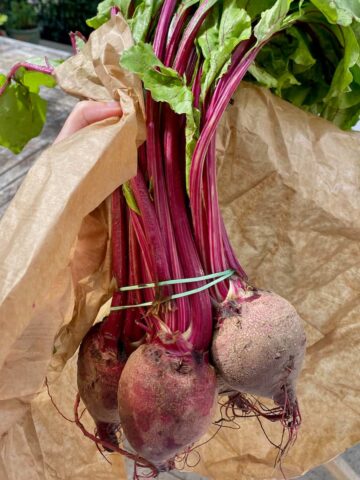
What is a Typical French Market?
French farmers' markets are the beating heart of the country's food culture. The French don't just eat with the seasons - they live by them. Local produce means fresher, tastier, and more vitamin-packed fruit and veg. While you might spot strawberries at Christmas elsewhere, in France, it's not the same. An out-of-season strawberry is viewed both as expensive and severely lacking flavour.
At a typical French market, for me it's not just about shopping; it's a social ritual.
I've picked up tons of recipe ideas from sellers' expertise over the years. When you ask them questions, they love to swap recipe tips, cooking ideas. I've even discovered many expressions using fruits and veggies in slang French - it's great fun to learn the language through food! Ever heard someone called 'une grosse légume'? Literally meaning a "big vegetable", it means that someone is a VIP! There are tons more included in the produce pages below.
My guide takes you through a classic French marché, with fresh and seasonal fruits and vegetables with tons of information I've picked up on market day.
Buying local is not just sustainable - it gives you more flavour, they're fresher with less time to travel, and generally cheaper.
Farmers' Markets in Paris
Paris is home to over 80 farmers' markets - both open-air and covered. (Just don't mix them up with the Paris Bourse. Though even the stock market has foodie roots - check out the financier cake.)
The most popular Parisian markets brim with seasonal fruit and veg. Some come straight from the growers (maraîchers/producteurs), others via Rungis, the largest wholesale food market in France.
Markets in France typically pop up at least once a week. Here in Saint-Germain-en-Laye, we're spoiled with three market days! In Paris, you'll find markets rotating across the city's arrondissements nearly every day.
For markets in Paris, see the Mairie de Paris's guide
for location and days of the week.
Fruits and Vegetables in Season by Month in France
Always aim to use seasonal produce - it's fresher, cheaper and healthier. The following fresh fruits and vegetables are in full season in September at our French markets:
- French fruits: bananas, blackberries, blueberries, figs, grapes, melons, nectarines, peaches, pears, plums, quince, tomatoes - with the first fall of apples, hazelnuts and walnuts.
- French vegetables: artichokes, aubergine, beetroot, bell peppers, broccoli, carrots, celery, chard, corn, courgettes/zucchini, cucumber, fennel, green beans, lettuce, leeks, mushrooms (champignons de Paris, Chanterelles), onions, parsley, new potatoes, radish, rocket (arugula), and spinach. Watercress is making its return.
Discover your guide to them below, including their seasonal recipes.
How to Remove Pesticides from Fruits and Vegetables
If your market produce isn't organic, a baking soda (bicarbonate of soda) soak can help reduce some pesticide residues on the surface.
Mix 2 teaspoons with 1 litre (4 cups) of cool water and soak for 10-15 minutes. Rub gently, or scrub firm-skinned produce with a clean brush, then rinse thoroughly under running water and dry with a clean towel.
This won't remove every pesticide, particularly residues absorbed beneath the skin.
What's the Most Eaten Fruit in France?
According to data from France's agricultural statistics (Agreste), bananas and apples are the two most eaten fresh fruits in France. Bananas currently take the lead in purchase volume, with apples closely behind as a long-time favourite across regions.
While oranges still rank high in total fruit consumption, most are consumed in the form of juice rather than as whole fresh fruit. In 4th and 5th positions? Pears (Comice & Conference) followed by Peaches/Nectarines, a big seasonal hit in summer.
Fruit
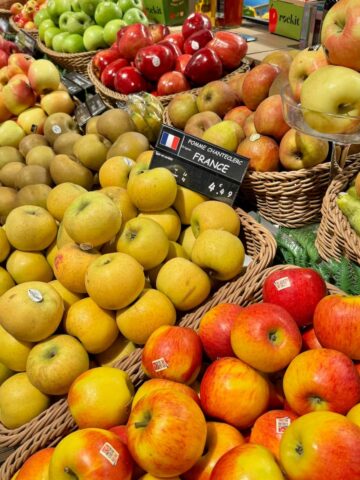
- Apples (Pommes)
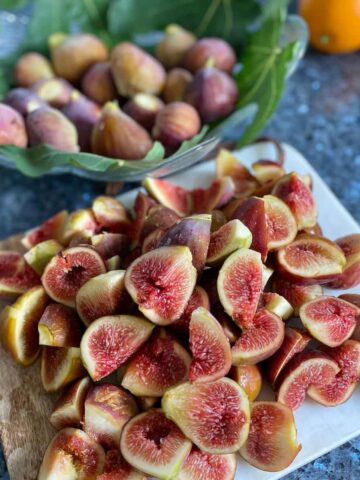
- Figs (Figues)
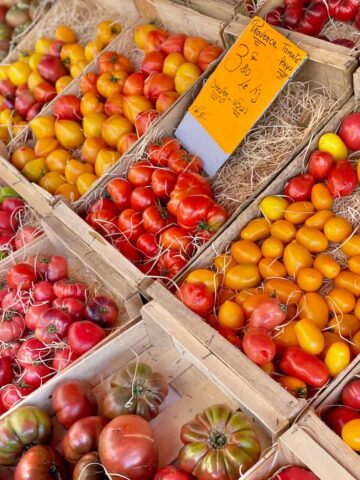
- Tomatoes (tomates)
- Peaches and Nectarines (Pêches)
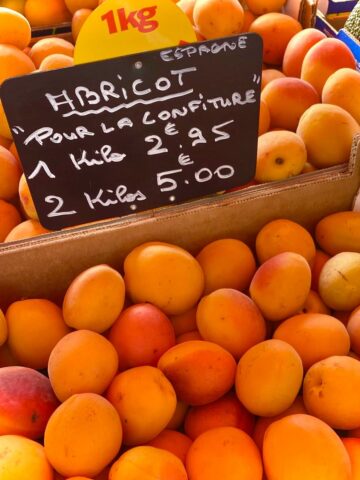
- Apricots (Abricots)
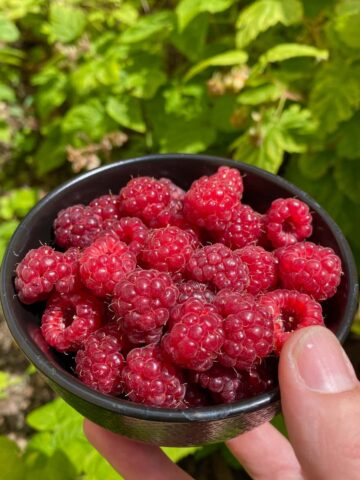
- Raspberries (Framboises)
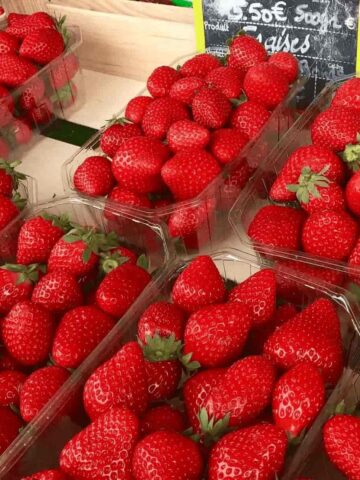
- French Strawberries (Fraises)
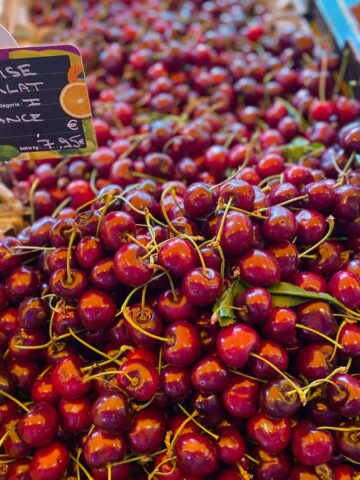
- Cherries (Cerises)
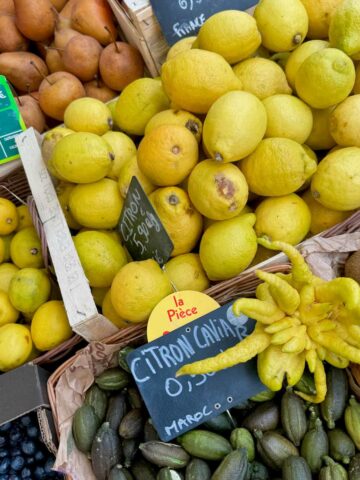
- Lemons & Limes (Citrons/Citrons vert)
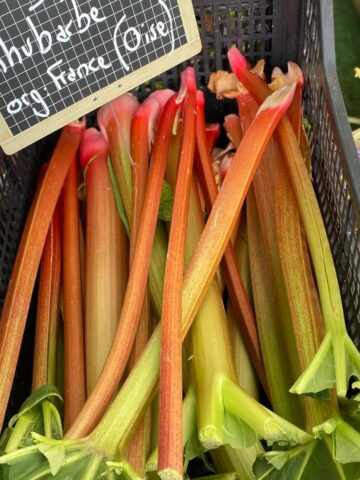
- Rhubarb (Rhubarbe)
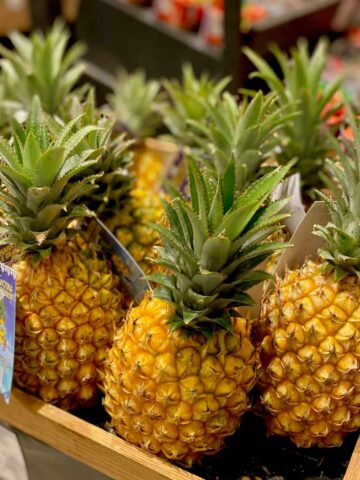
- Pineapples (Ananas)
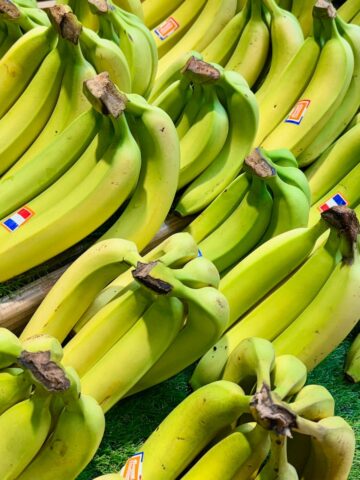
- Bananas (Bananes)
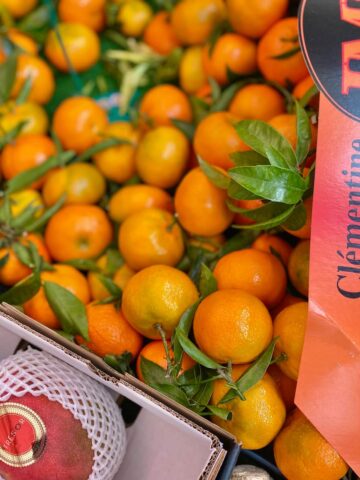
- Clementine Oranges
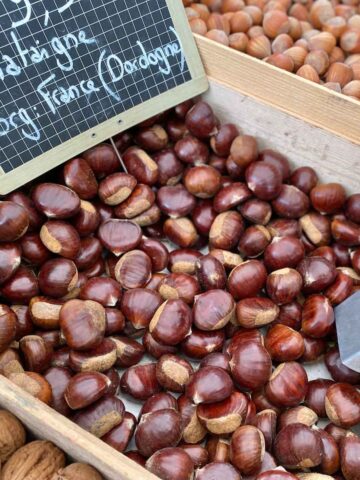
- Chestnuts (Châtaignes) - Guide to Uses and Recipes
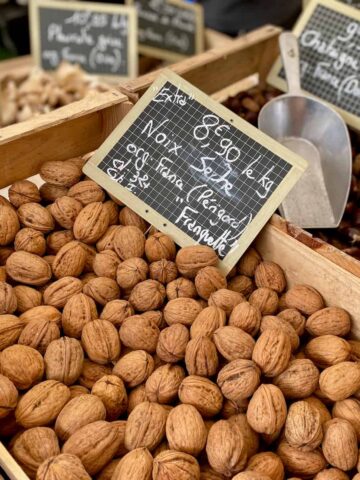
- Walnuts (Noix)

Vegetables (légumes)
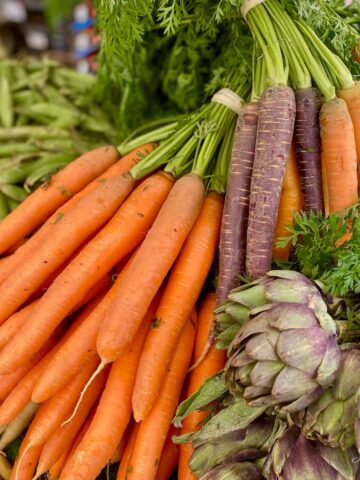
- Carrots (Carottes)
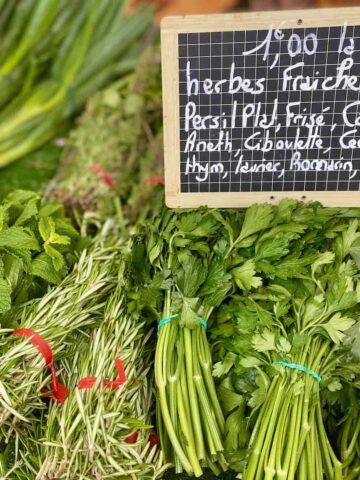
- Fresh Herbs (Herbes Aromatiques)
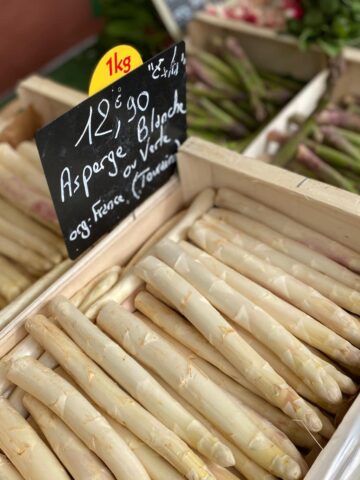
- Asparagus (Asperges)
- Guide to Cabbages (Choux) and Recipes
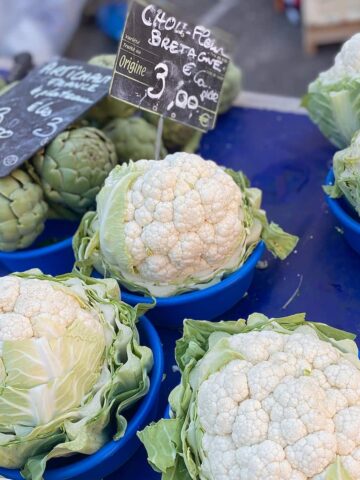
- Cauliflower (Chou-fleur)
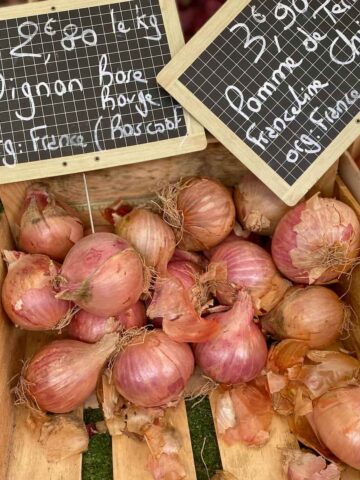
- French Onions (Oignons)
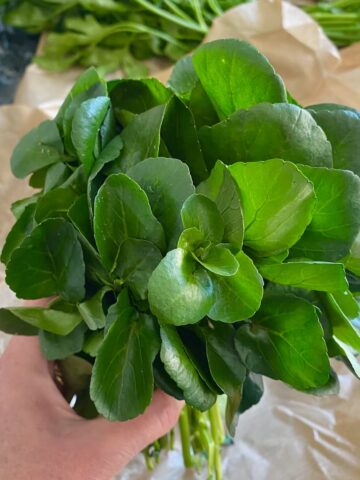
- Watercress (Cresson)
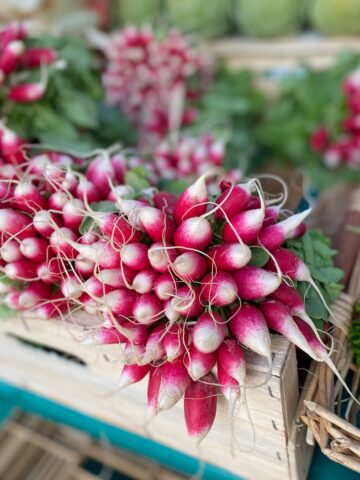
- French Radishes (Radis)
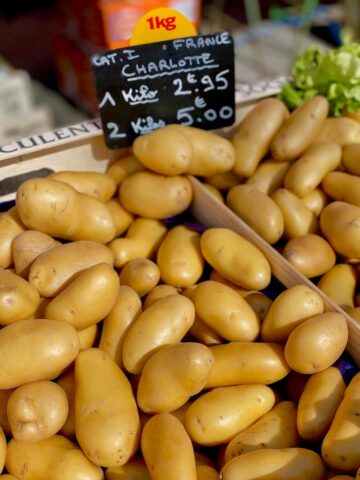
- Potatoes (Pommes de Terre)
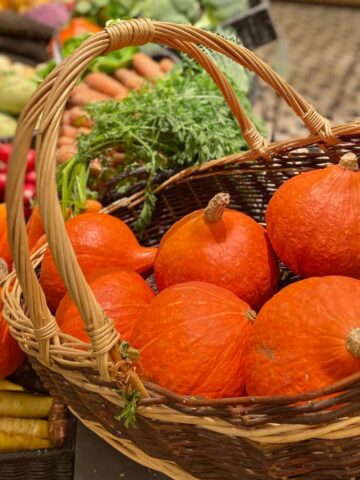
- Pumpkin & Squash (Potiron & Courges)
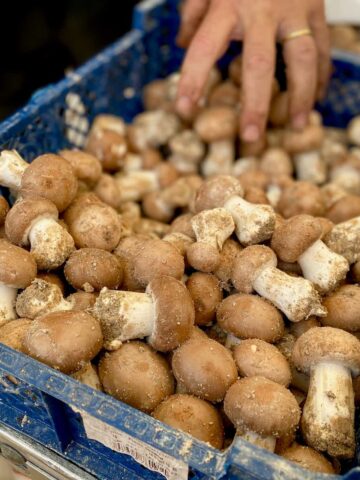
- Mushrooms (Champignons)
- Leeks (Poireaux)
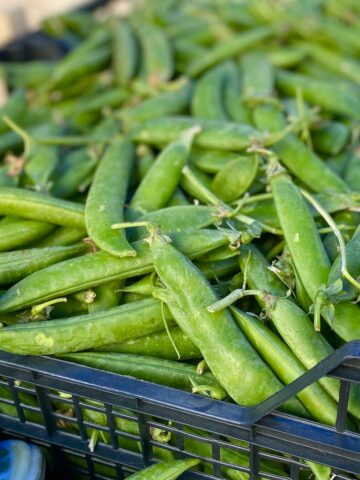
- Peas (Petits Pois)
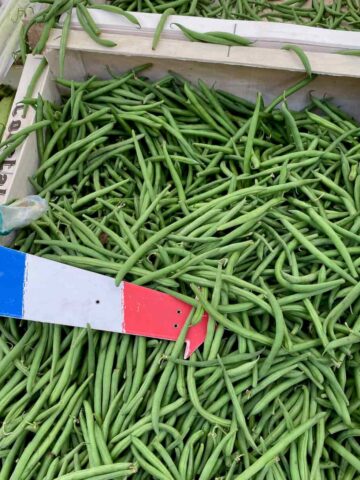
- French Green Beans (Haricots Verts)
- Beetroot (Betteraves)