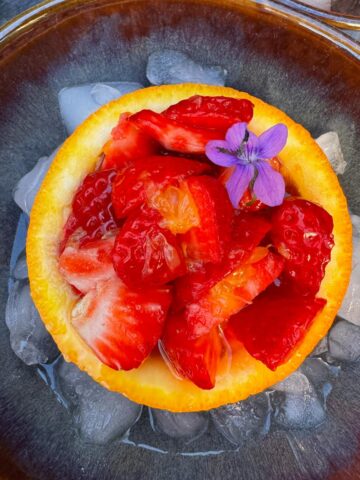
How to make salted caramel macarons like in Paris, with a thick salted caramel filling and proper ruffled feet.
I first published this recipe in Teatime in Paris (2015), and now it lives here in full, with my top tips for getting them right. If you're searching for the best salted caramel macarons recipe, you're in the right kitchen.
I made these twice last month ... I loved this filling. First time I didn't wait long enough and so they weren't set as much but next time it worked so much better. These are now our new family favorites. Thanks so much Jill! - Jenny

Salted Caramel Macarons Recipe (Paris-Style)
These salted caramel macarons taste like the ones I buy in Paris: delicate shells, soft centres (after resting), and caramel that feels more pâtisserie than sugar bomb.
Caramel needs sugar to behave - but I've reduced it in the filling as much as I dare while keeping it thick, pipeable, and properly moreish. The salt is the whole point, really.
Salted caramel sits firmly in the "most popular macaron flavours in Paris" category - and yes, I happily did the research for you in my Top 20 Best Macarons in Paris.
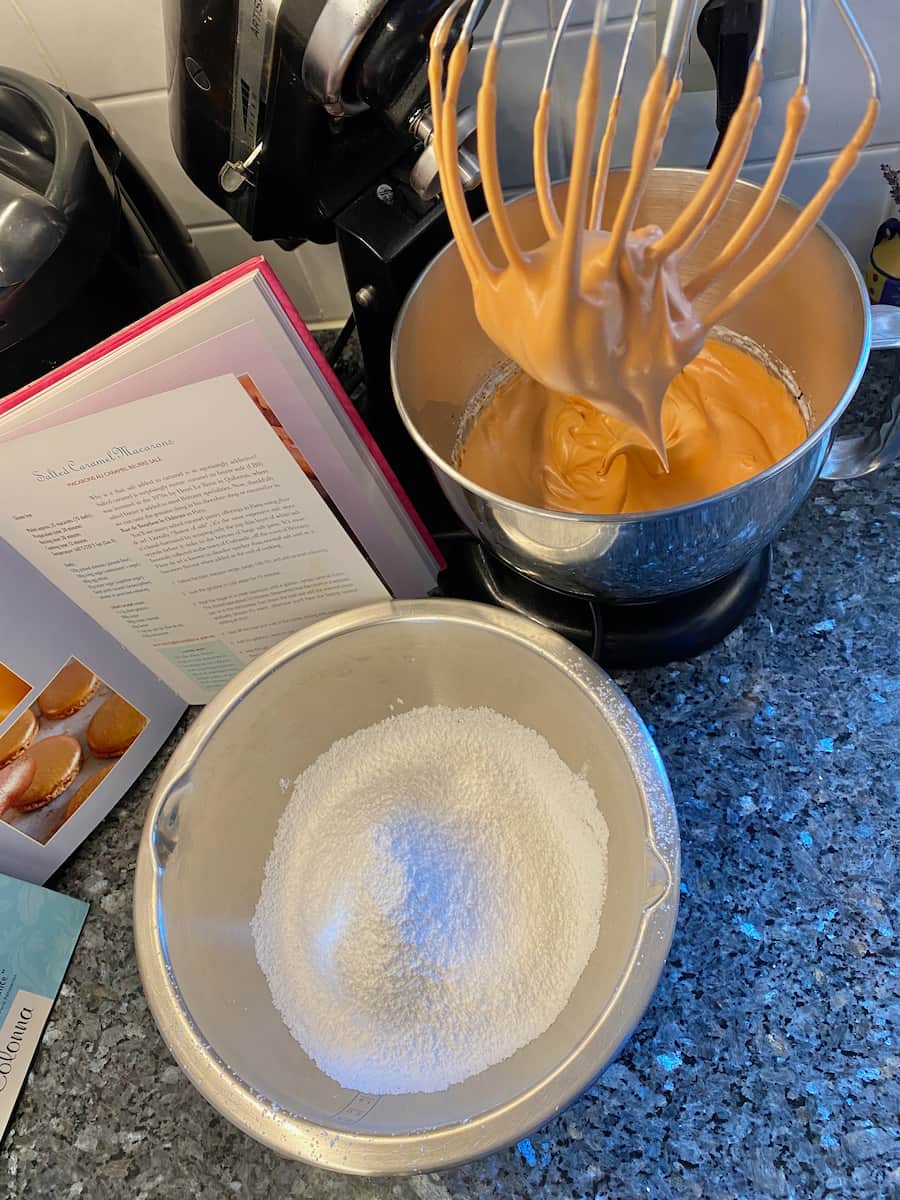
Where Did Salted Caramel Come From?
Salted caramel is surprisingly recent: Caramel au beurre salé, or salted butter caramel, was created in the 1970s by Henri Le Roux in Quiberon, Brittany - where salted butter turns up in just about everything (and nobody complains).
What salt do I use?
I go for French fleur de sel (flower salt) from the Guérande.
Maldon salt flakes or Celtic sea salt work well too.
Top Tips How to Make French Macarons
Macaron shells don't need a novel. They need a few non-negotiables. Here are the checkpoints I use every time:
- Use the finest almond flour you can find (fine ground almonds, not almond meal).
- Sift well then discard larger bits (save them for another bake). In the UK, look for caster sugar and icing sugar.
- Age egg whites 2-3 days in the fridge, covered with pierced non-PVC cling film.
- Whip whites to glossy stiff peaks. I stick to French meringue as it's simpler, and it works.
- Use a large flexible spatula. This is your macaron friend - as well as me!
For the full shell method with exact timings and temperatures, jump to the recipe card. For more on shells, see my raspberry macaron recipe.
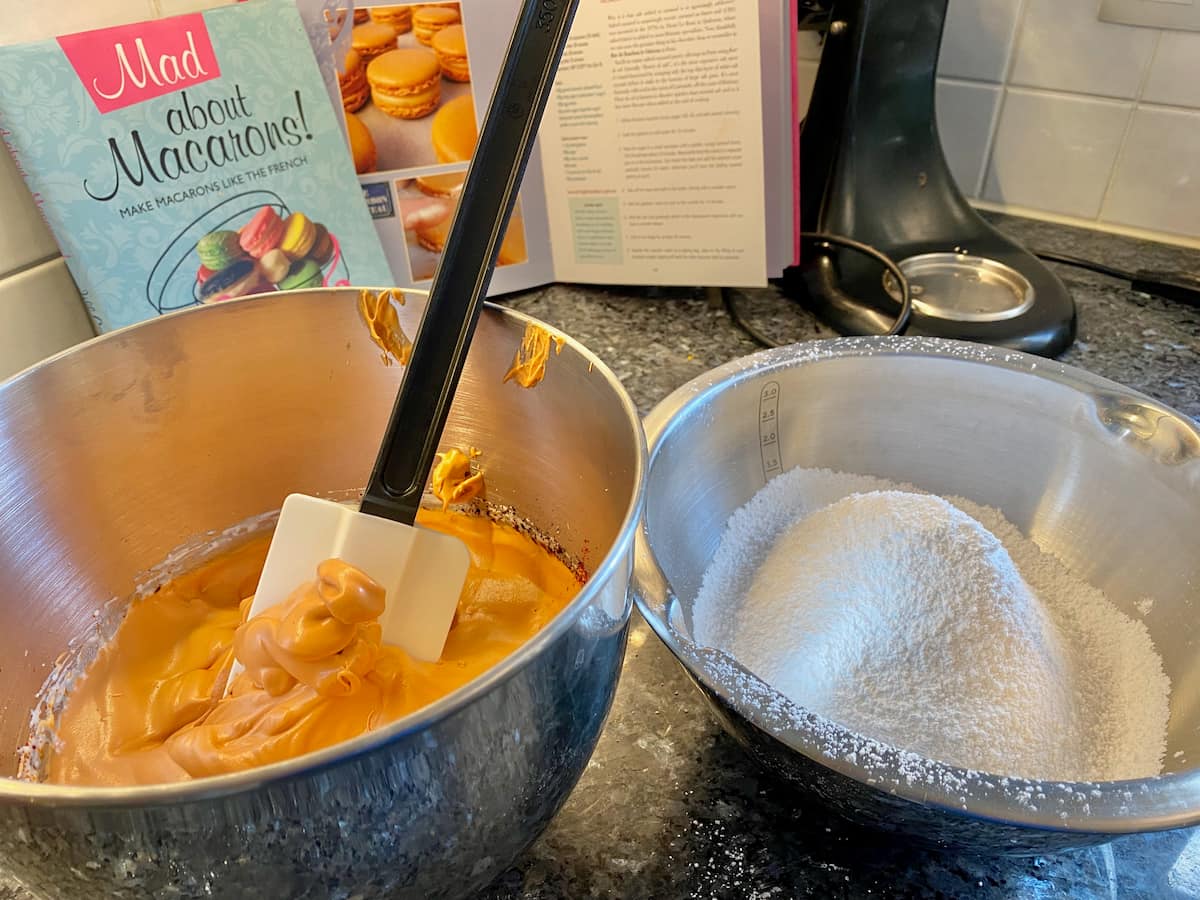
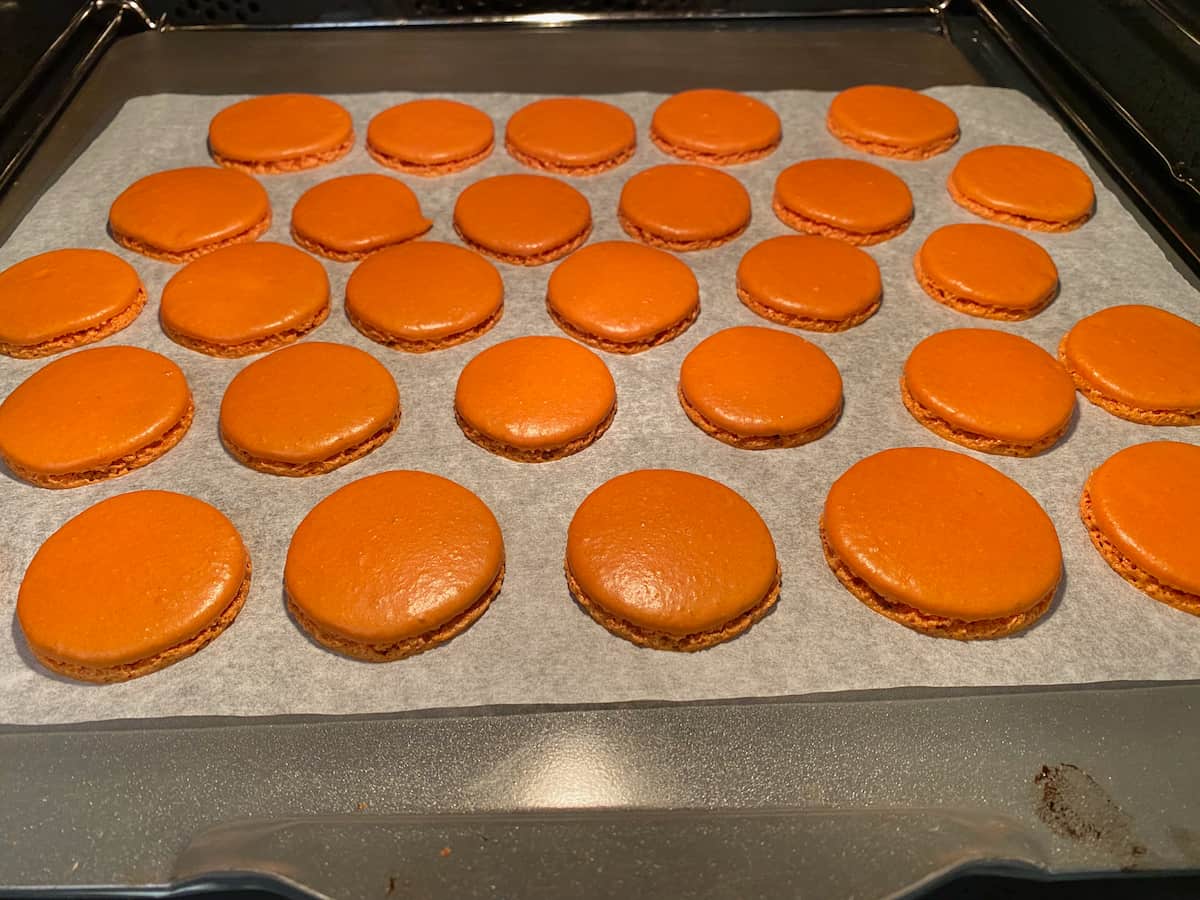
Your oven causes more macaron drama than your mixing bowl. Use an oven thermometer, then tweak the temperature until your shells bake evenly (no cracks, no hollows, no surprises).
From 'Mad About Macarons' (2010) by Jill Colonna

Thick Salted Caramel Filling for Macarons
This filling turns thick, smooth and pipeable - not runny, not gritty and definitely not escaping out the sides.
If you've made caramel for crème caramel, you'll recognise the process. If caramel makes you nervous, I've included photo steps below, and a safer method in my salted caramel sauce recipe.
One rule: weigh everything - here's why we need digital scales.
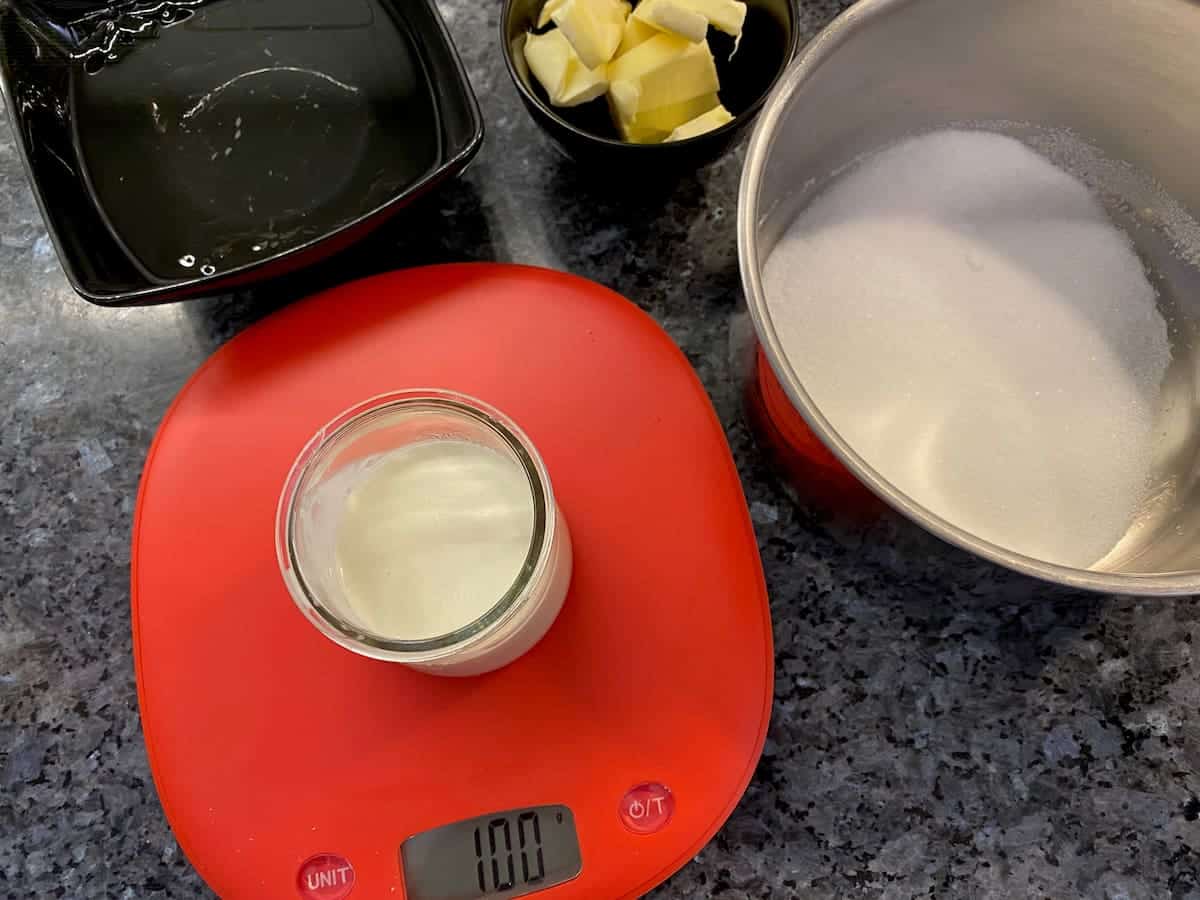
First make the caramel by dissolving the sugar over a medium to high heat in a saucepan. Leave the caramel alone without stirring it.
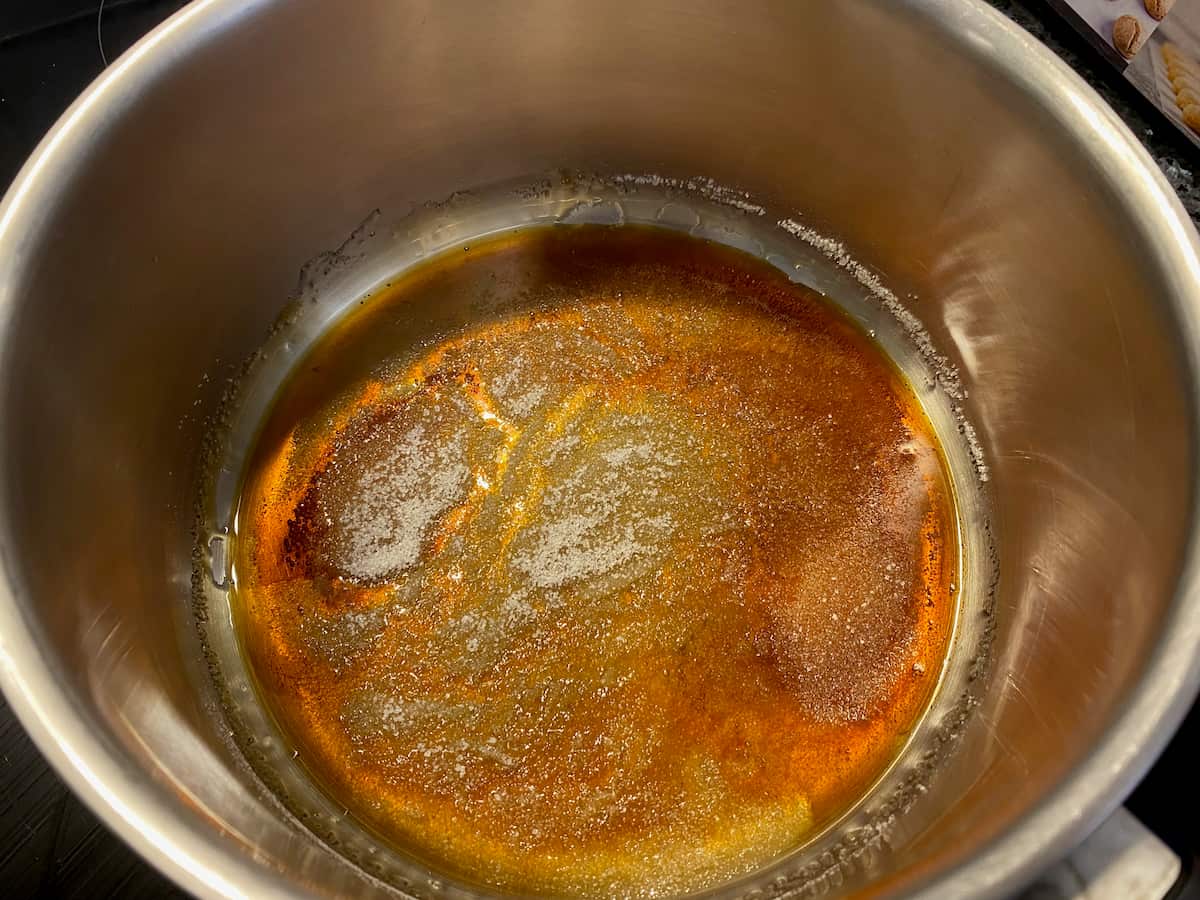
It will turn into a caramel within a few minutes so keep your eye on it. Just shake the pan to dissolve all of the sugar into the caramel.
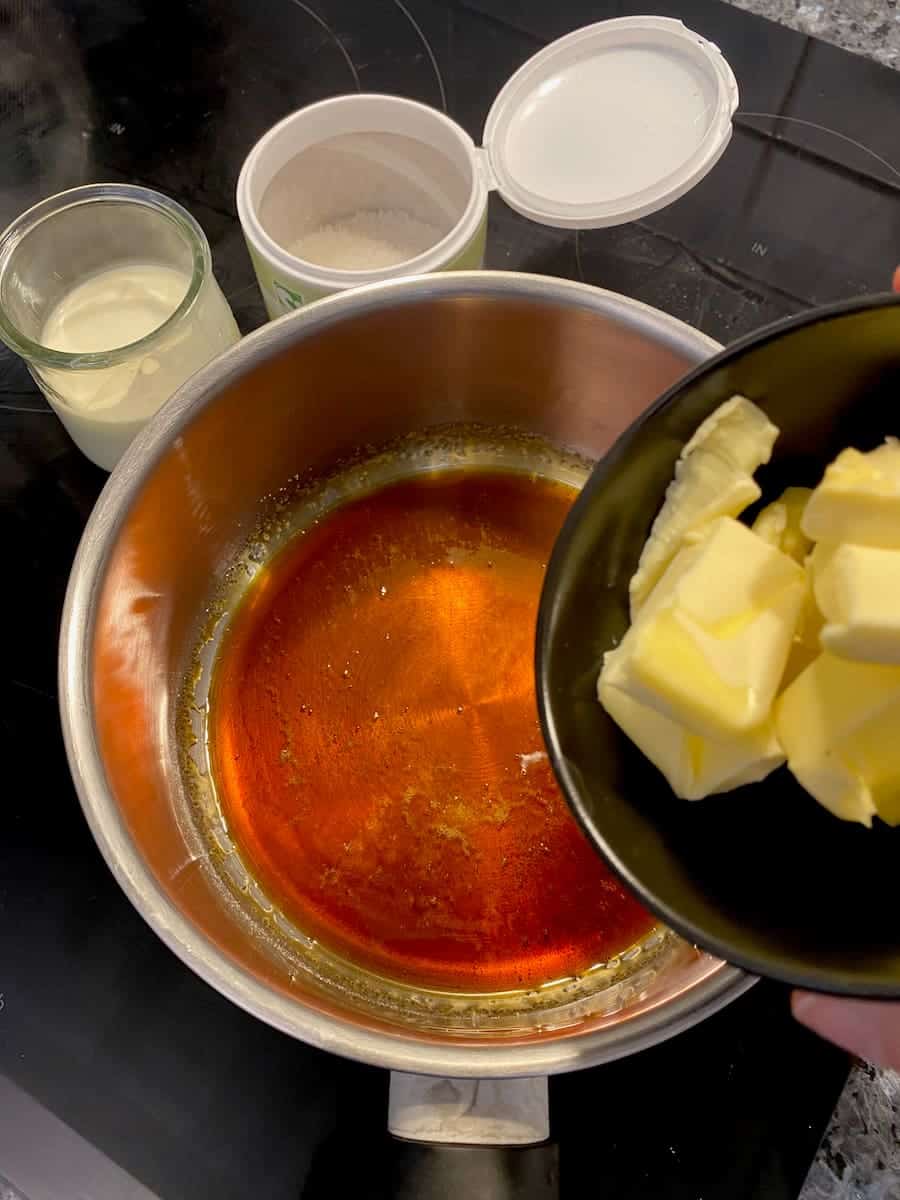
Turn down the heat then add the butter and the warmed cream. Stir constantly together until the caramel becomes beautifully smooth.
Take off the heat and add the gelatine, squeezed of excess water and stir into the caramel.
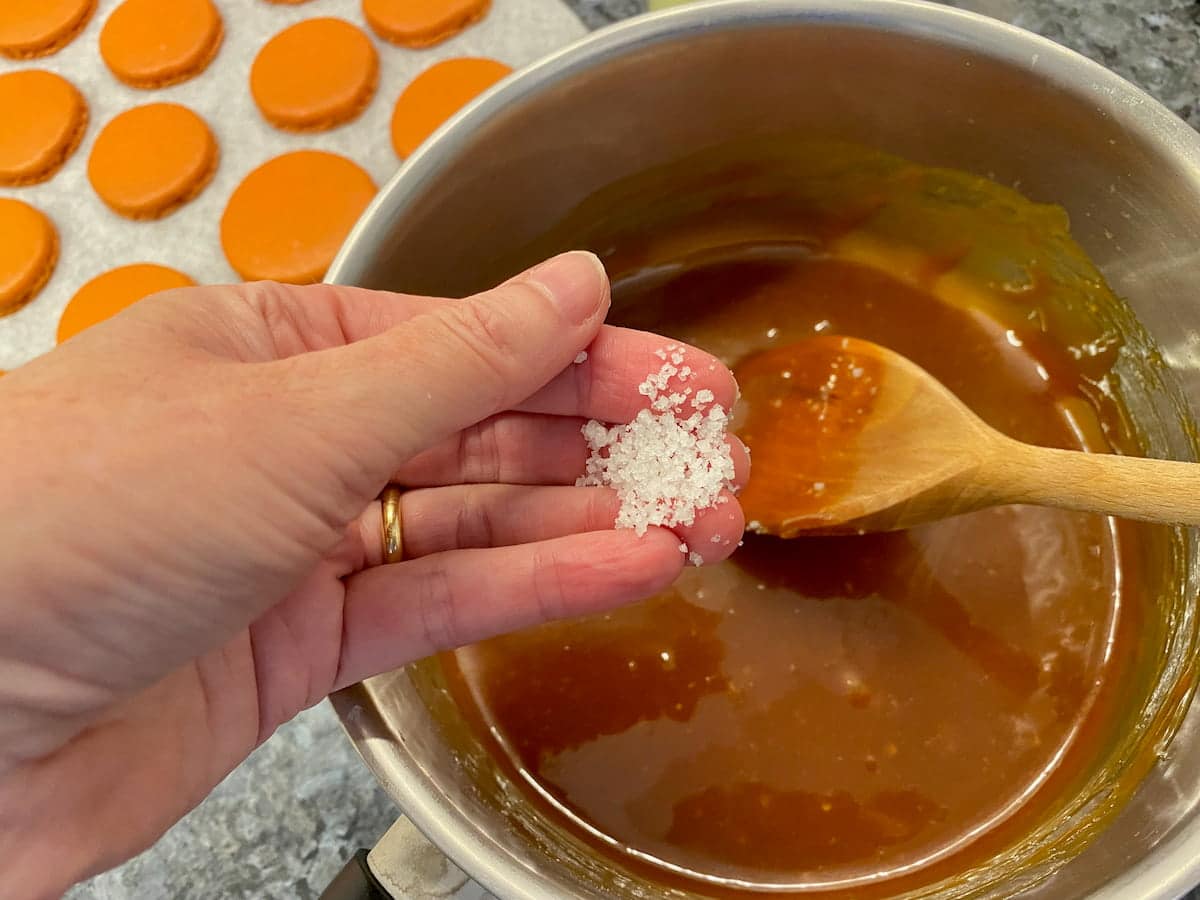
Leave on the counter to cool for about 15 minutes then add the salt (fleur de sel) and mascarpone.
Top Tip: Don't forget to taste your filling by adding just a little salt at first and add more as necessary. Don't let too much salt ruin the flavour of a whole batch.
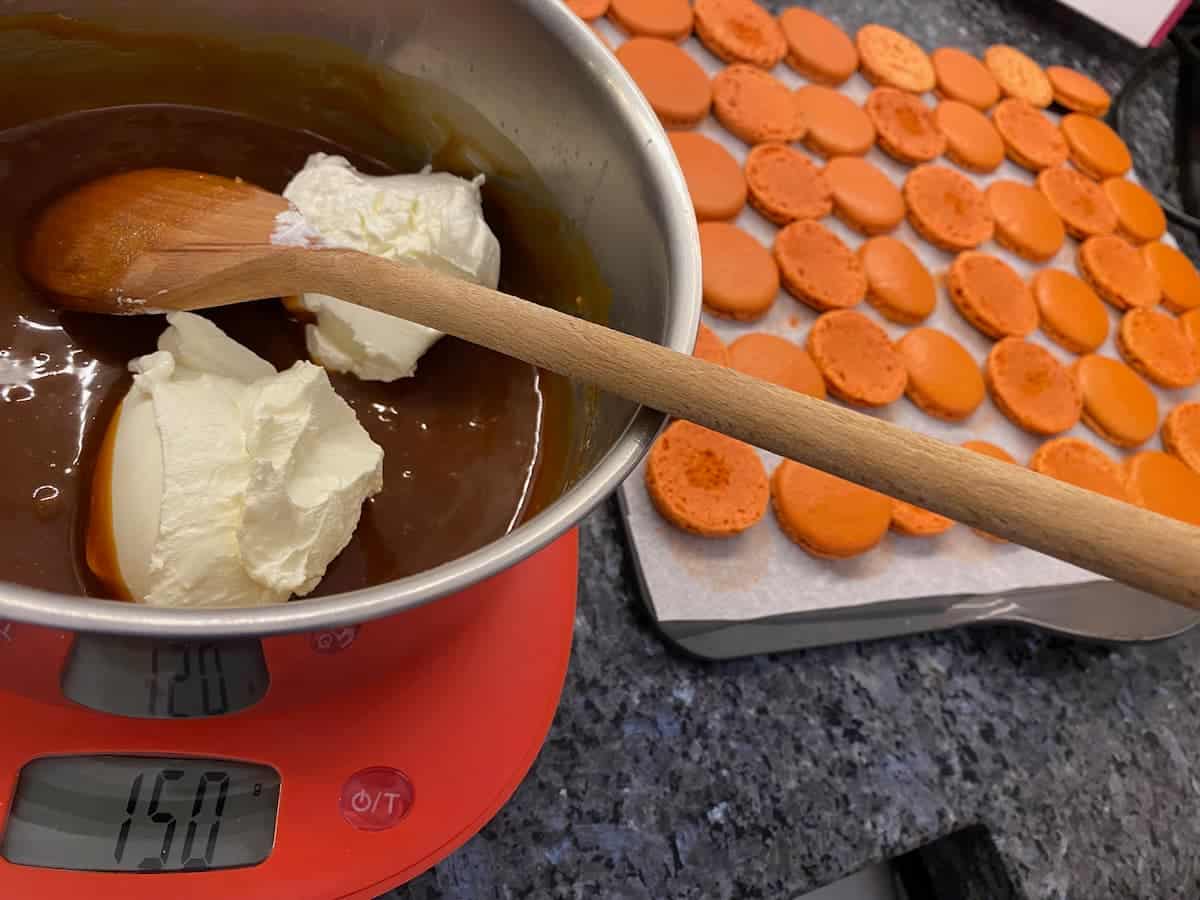
Stir or whisk together using a hand whisk then chill the filling in the fridge for at least 30 minutes.
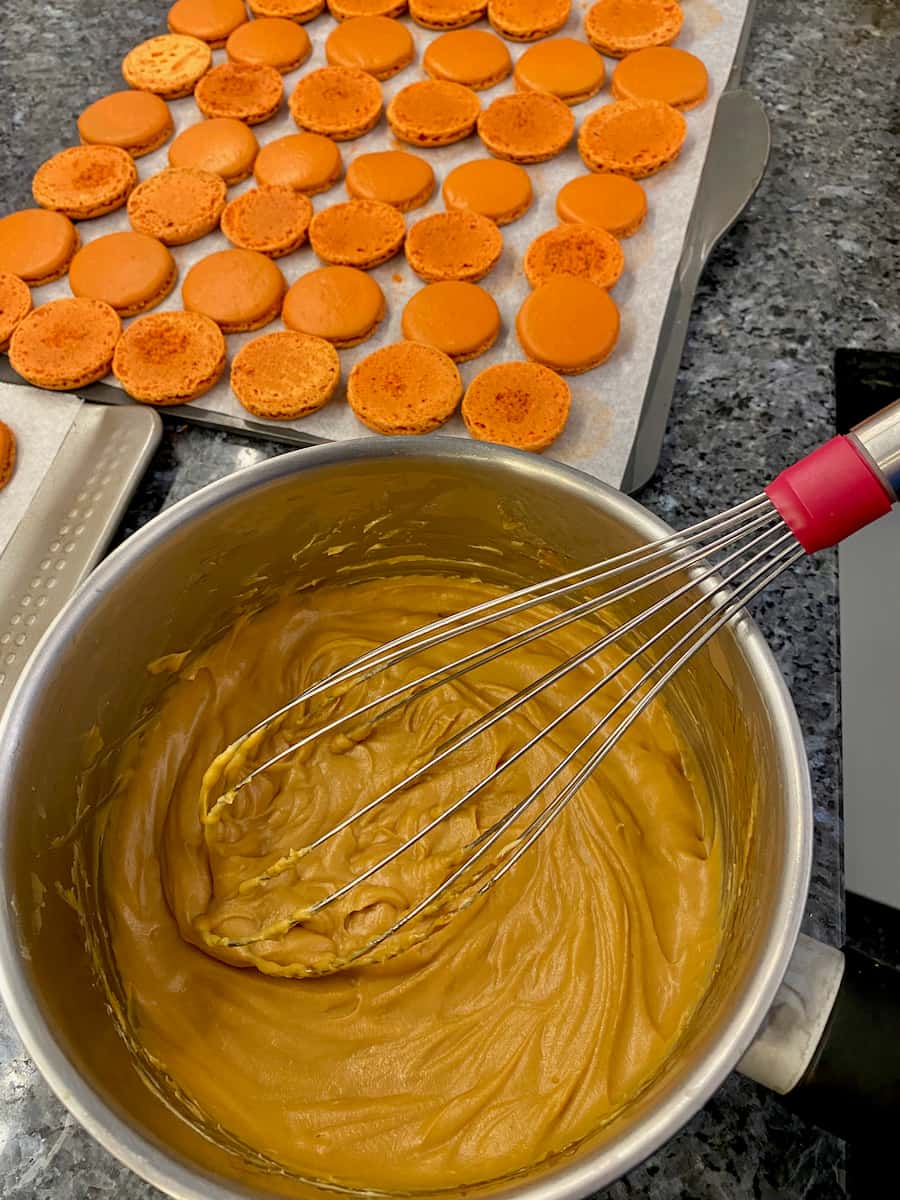
30 minutes later, the filling is thick enough to work with.
(Try not to taste too much of the filling and keep enough for the macarons!)
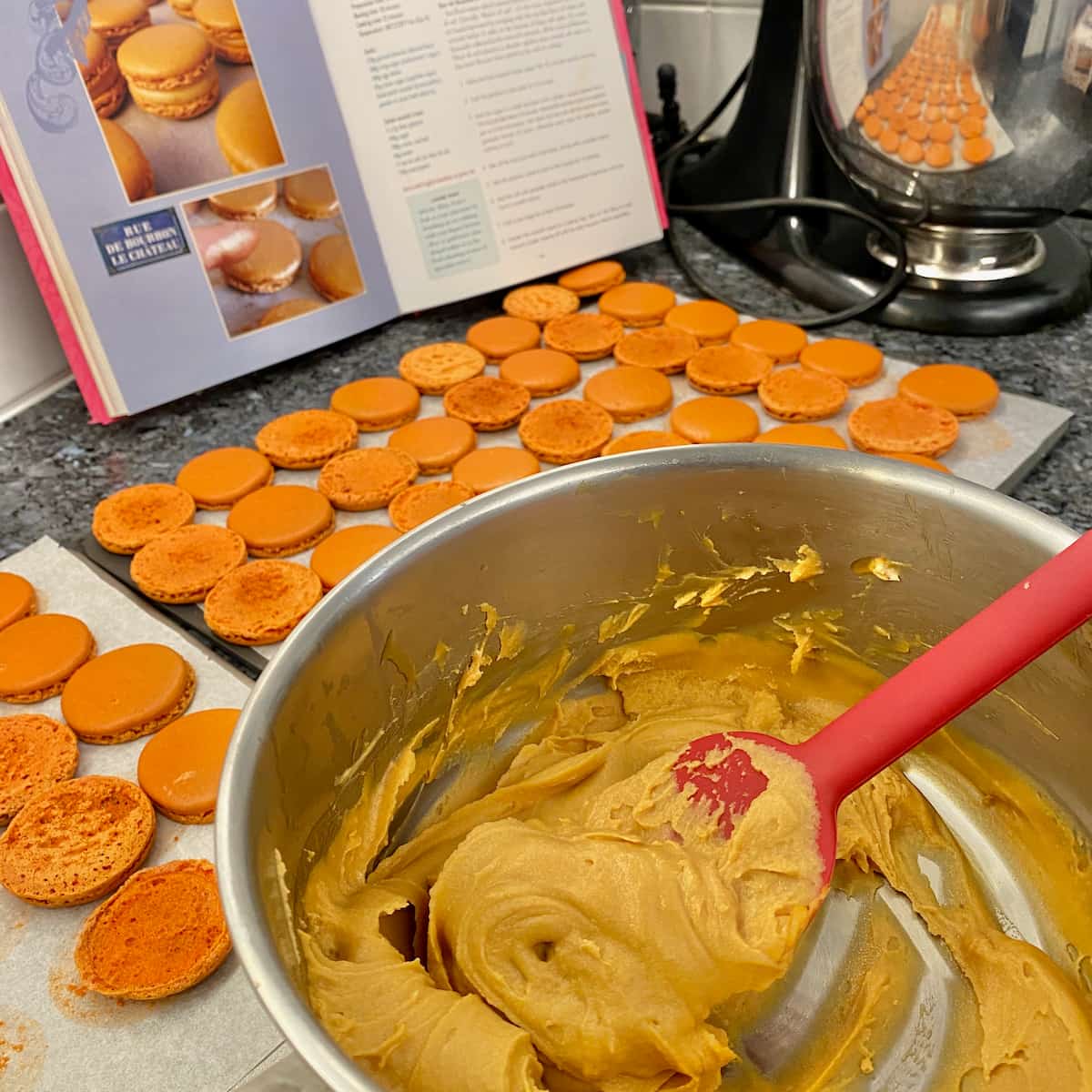
Stir the filling again, transfer to a piping bag and squeeze out on to each macaron shell pair.
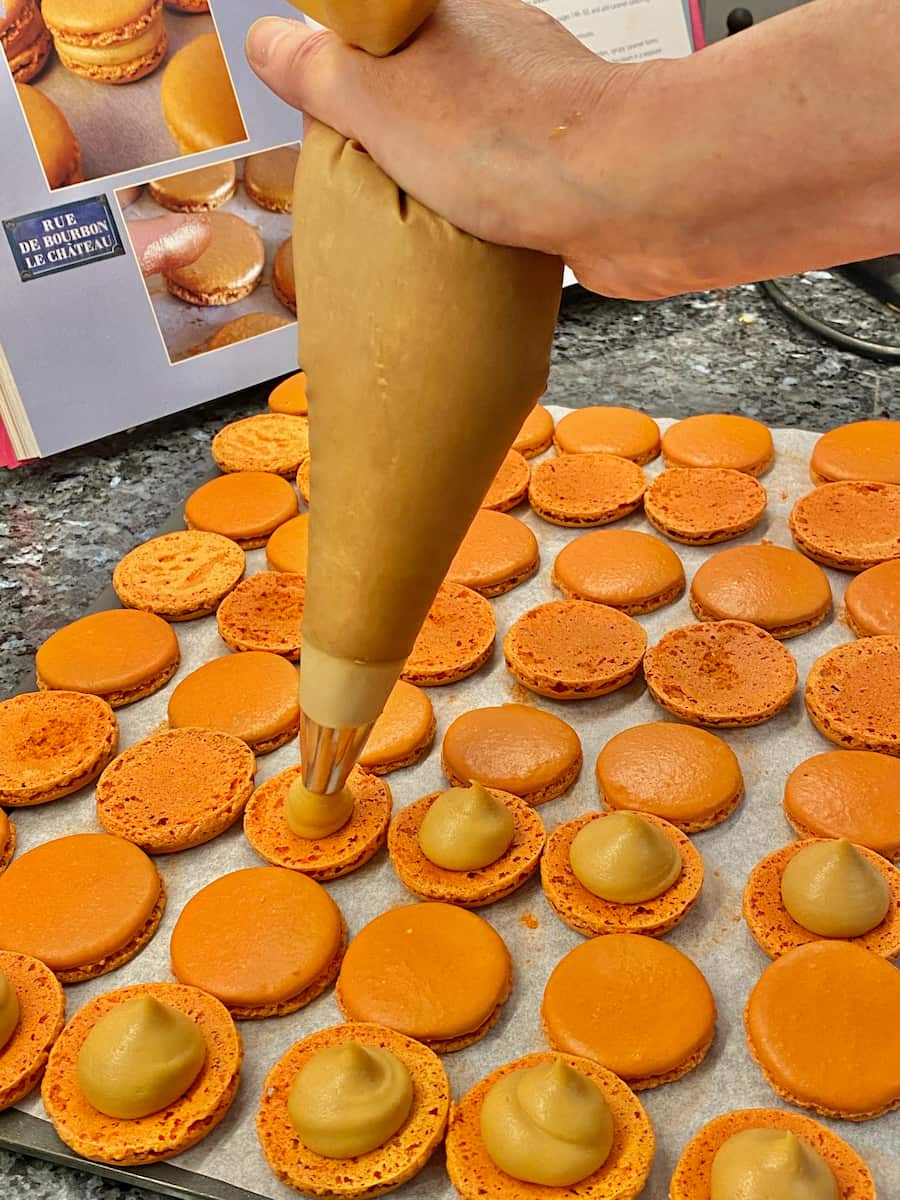
normally the left hand supports the bottom of the piping bag - I just needed my hand to take the photo!
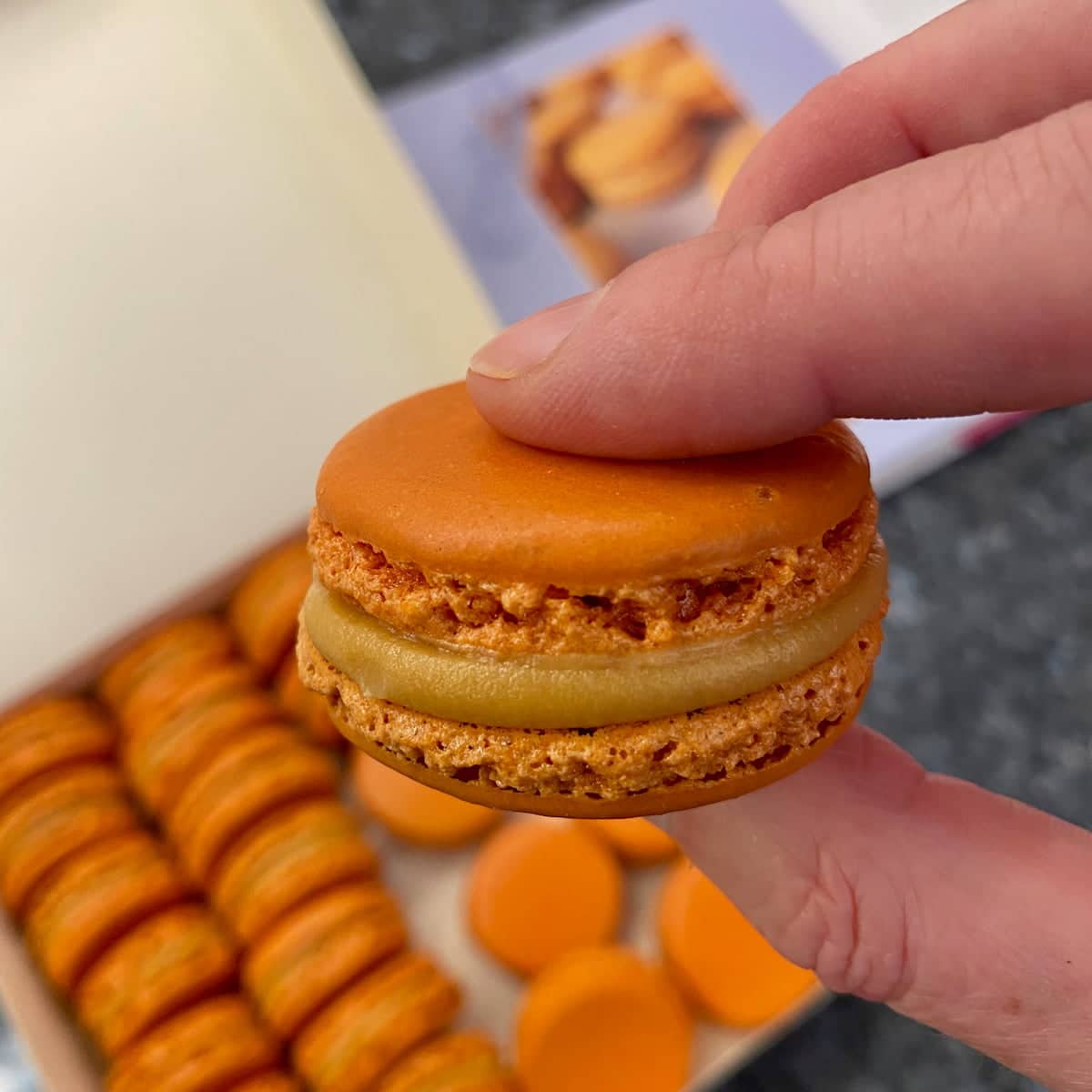
Pipe a neat mound of caramel onto one shell, then sandwich gently with its partner. As soon as they're filled, store in a box and refrigerate for 24 hours to mature.
Love Caramel Desserts?
If caramel feels intimidating, my e-book Master Crème Caramel walks you through it step-by-step - without fear of burnt sugar. And if you love that crack on top, my Crème Brûlée course shows you exactly how to get it right.
What to Avoid When Making Macarons
After teaching macarons since 2010 (and publishing the first macaron cookbook in the UK), I've seen the same mistakes crop up again and again. Here are the ones that matter most:
- Skip cups. Macarons don't do "about a cup". Weigh in grams. Always.
- Follow one recipe at a time. Pick a recipe (this one) and stick to it.
- Don't multi-task. Macarons reward focus - and have fun making them!
- Avoid liquid colouring. Powders work best. Gels can vary.
- Use fresh almond flour. Old out-of-date almonds cause flat, slightly bitter shells.
- Be patient. Rest the shells before baking, then mature the filled macarons (particularly chocolate and salted caramel) 24 hours before eating. Yes, it's cruel but worth it.
How Long Do Caramel Macarons Keep?
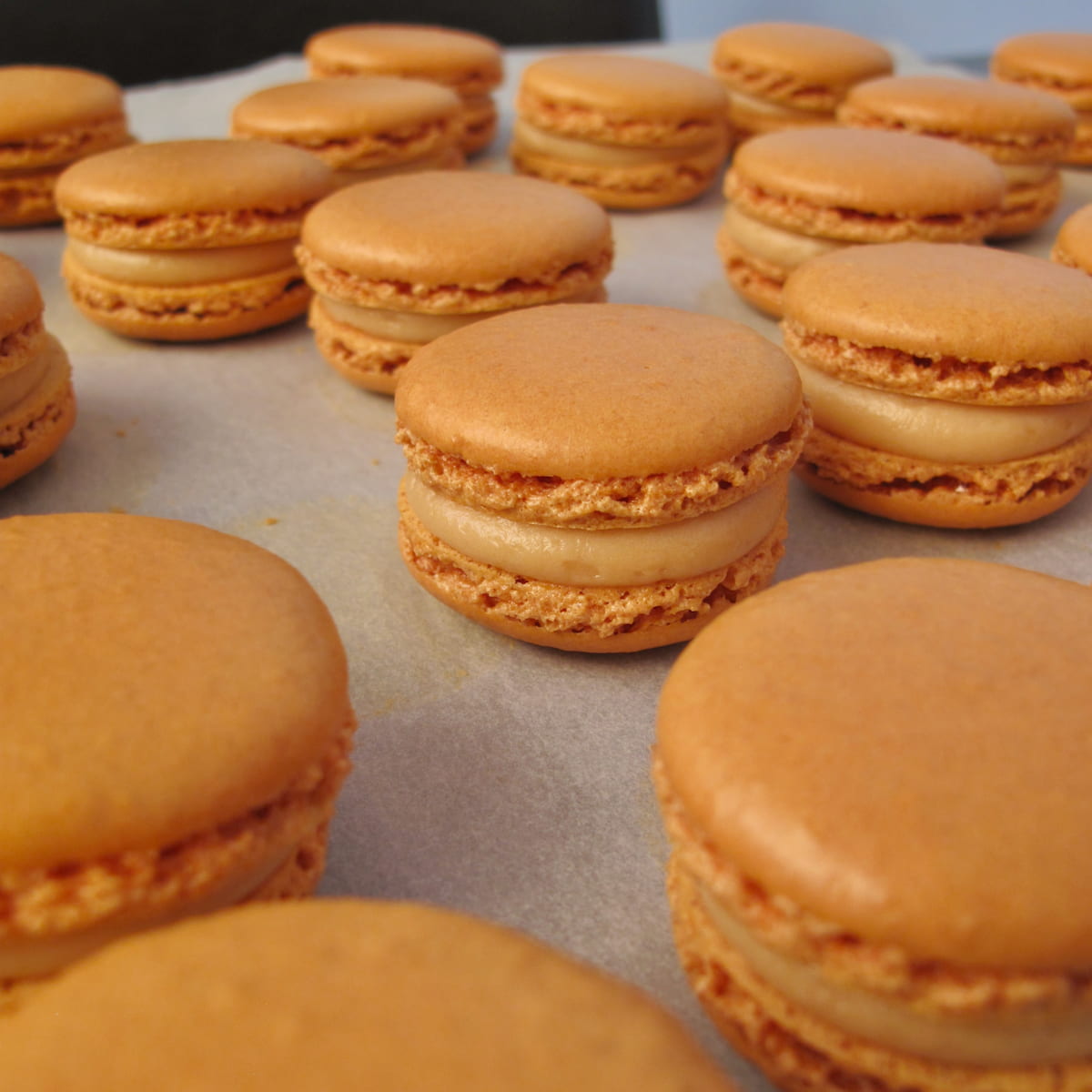
Once filled, store your macarons in an airtight box in the fridge for at least 24 hours before eating. This resting time allows the salted caramel filling to gently soften the shells.
After a day, you get that classic Paris-style texture: soft, fondant centre and slightly delicate exterior.
Salted caramel macarons keep in the fridge for up to 5 days, or freeze beautifully for up to 2 months.
Salted Caramel Macarons FAQ
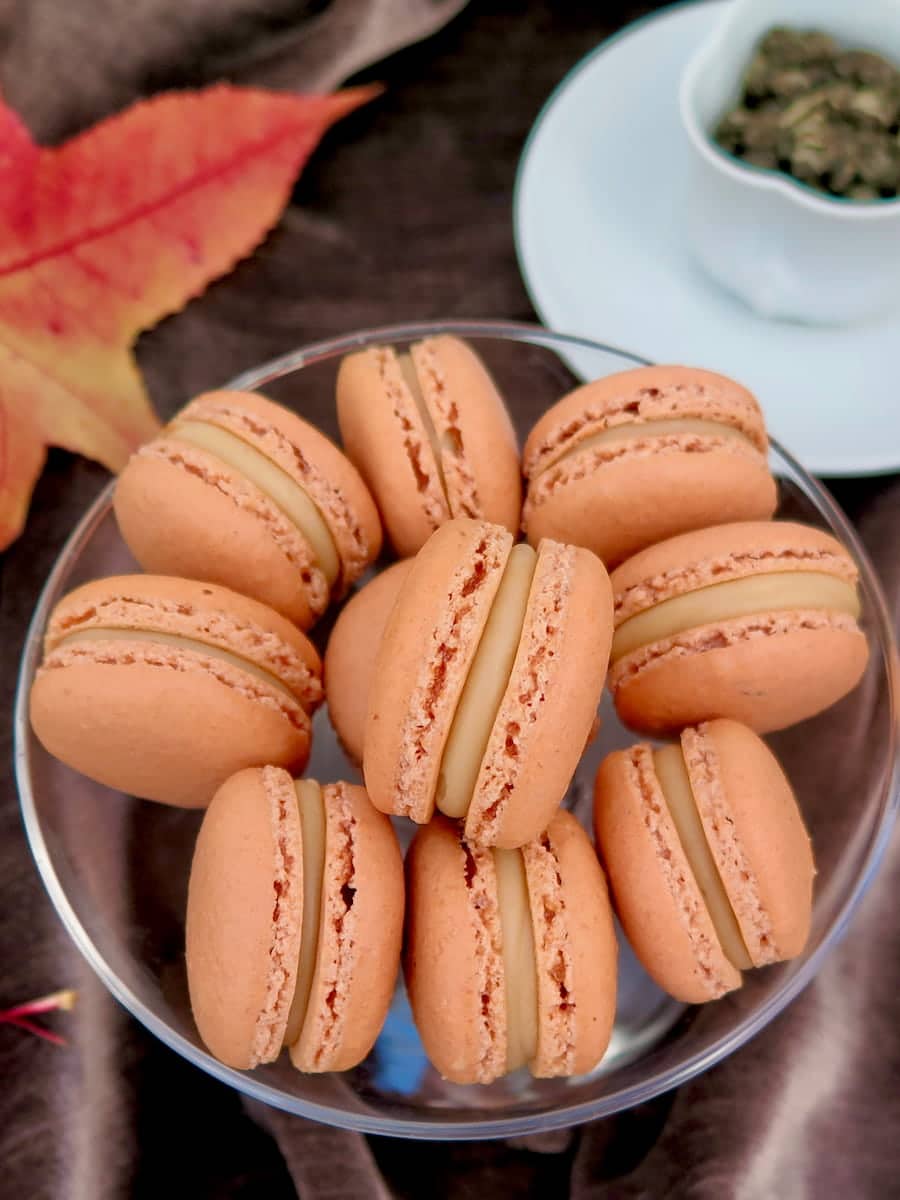
The difference is the filling. This salted caramel macaron filling is thick, stable and lightly salted - made with mascarpone for a smooth texture that matures beautifully after 24 hours. The result tastes like Paris pâtisserie, not overly sweet.
Salt isn't essential - but it transforms caramel. Without it, you can flavour the caramel with orange, lemon or lime zest, coffee or vanilla instead. That said, salt gives that unmistakable French contrast between sweet and savoury.
This post first appeared in 2015 as a jasmine-infused caramel filling, when I couldn't share the full book recipe. It's now completely updated with the original salted caramel macarons from Teatime in Paris.
These are French macarons (almond meringue shells). If you searched for "salted caramel macaroons", you're not alone - but they're different cookies entirely. Here's the difference between macarons and macaroons.
I prefer baking macarons on flat baking parchment. In my experience, parchment gives better airflow and slightly crisper bases. A macaron mat can retain moisture and sometimes cause hollow shells. If you're curious, I've tested both in detail in my silicone mat review.
Caramel buttercream produces a sweeter result. This mascarpone caramel filling gives a more balanced flavour and a texture closer to what you'll find in Paris pâtisseries.

Salted Caramel Macarons

Equipment
- Electric whisk or stand mixer with whisk attachment
- flat baking sheets lined with baking parchment
- Piping bag reusable silicone (40cm/16')
- plain tip (8-10mm/¾-½')
- 2 large mixing bowls (super clean for whites - not trace of oil or egg yolk)
Ingredients
French Macaron Shells
- 100 g (3½oz) egg whites organic (2-3 days old, at room temperature)
- 65 g (2½oz) caster sugar (superfine)
- 120 g (4½oz) ground almonds (fine almond flour) sifted
- 180 g (6oz) icing sugar (powdered sugar) sifted
- pinch caramel powdered colouring (brown/yellow) OPTIONAL
Salted Caramel Filling
- 100 g (4oz) whipping/heavy cream warmed
- 1 x 2g sheet or 1 tsp sheet or powdered gelatine
- 100 g (3.5oz) granulated sugar
- 60 g (2.5oz) unsalted butter
- ½ teaspoon sea salt fleur de sel, Maldon flakes or celtic salt
- 150 g (5.5oz) Mascarpone (see NOTES below)
Instructions
To make the Macaron Shells
- Line 3 flat baking sheets with perfectly flat parchment paper and set aside.
- Sift the finely ground almonds with the icing sugar into a large mixing bowl using a medium sieve. Discard any large, coarse almond pieces. Mix both well together. Set aside.
- Whisk the egg whites in a separate bowl (or in the bowl of a stand mixer) on medium speed until they start to foam, then add a little caster sugar. Continue to whisk and increase speed gradually to high as you add the rest of the caster sugar. If using, add a tiny pinch of powdered caramel colouring. Whisk to glossy stiff peaks.
- Fold the beaten egg whites into the dry ingredients using the large, flexible spatula. Mix well. The batter will be a bit thick and clumpy at this point.
- Using a plastic scraper or still with the spatula, work to a smooth mixture (macaronnage). Press down well on the sides or bottom of the bowl, going back and forward to press out the air bubbles from the mixture.
- Lift the spatula regularly and drop the batter. As soon as you have a smooth brilliant mixture that drops like a ribbon (or 'lava'), stop! Too much mixing results in flat macarons with cracked tops; under-mixing results in dull, bumpy shells.
- Transfer the batter using the spatula to the piping bag fitted with a plain tip. Pipe out 3cm (1¼ inch) rounds. Press the tip right down on the paper then finish off with a flourish to obtain a nice round. Leave a good space between each as they spread out.
- Leave for about 30 minutes to air. They are ready to bake when they are hard to the touch. If not, air for slightly longer. This is a good time to make the filling.Meanwhile, preheat the oven to 170°C/300°F (155°C fan/gas 3).
- Bake for 10-12 minutes, one tray at a time, low to centre oven. After 3 minutes, the feet start to form (do the macaron dance!)After 8 minutes, do my 'wobble' test: touch the top of a macaron and gently move your finger side to side. Depending on how much it moves, cook for 2-4 minutes longer until firm.
- When ready, leave on the baking tray until completely cool. Remove them all carefully (they should peel off easily). Marry up the shells in pairs according to size, one row flat side up, another down to prepare for the caramel filling.
Thick Salted Caramel Macaron Filling
- Soak the gelatine for 10 minutes in cold water.
- Warm the cream in a separate pan or a few seconds in the microwave.
- Measure out the sugar in a medium saucepan. Put on medium to high heat, without stirring, until a golden, syrupy caramel forms. Shake the pan to dissolve all the sugar when it starts to change colour. Be careful that it doesn't colour too much (i.e. it can burn quickly - and there's nothing worse than bitter burnt caramel, so keep your eye on it!). This should take no more than 10 minutes in total. Turn down the heat and add the butter and warmed cream together.
- Take off the heat and stir the caramel with a wooden spoon.
- Add the gelatine (squeezed of excess water) and stir. Leave to cool for 15 minutes on the counter.
- Add the salt and whisk in the mascarpone vigorously (or use an electric whisk) until smooth.
- Chill in the fridge for at least 30 minutes.
- Transfer the salted caramel filling to a piping bag, pipe on a little filling to each macaron couple, topping off with the other macaron shell to assemble.Store in an airtight box and refrigerate for at least 24 hours before eating.
Notes
This post was first published on 9 November 2015 as a jasmine-infused caramel filling. It's now fully updated with the original salted caramel macarons recipe from my book, Teatime in Paris (2015). My first book, Mad About Macarons (2010), was the first macaron cookbook published in the UK - and I've been teaching French macarons ever since.