Gluten-free shortbread inspired by the Scottish classic, made without wheat, gluten-free flour blends or xanthan gum. This easy recipe uses oats, cornflour and rice flour for a light, buttery crumb that slices neatly into rounds - no tins, moulds or cookie cutters needed. From a full-blooded Scot, based on my Granny's traditional Scottish shortbread recipes.

What Makes this Gluten Free Shortbread Work
This recipe works because it doesn't just replace wheat flour; it rethinks it.
After being told to avoid gluten and craving real Scottish shortbread (well, I am a Scot!), I couldn't rely on commercial gluten-free flour (harder to find in France and often processed). So I went back to my roots to make a natural flour blend.
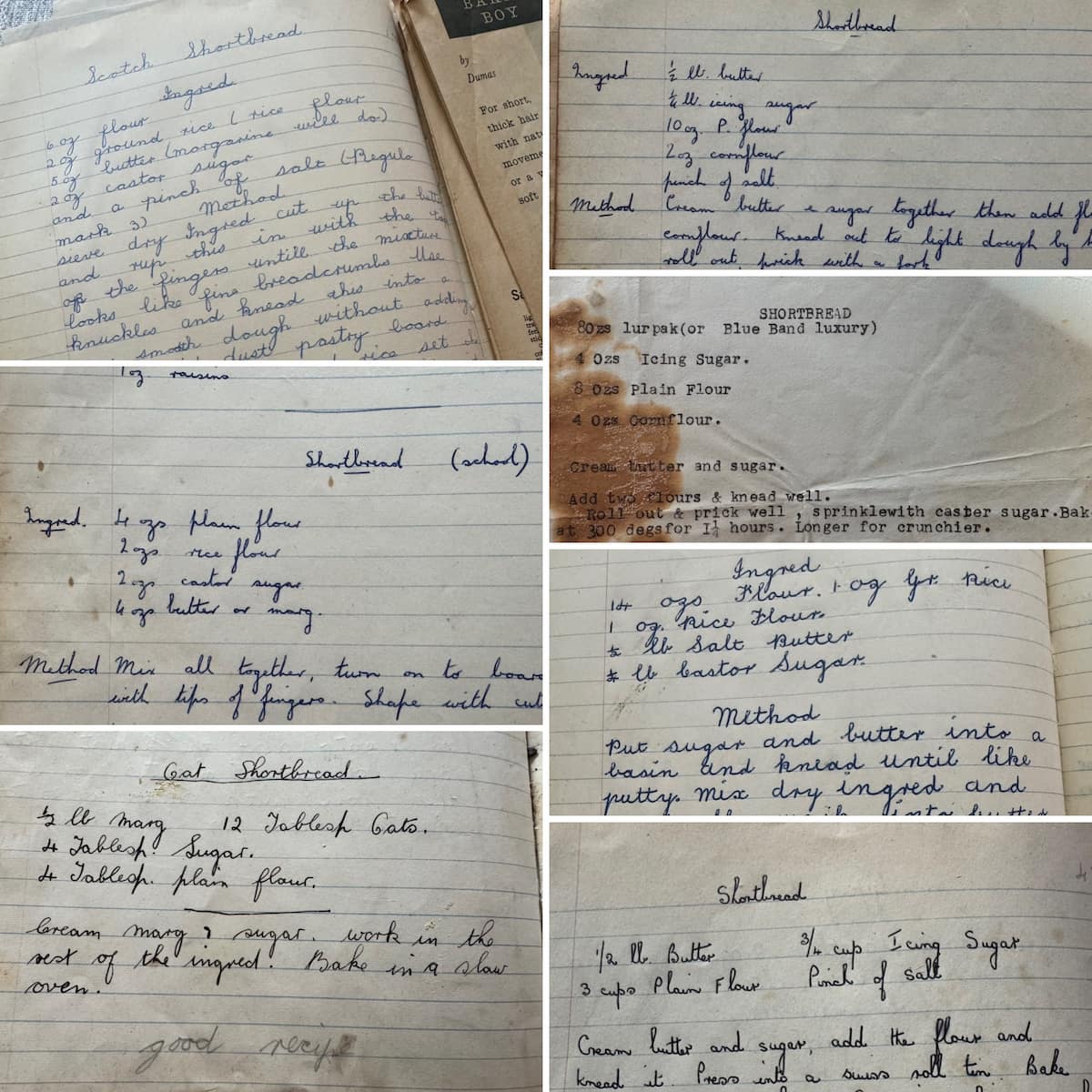
I turned to my Granny's handwritten Scottish recipe 'black book' - a treasure trove of traditional Scottish recipes - which includes a dozen for shortbread alone. From those labelled as Mrs Gibson's, to my Mum's writing noting the recipe came from school. As I could only use one, Granny's little note whispered under 'Oat Shortbread' with 'Good Recipe' steered me in the right direction.
What I found was interesting. I noticed that alongside plain all-purpose flour, she regularly used rice flour and cornflour, each for a specific purpose.
Rice flour lightens the crumb (although my first tests using it alone with cornflour was far too brittle). Cornflour softens it, but the oats provide flavour and typical structure.
By combining all three flours, I managed to recreate the texture of classic Scottish shortbread without xanthan gum or gluten-free flour mixes. Just handy ingredients already from the pantry.
The shaping method borrows from French diamant biscuits (from my 2nd book) - rolled, chilled and sliced - but the soul of the recipe remains firmly Scottish: simple ingredients, careful ratios and a melt-in-the-mouth bite.
If you enjoy this style of shortbread cookie or biscuit, try these French shortbreads or salted butter cookies (Palets Bretons), a classic gluten version.
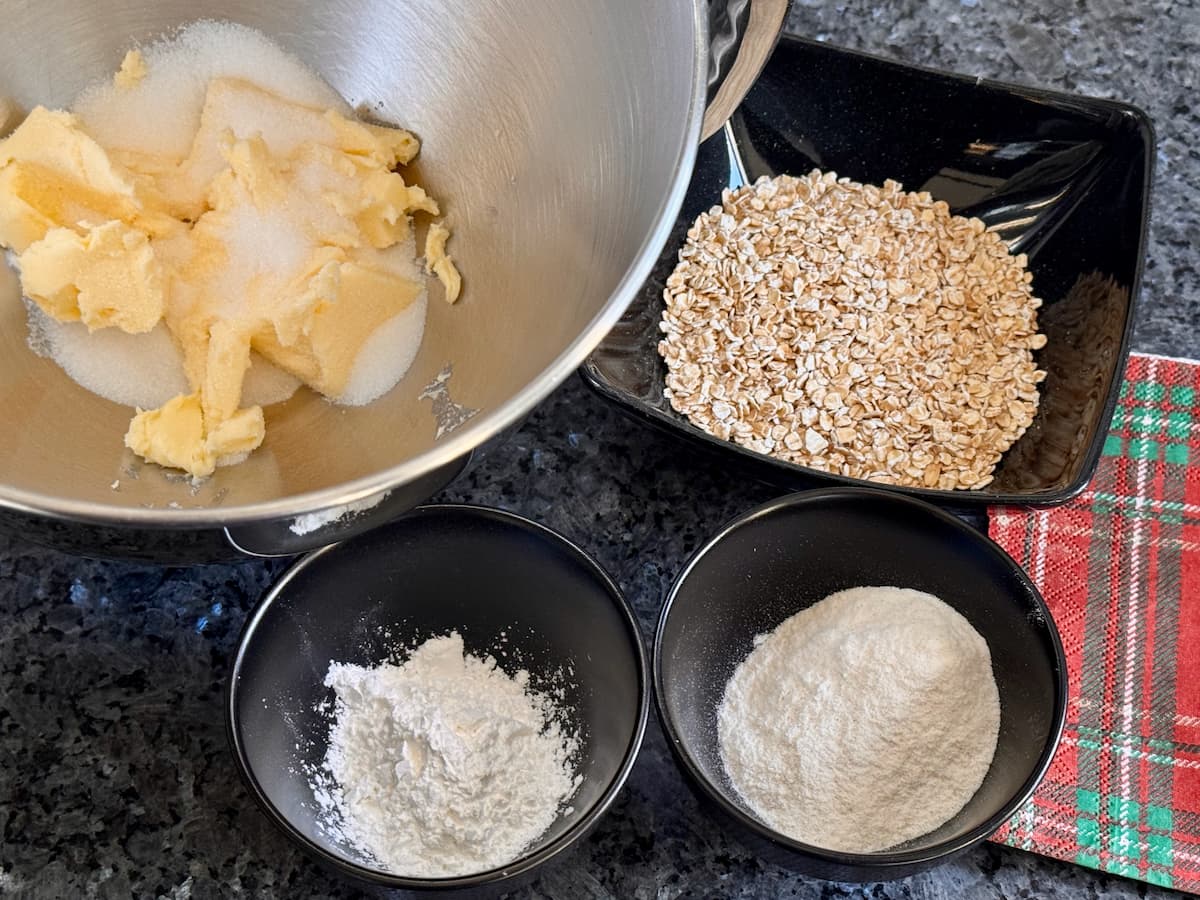
Gluten Free Shortbread Ingredients (with Cornflour and Oats)
You'll just need some simple pantry staples. Key ingredients are normally flour, butter and sugar, but we're replacing classic wheat flour with oats, cornflour and rice flour.
- Butter - as with all baking, the better quality the butter, the better the shortbread. After the war, Granny used margarine but use a French or European style butter (at least 82%) if possible. I prefer lightly salted (in France, beurre demi-sel). Otherwise use unsalted with a ½ teaspoon of salt (fleur de sel, Maldon salt flakes or Celtic salt are best).
- Oat flour - the main ingredient to replace wheat flour. A healthy Scottish staple that's high in soluble fibre which gives that toasty, biscuit-y flavour and body. I use either organic steel cut oats/oat flakes or medium rolled oats and grind them in a coffee grinder to make my own flour. Otherwise buy oat flour directly. This does make the shortbread a little darker than the classic but the taste is spot on!
- Rice flour - keeps the crumb light but also makes it fragile; hence not too much.
- Cornflour (cornstarch / Maïzena) - softens the texture and helps the shortbread biscuits hold together.
- Sugar - I reduced it like Granny did and it works - especially together with the salt and butter, making it moreish. She flitted between icing/powdered sugar and caster sugar. I've tried both and they both work well. It's up to you if you want to roll the rounds in granulated sugar or sprinkle with more sugar at the end of baking.
Eggless biscuits: although it's tempting to add an egg to bind the flours, traditional Scottish shortbread never uses eggs. Its structure comes from butter, sugar and flour.
Use digital kitchen scales, as this does make a difference to your baking. Grams and ounces are more precise and you'll have more consistently successful results every time. I've also given tablespoons, as that's what Granny did. If you see her original recipe, I've kept with the total tablespoons!
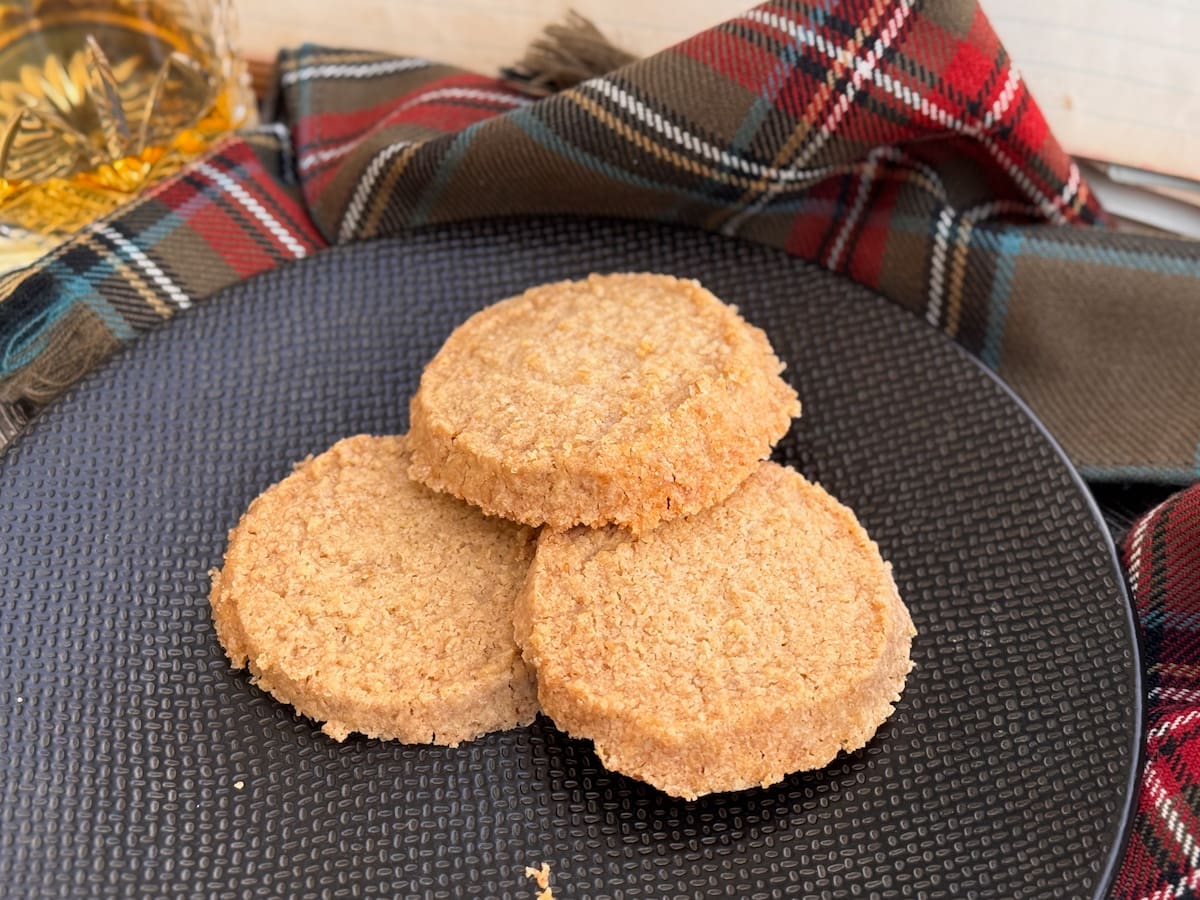
Why There's No Xanthan Gum or Gluten-Free Flour Blend
Most recipes rely on commercial gluten-free flour blends and added gums. I chose not to use them for this gluten-free shortbread recipe.
In France gluten-free flour blends are not as easy to find than in the UK or USA, for example - and when they are, the added ingredients often push them firmly into the processed foods category.
Instead, this recipe builds structure naturally using oats, rice flour and cornflour: ingredients found in traditional Scottish baking long before gluten-free blends existed.
Brave? Hmm. Perhaps just a tad 'mad' - but very much in keeping with my Granny's way of baking.
How to Make Gluten-Free Shortbread Cookies
Full instructions are in the recipe card below.
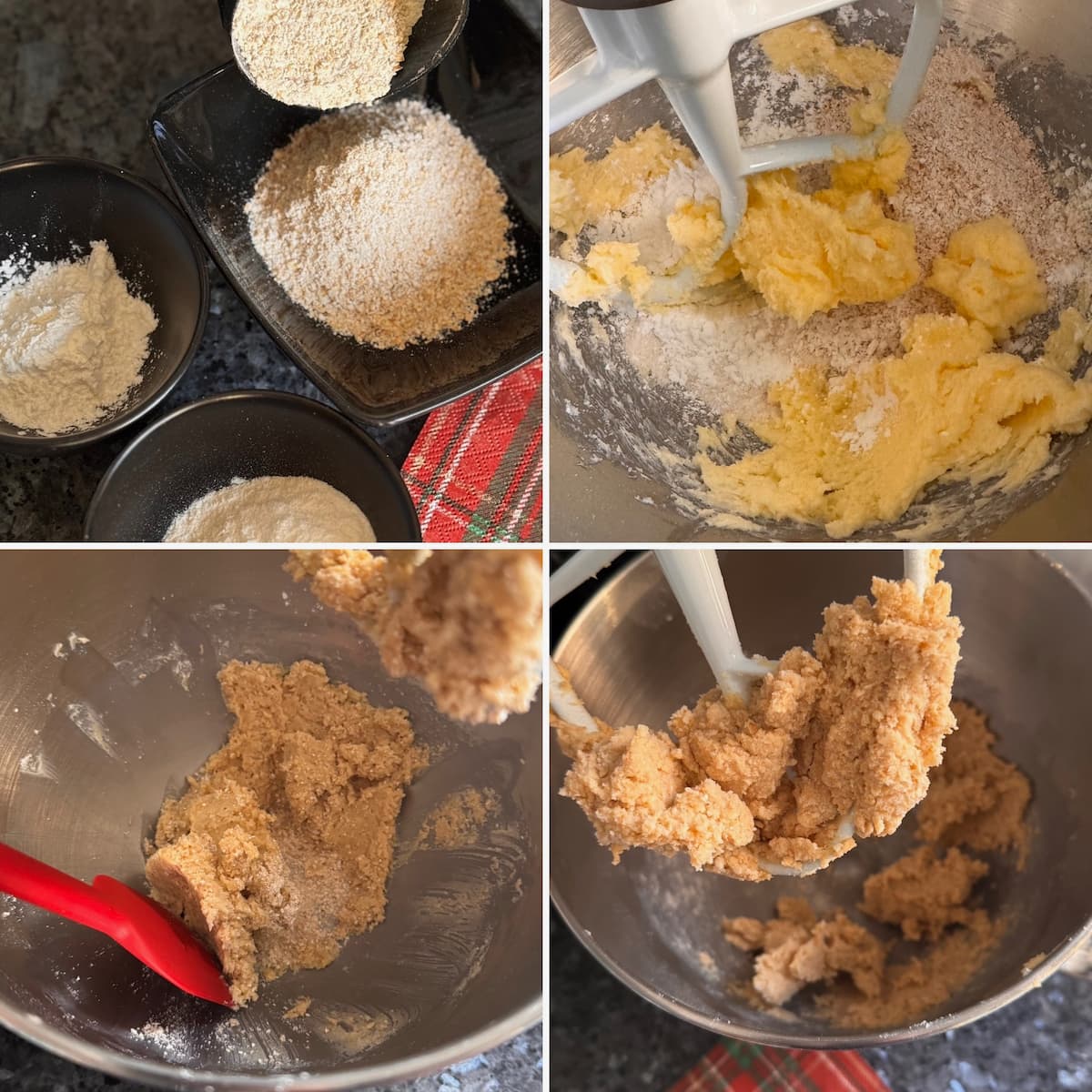
- Mix the butter and sugar just until smooth and pale. Yes, Granny mostly says cream it but just don't over-mix. Add salt if using unsalted softened butter.
- Add the flours all at once and mix gently until the dough comes together. It will look crumbly, then suddenly hold.
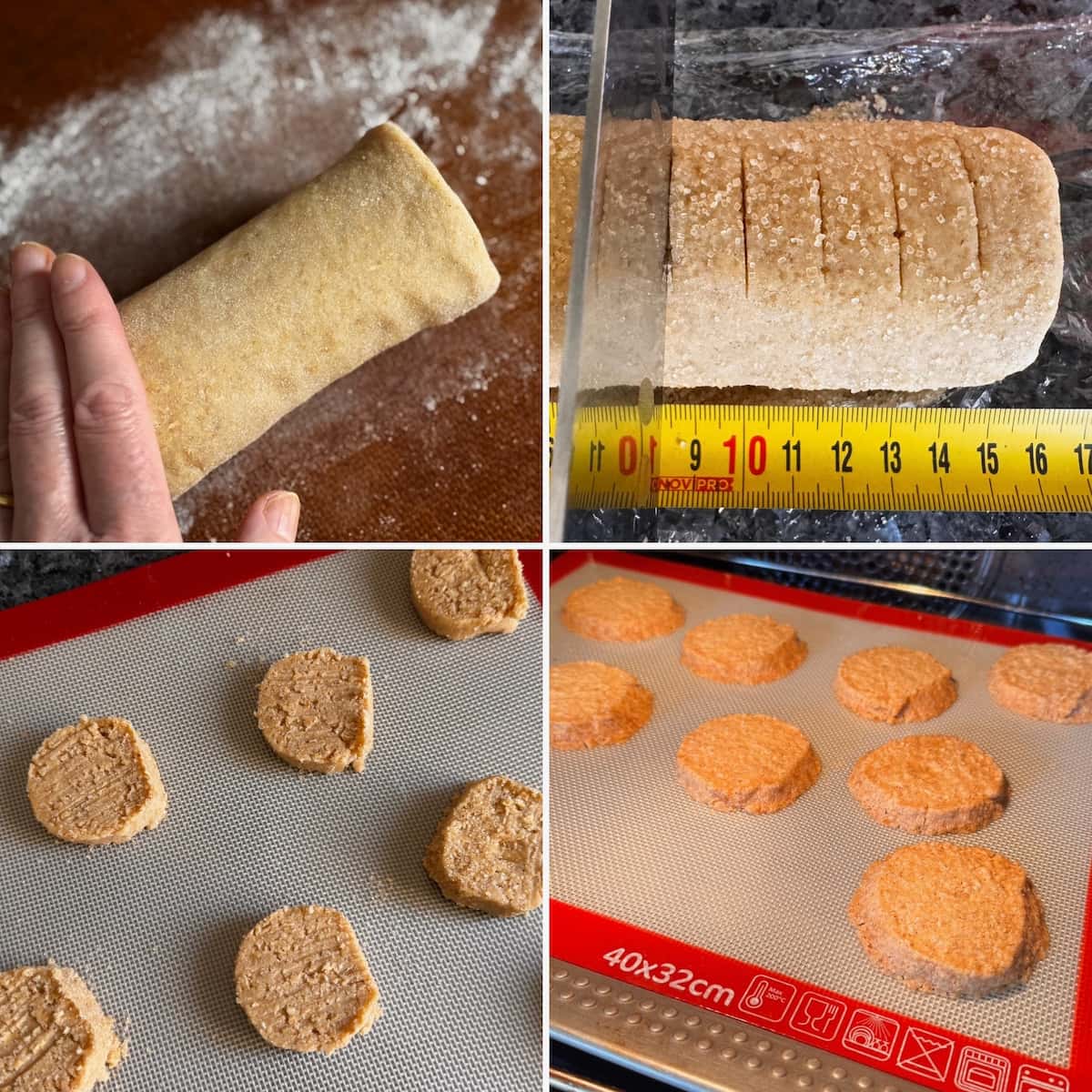
- Shape and chill by rolling into a neat log (and in sugar for diamond-looking crystals on the sides) and chill until firm. This makes the slicing clean and easy without a rolling pin or cookie cutters. (Alternatively, press into a rectangular baking tin and pre-cut into squares, triangles or rectangular fingers and prick with a fork.)
- Slice and bake cookies until lightly golden at the edges but never browned.
- Leave to cool completely before moving - the shortbread firms up as it cools.
Traditional Shapes of Scottish Shortbread
- Fingers: the most popular, thick rectangular biscuits with the characteristic fork pricks.
- Petticoat Tails: much thinner than traditional Scottish shortbread - rolled out into a circle, pinched at the edges, pricked, baked then cut into 8 triangles.
- Moulds: if you have a shortbread mould or pan like this wooden wooden thistle (we often find great collections at Christmas markets in Scotland), then roll the cookie dough into it (greased beforehand), chill and flip onto a baking sheet or bake directly if using this ceramic mould.
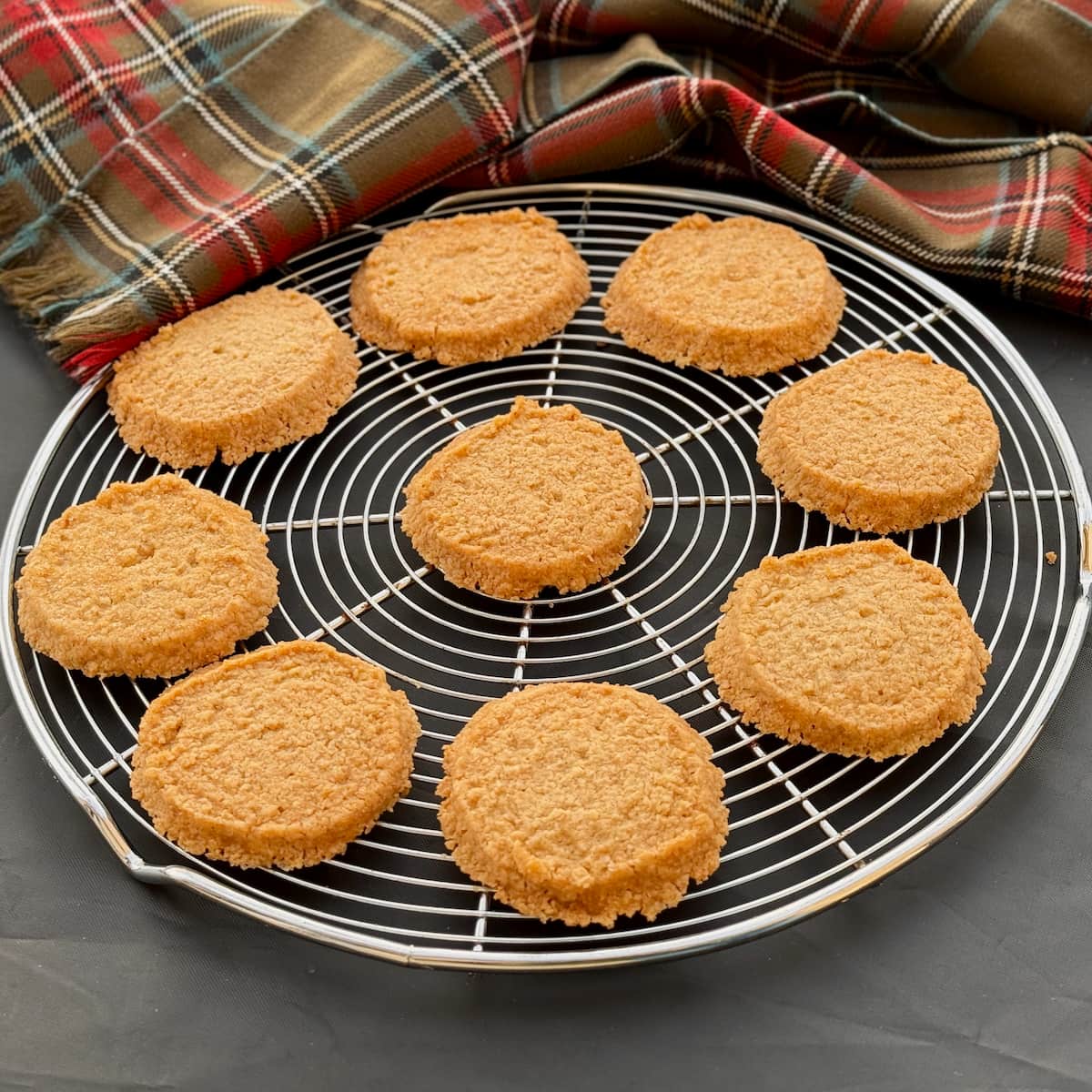
- Sugar-crusted Rounds: I find this is the easiest way. (Walkers call theirs Shortbread Highlanders.) These oat shortbread rounds are simply rolled (or not) in sugar, chilled and sliced (1-1.5cm) and baked, in the same way as French diamants - a quick and easy technique without using a rolling pin or cookie cutters.
- Thins: great for using as a base for different desserts. For example, try this version in my unique iced cranachan dessert to make it gluten free.
How Best to Serve Shortbread
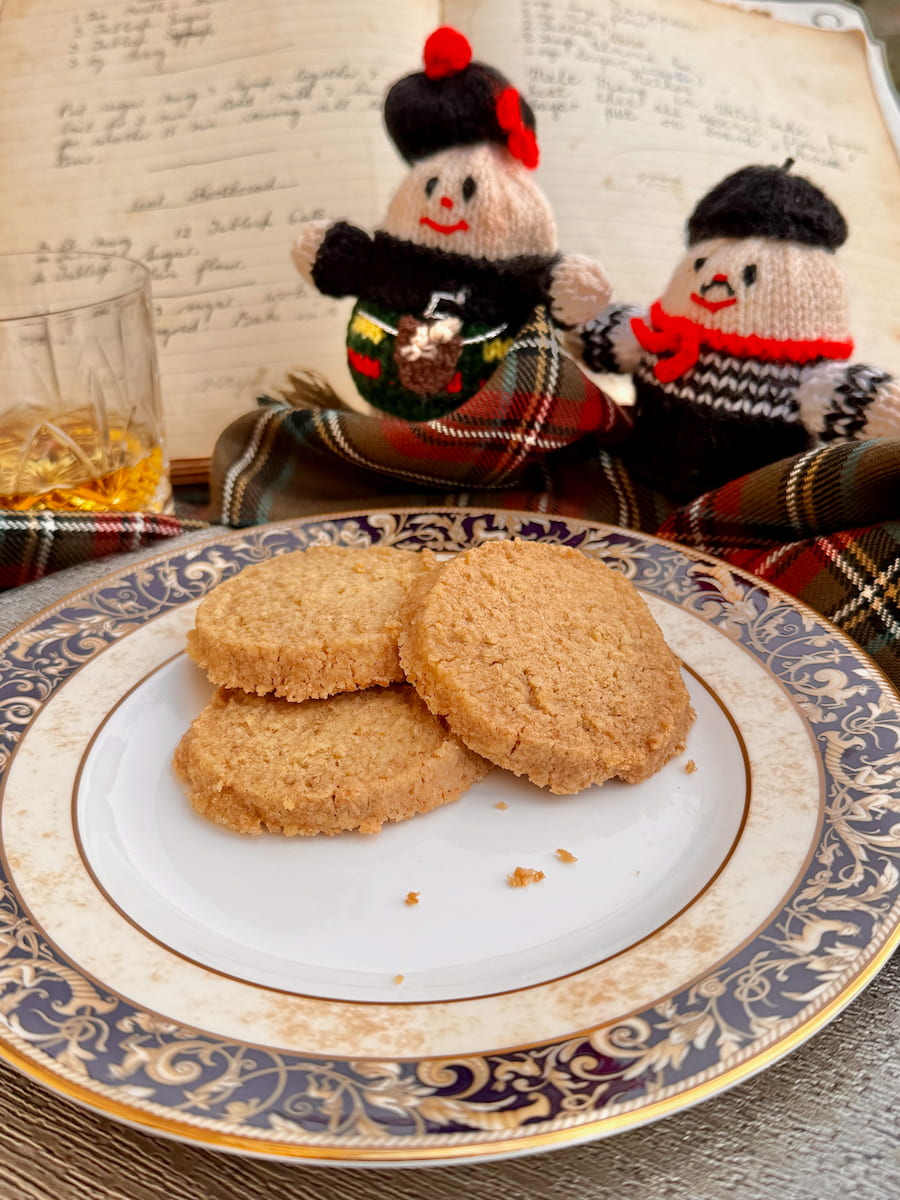
How shortbread is served depends on the occasion and perhaps even its shape. Serve with a good pot of tea (usually black tea with a little milk) or a dram of Whisky.
Enjoy with a wee dram for special occasions like New Year's Eve (Hogmanay as we call it in Scotland), Burns Night (25th January), and Saint Andrew's Day (30th November). To best enjoy a single malt Whisky, add just a little water - usually tap water in Scotland is delicious so, if like us in France where it's pretty awful use mineral water and enjoy with a couple of shortbread biscuits.
Fingers are made for dunking, in my humble opinion - a great treat with this Parisian hot chocolate. Rounds and thin petticoat tails add elegance to desserts like this Drambuie ice cream - and these thicker oat shortbread rounds are, well, all-rounders!
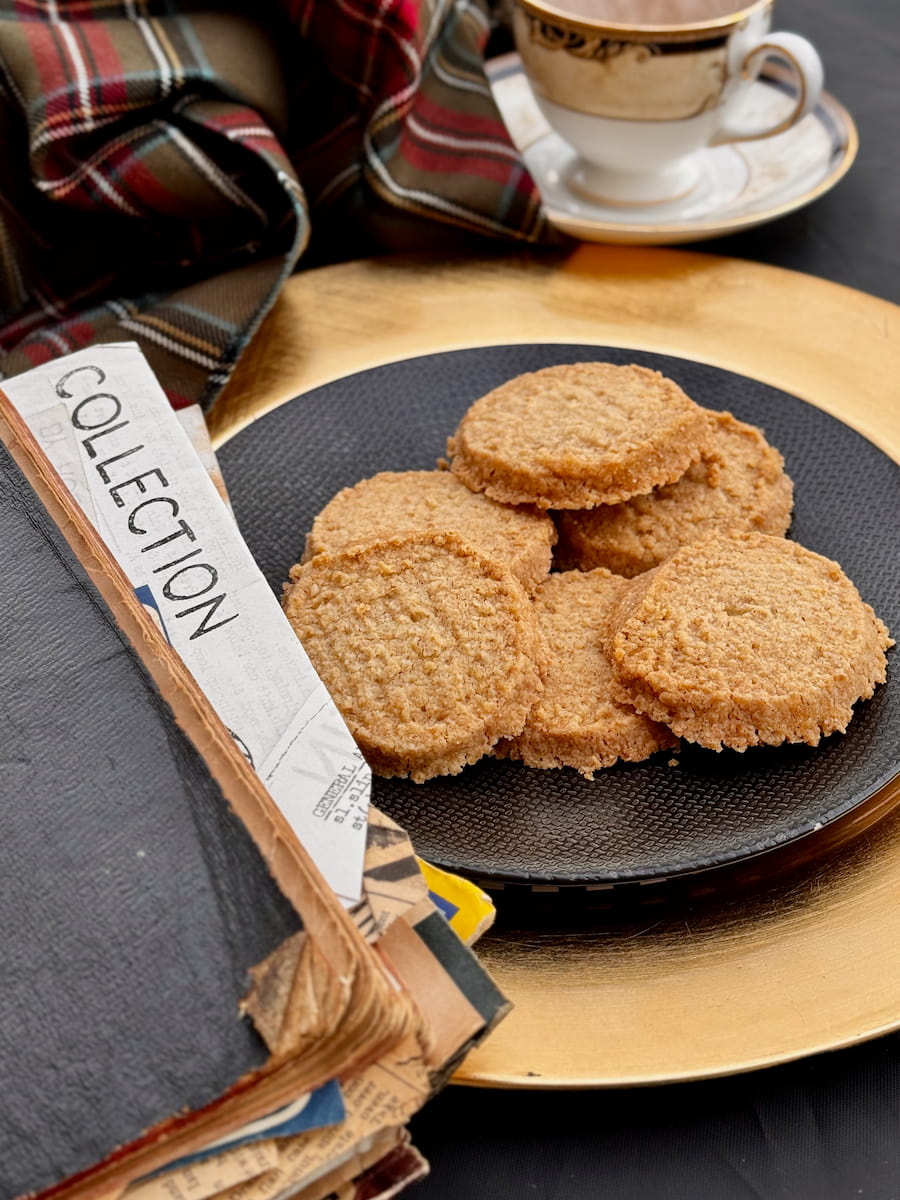
Well, Granny, if you're watching over, I hope I've done you aye proud.
I don't have your Moffat tartan (or the MacKenzie on my dad's side), but here's our Scottish Stuart tartan to echo the Auld Alliance. Confirmed by the Lord Lyon for the history and twinning of Ayr with Saint-Germain-en-Laye, called the Princess Mary.
So, there you have it. I'll also raise a dram to my grandad, John Stobie, who died on Burns Night - a champion drummer in the City of Edinburgh Police Pipe Band.
For more, see the full collection of gluten-free recipes, gluten-free desserts - including gluten-free brownies made with rice flour - & more Scottish recipes.

Gluten Free Shortbread

Equipment
- silicone mat if baking shortbread rounds (or parchment paper)
- stand mixer optional (can also be mixed by hand)
- shortbread mould optional
Ingredients
- 225 g (8 oz/ ½ lb) butter, salted softened (see Notes)
- ½ teaspoon salt (fleur de sel, Maldon or Celtic) if unsalted butter
- 60 g (2½ oz/ 4 tbsp) caster sugar
- 120 g (4½ oz/ 8 tbsp) oat flour organic (or large oats ground to a powder)
- 80 g (3 oz/ 5 tbsp) rice flour
- 40 g (1½ oz/ 3 tbsp) cornflour (cornstarch/Maïzena)
- 2 tablespoon granulated sugar optional, for rolling
Instructions
- Mix the butter, salt (if unsalted butter) and sugar together - either by hand using a wooden spoon or using a stand mixer with paddle beater. Mix just until smooth and the sugar no longer shows.
- Mix in the oat and rice flour plus cornstarch together all at once. While mixing, it will clump together - push down the buttery ingredients stuck to the side of the bowl and stop mixing as soon as all the ingredients come firmly together.
- Roll into a log (6cm/2-inch diameter) on a very lightly floured surface (I use a small handful of rice flour) and roll in a little granulated sugar, if using.Wrap, then chill in the refrigerator for about 30 minutes (or freezer for 15 minutes) and can be left overnight. Preheat the oven to 170°C/325°F (150°C fan/gas 3).Fingers - alternatively, press into a small baking tin using your fingers and smooth the surface with a palette knife. Cut into rectangles, prick evenly with a fork and chill. Mould - roll into a greased mould, following its instructions.
- Slice into 1-1.5cm/½-⅔-inch) rounds and place spaced apart (they will spread out slightly while baking) on 2 lined baking sheets. Bake for 25-35 minutes (depending on their thickness) or until golden but not brown. They should be slightly toasted at the edges. Remove from the oven and leave to rest without disturbing until cooled slightly (they firm up while cooling) then carefully transfer to a wire rack to cool completely.
Notes
Frequent Questions
Yes - and shortbread is one of the easiest biscuits to adapt. Traditional shortbread relies on butter and sugar for structure, not gluten. Using naturally gluten-free flours gives a tender texture, as long as the dough has enough fat and is handled gently.
It can work, but it's not essential - and not always easy to find in France. This recipe skips gluten-free flour blends entirely (many often include surprising ingredients). Instead, it uses classic French pantry flours to create the most traditional Scottish shortbread flavour and texture, without gums or additives.
Gluten-free shortbread becomes crumbly when there isn't enough moisture or fat, or when the dough is overworked. Letting the dough rest, slicing it while chilled, and baking at a moderate oven temperature all help the biscuits hold together beautifully.
The classic 3-2-1 ratio (3 parts flour, 2 butter, 1 sugar) is a useful starting point, but gluten-free shortbread benefits from small adjustments. Without gluten, the balance shifts slightly towards fat and finer flours to keep the texture tender rather than dry.
Pricking shortbread is traditional, especially for fingers and petticoat tails, and helps prevent puffing. For these gluten-free shortbread rounds, pricking isn't necessary - the dough bakes evenly without rising.
While this gluten-free version is best plain to appreciate their simple butteriness with a play of salt, you could add a little vanilla extract or powder, a teaspoon of finely grated lemon zest or orange zest, or half a teaspoon of lavender.