

Easy recipe for a classic French Crème Caramel, made lighter without cream. If your crème caramel has ever turned rubbery, too sweet or slightly bitter, it usually comes down to small details - and this recipe gets them right.
Made with whole milk and egg yolks, it's silky and delicate - the version we make at home in France. Popular in Parisian restaurants as a great make-ahead recipe. At home, it works just as well - either as individual portions or a large version.
Wondering what makes crème caramel different from French flan or crème brûlée? Read on for the explanation plus my best tips for success.
This recipe and the reviews gave me the confidence I needed, and wow, absolutely perfect. I had zero hopes and it came out delicious. - Anna
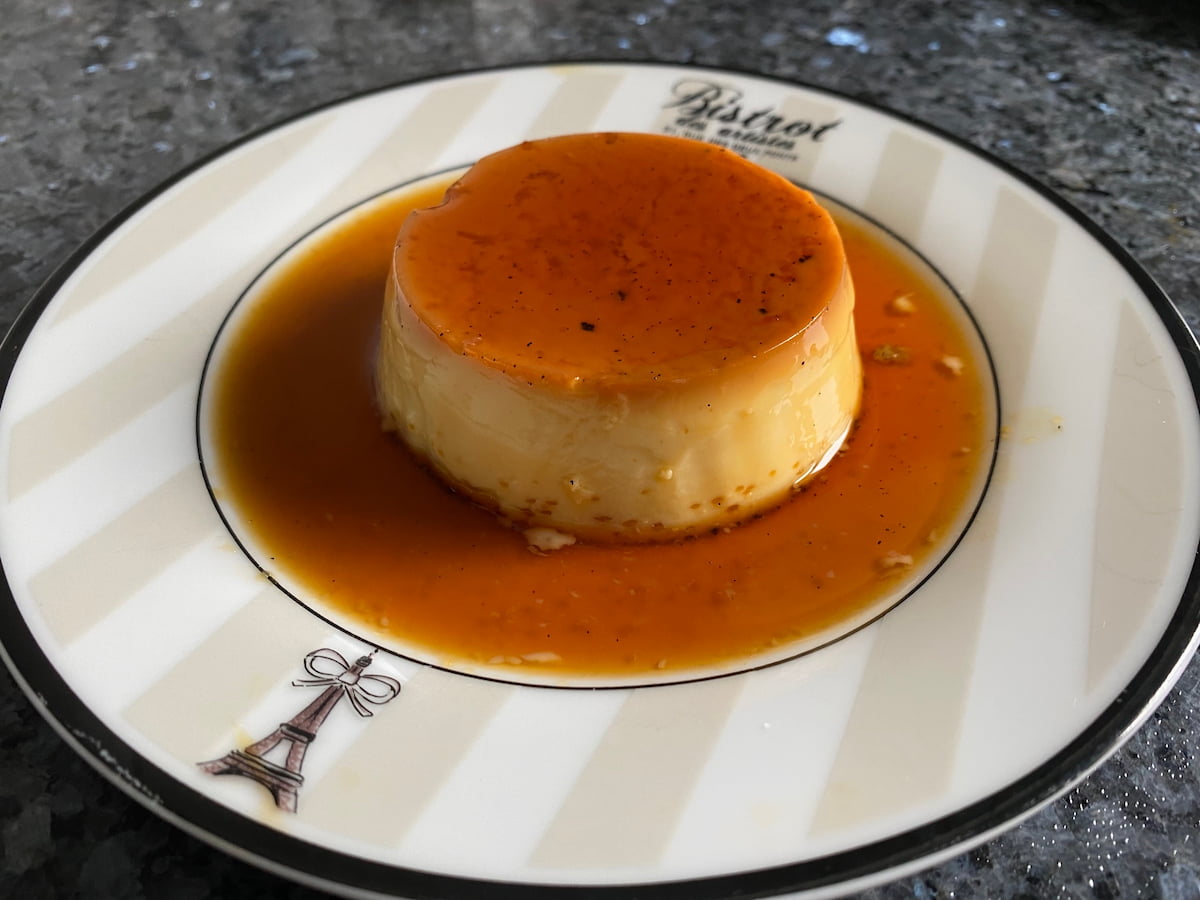
Crème Caramel Ingredients
It only takes 4 ingredients to make a classic French Crème Caramel: milk, eggs, sugar and vanilla - but the balance is what makes the difference.
The fresher the milk and eggs (organic or free-range), the better. It's best 'plain' with vanilla - but the recipe can easily take on many flavour variations: teas, coffee, herbs and orange work well. Just infuse in the milk in place of the vanilla.
However, vanilla isn't plain if you use a sticky vanilla pod/bean or powder for this recipe. At a pinch, replace with good quality vanilla extract. Please do not use vanilla essence or aromas. The resulting taste is synthetic. Try both versions: you'll taste the big difference.
Over the years, I prefer this recipe, as I've experimented making Crème Caramel with milk and cream. In the end, this is by far the family's favourite, initially based on Raymond Blanc's recipe but with less sugar in the custard. It uses fresh whole (full-fat) milk - not cream. Plus, the addition of 3 egg yolks gives it that silky, melt-in-the-mouth feel of the custard, keeping it light.
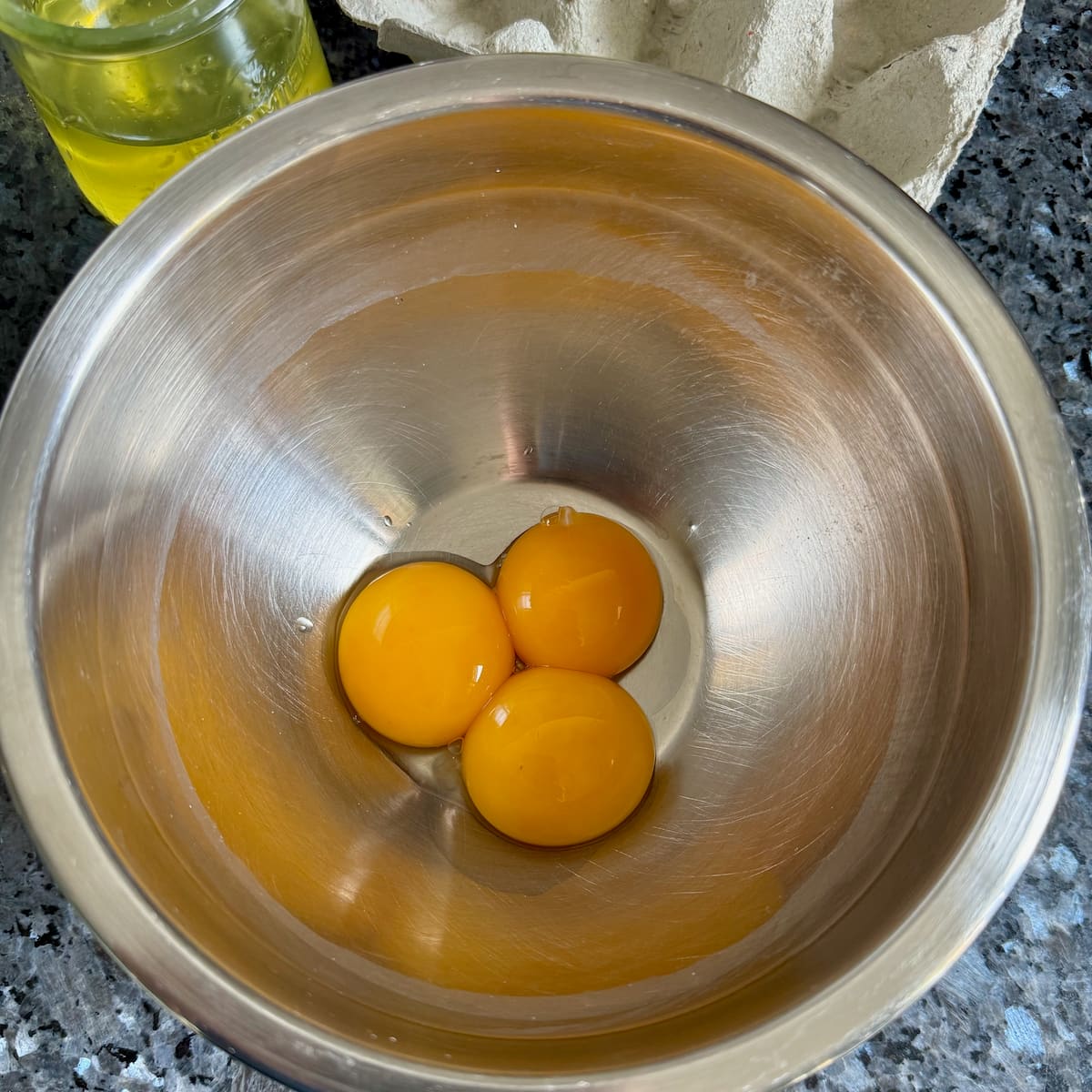
For another infused type of French custard with egg yolks,
see my recipe for Crème Anglaise with Chai tea.
Why I Reduce the Sugar and Avoid Packet Mixes
Please avoid packet mixes to make this, as it's processed with far too much unnecessary sugar. That's one of the main reasons why we make our desserts homemade, to control the sugar content.
Many pâtisserie chef friends agree that too much sugar destroys flavour. So, as there is enough in the caramel, I reduced the sugar in the recipe's caramel custard - and nobody even notices! That way, we can enjoy the flavours of the vanilla and that amber caramel.
How to Make Crème Caramel (Quick Overview)
- Make the caramel and pour into ramekins
- Heat the milk with vanilla
- Whisk eggs and sugar gently (avoid bubbles)
- Combine cooled, warm milk slowly
- Pour into ramekins and bake in a water bath
- Chill completely before serving
Want to see the full technique in action? I demonstrate every step in my accompanying video course here.
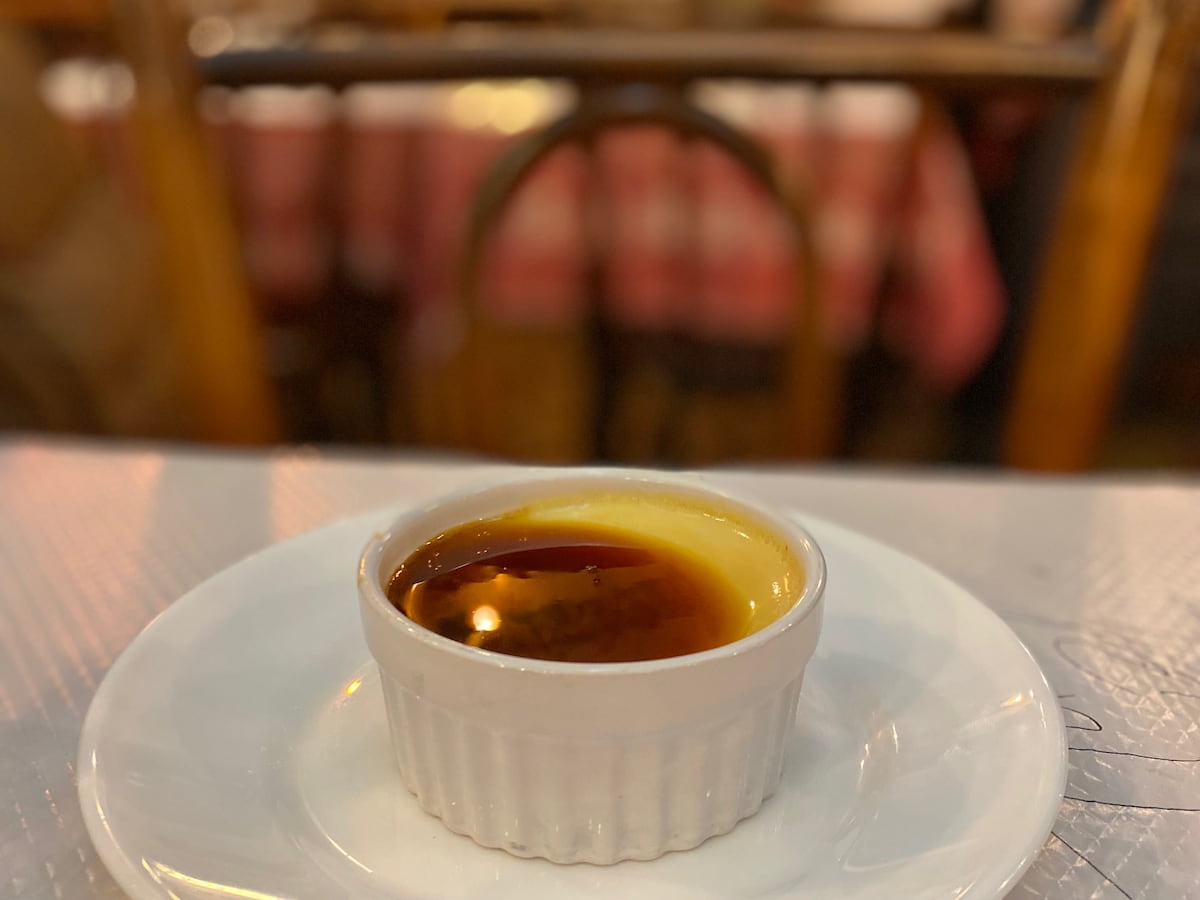
Not sure how to upturn them? I've got you covered in my demonstration video and in the tips below. It's easier than you think.
However, many cafés or brasseries serve them directly in their individual ramekins direct from the fridge. So, if you're worried about upturning them, don't worry. Serve it the Parisian Bouillon Chartier crème au caramel way! (Make the caramel and pour directly on top of the chilled puddings in their ramekins.)
Why Crème Caramel is the Best Make-Ahead Dessert
French crème caramel - or caramel pudding - has been a classic Parisian brasserie staple for decades (since the 1930s) because it's simple, economical and ideal for making ahead.
Thanks to the famous French chef, Auguste Escoffier who modernised French cuisine, it's a win-win in brasseries and restaurants as it's a most delicious practical dessert. It can keep for up to 5 days in the fridge - so it's easy to prepare a day or two in advance. This makes entertaining extra easy.
Common Crème Caramel Mistakes and How to Fix Them
This is such an easy recipe. Based on many mistakes made over the years, I've learned these cooking tips along the way:
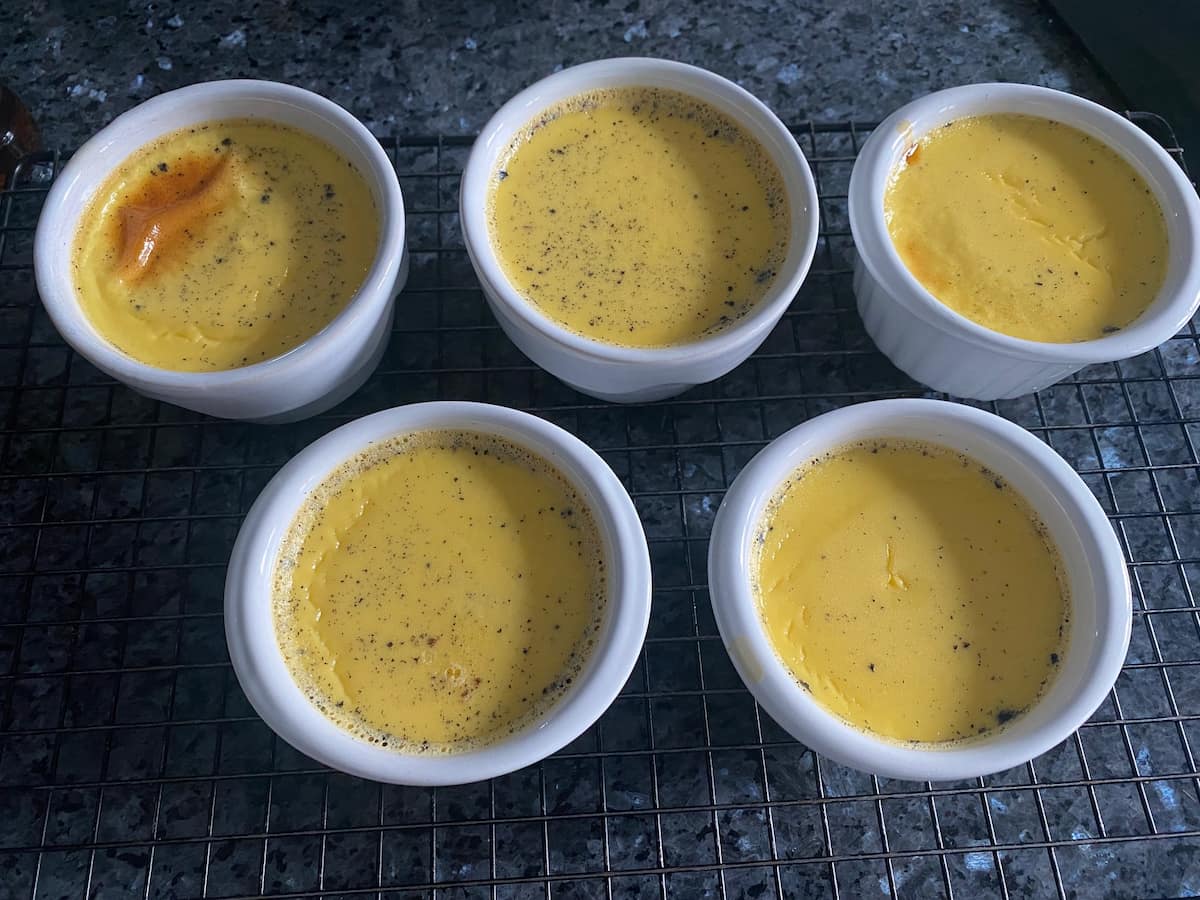
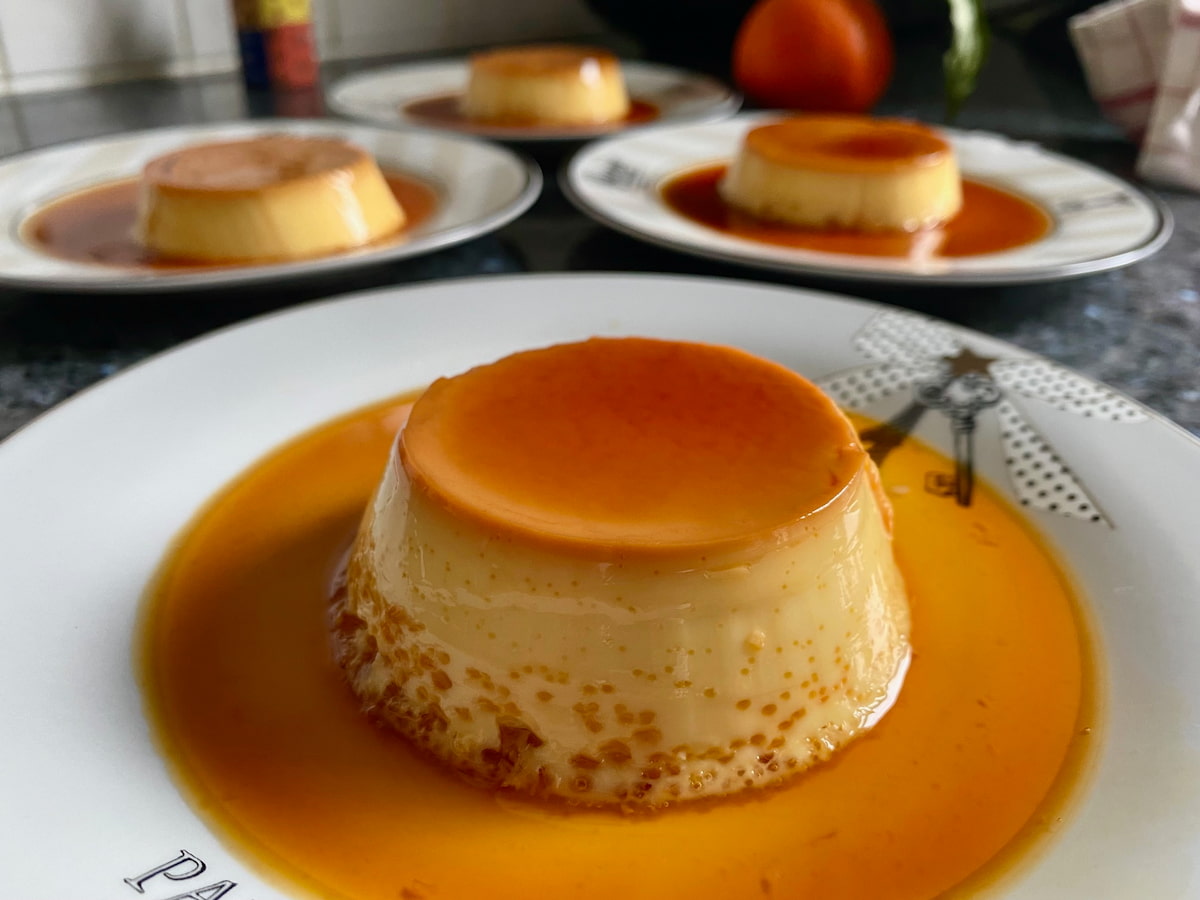
- Air Bubbles. Don't worry. A few bubbles around the edges can happen and aren't necessarily a problem. Larger bubbles mean the custard has baked a little too long or the heat was too high. The photo above is an intentional example: the crème caramel in front was left in the oven for another 10 minutes to show the difference, while the ones behind were just right. Even slightly overdone, it's still soft, silky and tastes wonderful; you'll even see little bubbles in many French bistros.
To avoid larger air bubbles, stick to the timing and place a sheet of baking paper at the bottom of the water bath (bain-marie) before adding the water. This helps keep the heat more even during baking. - Why has my caramel turned white and solidified? This is either because the temperature was too low or you stirred the sugar while on the heat. Don't disturb the sugar crystals. Once it's on the heat, leave it alone and ensure the heat is medium to high.
- Why do I have custard foam? Don't over-whisk after adding the warm milk. Whisk very gently just to combine then leave the custard to settle for a few minutes and the foam will subside. A few bubbles are ok!
- My vanilla bean/pod is dry. Leave for a few days in a jam jar with a tablespoon of dark rum. The result is a stickier vanilla pod and the aromas are brought out at their best (I picked this one up from a vanilla seller at the market in Apt, Provence).
- Do I need to sieve the custard? Not always. If the custard is already smooth, I don't find it necessary. If you're using a vanilla pod and have any fibrous bits, stray eggshell or small lumps, pass it through a sieve before pouring into the ramekins. With vanilla extract, gel or powder, I normally skip this step.
- How do I release them easily? Run a sharp knife around the ramekin then upturn on to a lipped plate (to catch the juice). Either tap or jiggle the ramekin and it will eventually come out! However, to be really sure, place the ramekins for 30 seconds in the roasting tin filled with boiling water. It's so much easier and you'll catch all the caramel left at the bottom.
Still worried about bubbles, stubborn caramel, grainy texture or unmoulding disasters?My video course shows you exactly how to fix them step by step for smooth, silky results every time. The eBook takes it further with more classic French custard desserts and flavour variations using the same techniques.
Is Crème Caramel the Same as Flan?
It's known in the rest of the world as Flan, particularly in South America and the Philippines. The French Crème Caramel is similar (if not the same) as flan but it doesn't use sweetened or condensed milk. Other names for it include purin in Japan - a gelatine no-bake version.
At home, the French (including my in-laws) often call it a Flan aux oeufs au caramel - a simple Flan aux oeufs doesn't even include caramel. Another name for it is a crème renversée, when served upside down.
So, why don't the French just call it Flan? The main reason is not to confuse a crème caramel with a Flan (pronounced flong).
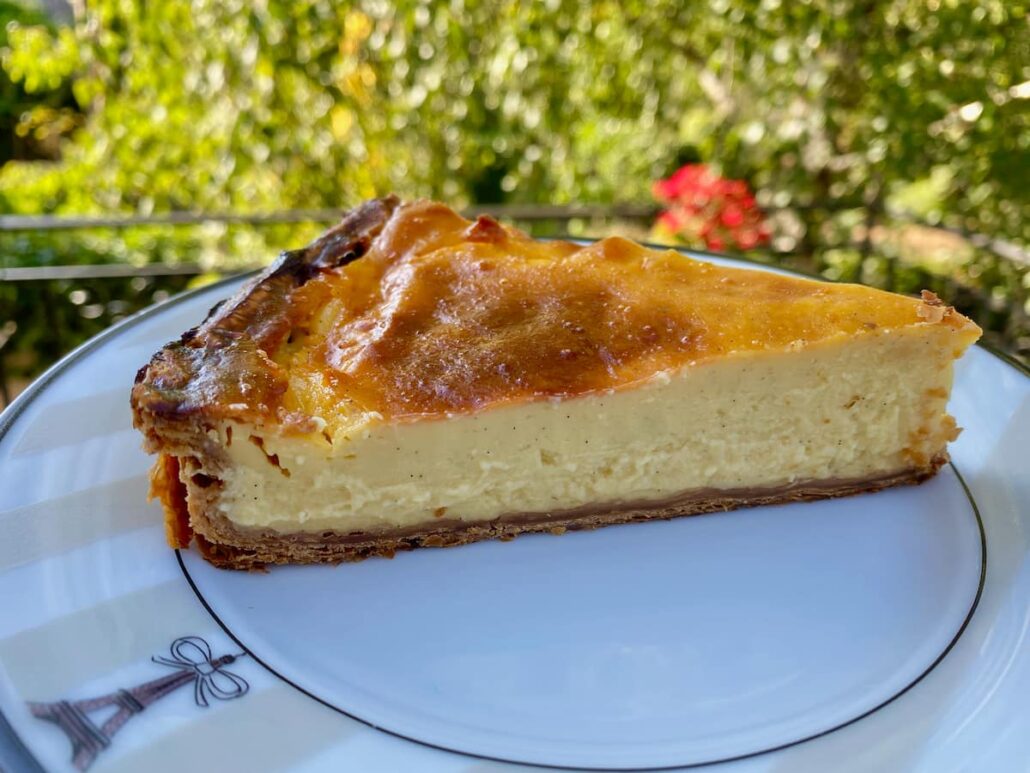
Bought by the slice at our bakeries, the Flan pâtissier or Flan Parisien (Parisian flan) is a more compact custard made with flour with a slightly flaky pastry base (using either puff or shortcrust). Although labelled as 'Flan nature' or with variations - such as coconut, chocolate or even pistachio (try the one at KL patisserie - see my guide to the Best Tearooms in Paris), it's simply known in Paris and the rest of France as 'Flan'.
Difference Between Crème Caramel and Crème Brûlée
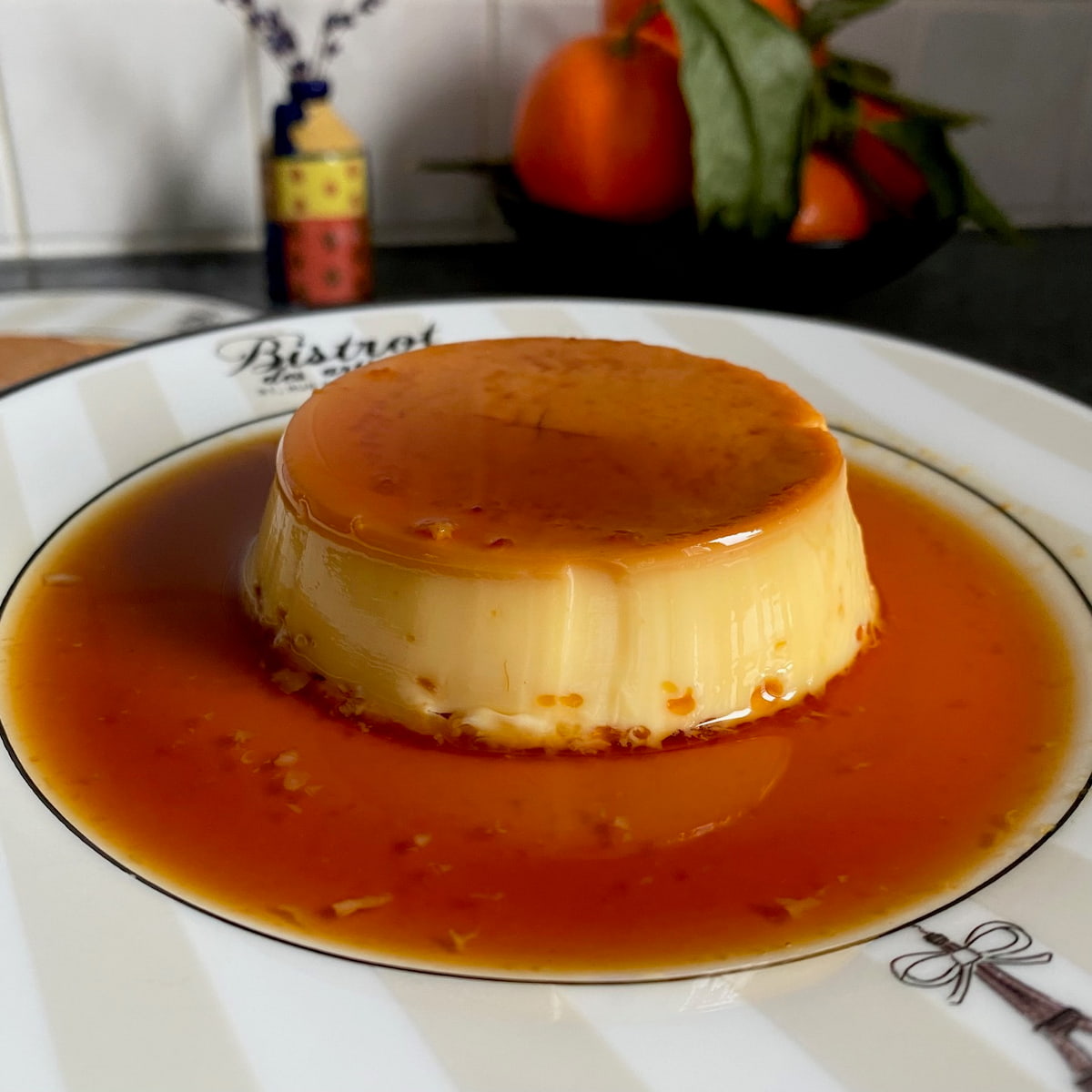
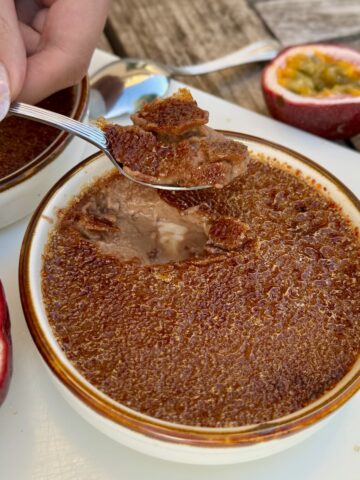
Both desserts are served chilled but prepared very differently. Whilst crème caramel has a smooth, creamy texture, it's almost gelatine-like (without using gelatine) and wobbly. It's much lighter made with full-cream milk (or a mixture of milk and some cream) and the caramel is prepared in advance.
A crème brûlée is made with cream with the caramel added at the last minute. The sugar (normally cassonade or cane sugar) is sprinkled on top just before serving then either grilled or "burned" with a blow-torch to make a crackling top. The result is not smooth like the crème caramel and, in order to get to the cream, the spoon cracks into the caramel.
For more, see my chocolate crème brûlée recipe
or my full crème brûlée video course.

How to Make a Large Version
You can make this as one large crème caramel instead of individual portions - perfect to slice at the table.
- Use a large ovenproof dish instead of ramekins
- Make the caramel and coat the base
- Prepare the custard as usual
The baking time and texture are slightly different, and should still have a gentle wobble when ready. The balance is a little more delicate in a large version, but once you know what to look for, it's surprisingly straightforward.
I go into more detail on timings, texture and 5 variations (including this larger version) in my e-book and show the full method step-by-step in my video course.
How to Serve
In France, crème caramel is usually served chilled and enjoyed on its own - but here are a few ways to dress it up.
At most, you'll find it served with fresh strawberries, raspberries, blueberries or other seasonal fruits.
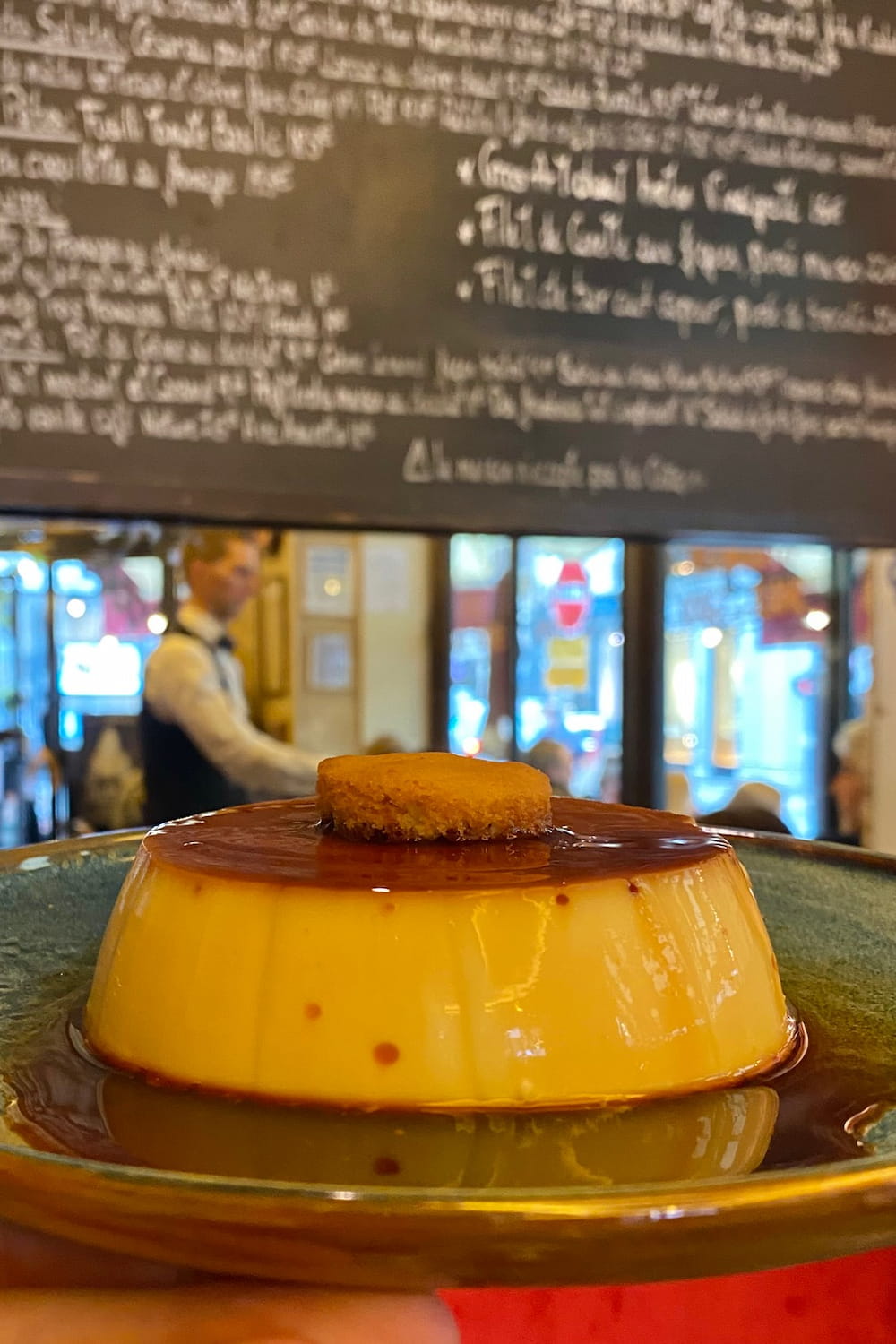
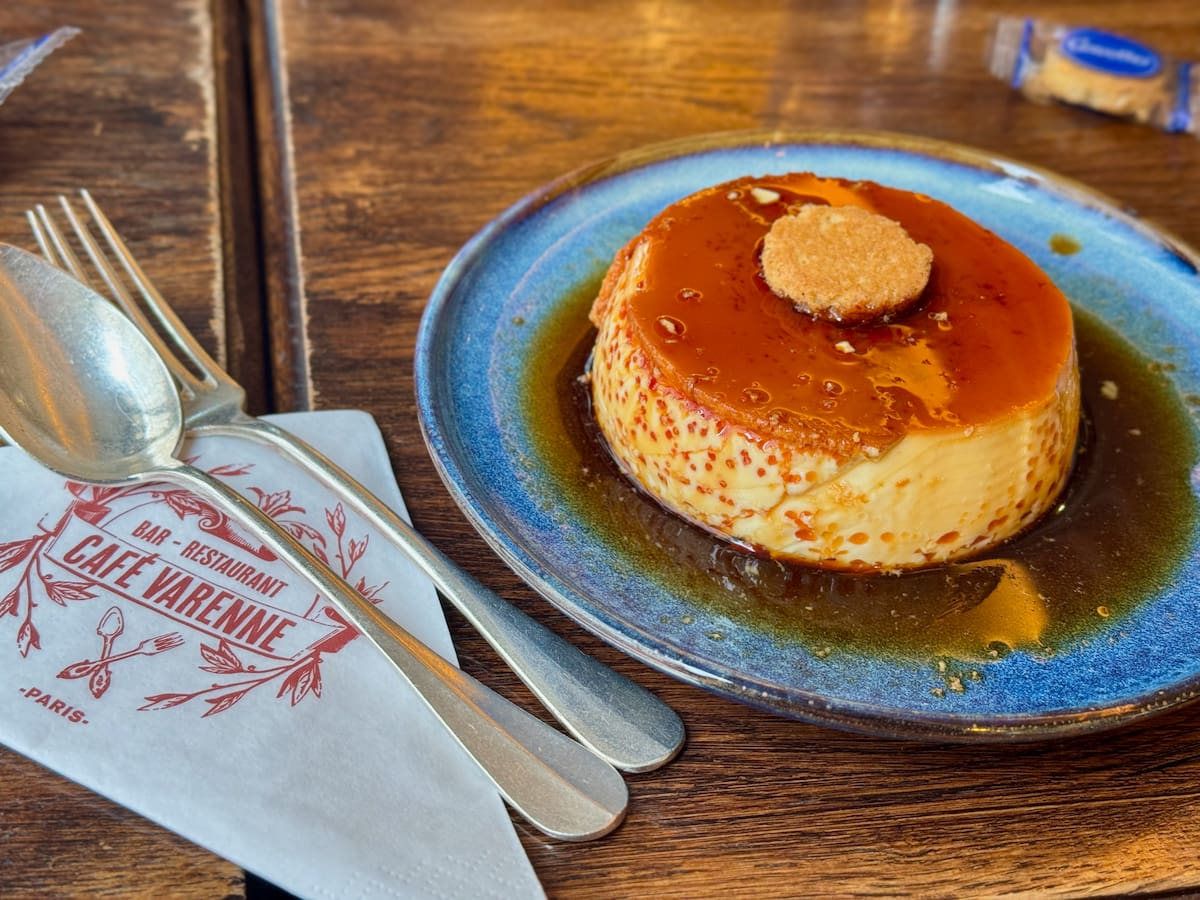
At Café Varenne in Paris (see my post on rue du Bac), they serve it with a small Palet Breton. It's a lovely contrast with the silky custard and caramel - and easy to recreate at home with my French butter cookies (Palet Bretons) recipe.
What Can I Do with the Leftover Egg Whites?
As this crème caramel recipe uses 3 egg yolks, keep aside the egg whites. They can keep easily covered in the fridge for up to 5 days and freeze well. When ready to use, make:
- French tuiles or Financiers - quick to make and delicious served with crème caramel
- Coconut macaroons (Rochers coco)
- Festive filled meringue snowballs with lemon and praline
- Vacherin French ice cream cake
- Dark Chocolate Mousse without cream
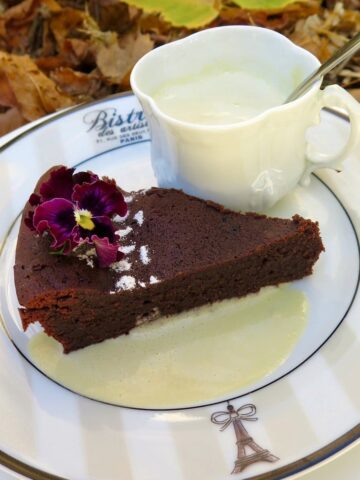
- Chocolate Almond Cake, known as la Reine de Saba
- If you'd like to use them for macarons, see my full recipe for raspberry macarons.
This French Crème Caramel recipe looks more complicated than it is - as I've included the detailed steps below so you can make it confidently from scratch.
Love caramel? Stick around (groan) and enjoy more caramel recipes:
- Tarte Tatin
- Salted Caramel Sauce (caramel au beurre salé)
- Sticky Orange Caramel Cake
- Salted Caramel Macarons
- Easy French Nougatine (great for topping desserts)
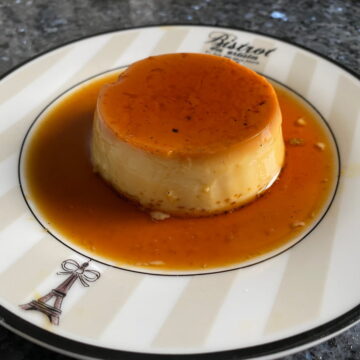
Classic French Crème Caramel

Video
Equipment
- 5-6 4oz ramekins ( 1x 15cm/6-inch ovenproof dish for a single large version)
- roasting tin or deep baking dish for the bain-marie (large enough to hold the ramekins/dish)
Ingredients
Caramel:
- 100 g (3½ oz/½ cup) granulated sugar
- 3 tablespoon water
Custard Cream:
- 500 ml (17 fl oz/2 cups) whole (full-cream) milk
- 1 vanilla pod/bean (or ½ teaspoon vanilla powder/vanilla extract)
- 2 large eggs (organic)
- 3 egg yolks (organic)
- 70 g (2½ oz/ ⅓ cup) sugar
Instructions
Make the caramel:
- Put the granulated sugar and water in a small saucepan. Shake the pan first to half dissolve the sugar in the water. Then, over a medium-high heat, leave the caramel to form without stirring. This should take about 10 minutes (don't multitask and leave the pan - keep your eye on it). It should start to smell like caramel when light brown. Swirl it around a bit and wait until the caramel is medium to dark brown (too light and it will just be too sweet; too dark, it will be bitter).
- Pour the amber caramel into 5-6 ramekin dishes (or one big dish), ensuring that it coats completely the base. Set aside to cool so that the caramel sets and immediately put the saucepan in the sink and soak in water, making it easier to clean later.
Make the custard cream:
- Preheat the oven to 170°C/340°F (150°C fan/Gas 3). Split the vanilla pod down the middle, if using. Pour the milk into a medium saucepan, adding the vanilla (or other infusions if using) and just allow the milk to heat to simmering point (not boiling). Cover and take off the heat to cool slightly and remove the vanilla pod (scraping out the seeds and adding to the milk).
- Whisk the eggs, yolks and sugar vigorously in a medium bowl until paler. Pour in the WARM vanilla milk (not hot - if hot, temper by adding a little at a time) and whisk gently just until combined. Leave to rest for a minute to let the foam subside.If needed, pass the custard through a fine sieve to remove any bits of vanilla pod or stray eggshell; if the mixture is already smooth, this isn't essential.
- Place the ramekins or large dish into a large roasting tin lined with baking paper. Pour the warm thin custard over the caramel in each ramekin, filling near to the top. Place the roasting tin in the middle of the oven and pour in warm-hot water from the kettle around the ramekins or dish so that it comes to about half or ⅔ of the way up.
- Bake for about 40 minutes or until set (they're not cooked properly if there's a dip in the middle. A knife inserted should come out clean). Remove from the oven carefully, and after 10 minutes, gradually remove the ramekins onto a cooling rack. When cool, transfer to the fridge, cover in plastic wrap or cling film and chill for at least 2 hours - ideally overnight.
Notes
Make-Ahead: crème caramels can be made 1-2 days in advance. For more detailed step-by-step guidance, troubleshooting and flavour variations, see my Master Crème Caramel e-book featuring 5 classic French custard desserts - or the video course focused entirely on mastering this recipe.
This recipe post was first published 4 May 2018 but is now completely updated.
Master French custards with confidence
Worried about bubbles, split caramel, desserts that won't set or custards that refuse to unmould?
My video course focuses entirely on mastering this recipe step-by-step. Want to go further? The Master Crème Caramel e-book shares 5 classic French custard desserts from Paris, with flavour variations, expert tips and optional videos in the Enhanced edition.
What readers are saying about Master Crème Caramel
"I had no idea how detailed and beautifully designed this book would be. The step-by-step photos and tips made it feel like a professional French dessert masterclass - but in such an approachable way."
- Christina Conte, USA


Faruk
You haven't mentioned oven temperature !!
Jill Colonna
Hi Faruk,
Perhaps you can't see it but it's clearly stated on the recipe card here and in the instructions. Happy flan making!
margaret reda
Hi Jill. There is a crucial step missing to make the custard silky smooth. Once everything is mixed, before putting it into the baking dish, the uncooked custard needs to go through a sieve. My mother was of Portuguese descent and a version of this dish was made regularly
Jill Colonna
Thank you, Margaret - and how lovely that your mother made a Portuguese version of this!
Sieving is certainly a useful way to make sure the custard is beautifully smooth. I don’t always find it necessary if the mixture is already smooth, but I do sieve it if there are little bits of vanilla pod, eggshell or any lumps. I actually show this more clearly in my crème caramel online course and cover it in the ebook too, so I’m going to clarify that point here in the recipe as well. Thank you for flagging it — and for the lovely 5 stars!
Ann Scott
Looks pretty good --- except for the bubbles in the finished custard. They mean that it was cooked at too high a temperature, so the water in the bain-Marie was too hot. When cooked at a slightly lower temperature the custard is very smooth; the bubbles indicate a grainy texture. Not my own idea; Julia Child points this out, so I'm sure other comments mentioned it.
Jill Colonna
Hi Anne, thanks for taking the time to comment. You're right that excessive bubbling can happen when a crème caramel cooks a little too long or at too high a temperature. The photo you mention is actually included intentionally in the troubleshooting section below as an example of a slightly overcooked result so readers can recognise it if it happens at home.
Although it was clear in the text, I've now added a photo caption to make it much clearer, so thanks for pointing that out. A few bubbles around the edges can still occur even in many traditional French bistros and family kitchens and don't necessarily mean the texture will be grainy. The goal is still a smooth, silky custard with a gentle wobble.
Thanks again for the helpful feedback.
Raychel Higgs
I should have watched the video first. I hadn't made caramel in ages, and I forgot that if you stir, then it turns back to granulated sugar. Anyway, it's in the oven, so I'm keeping my figures crossed.
Jill Colonna
Hi Raychel,
Yes, I show it in the accompanying video but I take it much further in my new online course how to make a large caramel cream and show making the caramel step by step in detail. I recommend this, as it's designed to help you even more - plus the e-book if you'd like to make other similar recipes. Hope this helps.
Toni
Thank you so much for this recipe! can i reduce the sugar a bit? in the custard.
Jill Colonna
Hi Toni,
I'm thrilled you love the recipe. Of course you can - that's why I wrote the complete guide to crème caramel with lower sugar in my new e-book, Master Crème Caramel. I've done all the experimenting for you 😉
Jen Dawes
Made this in a big dish. So easy and delicious.
Jill Colonna
Hi Jen,
So happy to hear you enjoyed it as a large crème caramel - if you love this, I have even more recipes and flavour variations in my brand new e-book for you!
Laura
Just made this for the first time and it was delicious. My family loved it 🙂 Thank you so much for sharing the recipe!
Jill Colonna
Fantastic, Laura! It's a real pleasure. Great to hear your family loved it, even making a caramel cream for the first time! Have a delicious new year and hope you try the next stage - the extra large version... Jill x
Rhea
If making a larger version, do you still need to place the baking dish into a roasting pan with water? Thanks!
Jill Colonna
Hi Rhea,
You do indeed - and it's all explained in the extra large crème caramel recipe in my new e-book here, with complete step-by-step details and more tips.
Jill x