

Learn to make our favourite classic French madeleines with lemon - golden, shell-shaped little cakes with their signature hump. This lemon madeleines recipe adds a subtle touch of honey with less sugar. Forget heavy butter cakes: these are light, delicate, and perfect for your next thé à la française.
I don't know why I haven't tried making madeleines before - perhaps as I thought their bump was difficult to do. Love this recipe Jill - thank you for sharing from your book. The lemon is beautiful. - Betty

What are Madeleines?
Madeleines are small, traditional shell-shaped French sponge cakes - not cookies - traditionally from Commercy, a little town in Lorraine in northeastern France. They're famous for their plump "bump" that forms on top during baking, giving them their instantly recognisable shape.
While some confuse them with cookies, they're more mini cakes - lighter than pound cake, yet more buttery than biscuits. If you're wondering about buying a special Madeleine tin - yes, it's necessary - just like the traditional tins for financiers.
Why Do Madeleines Have a Hump?
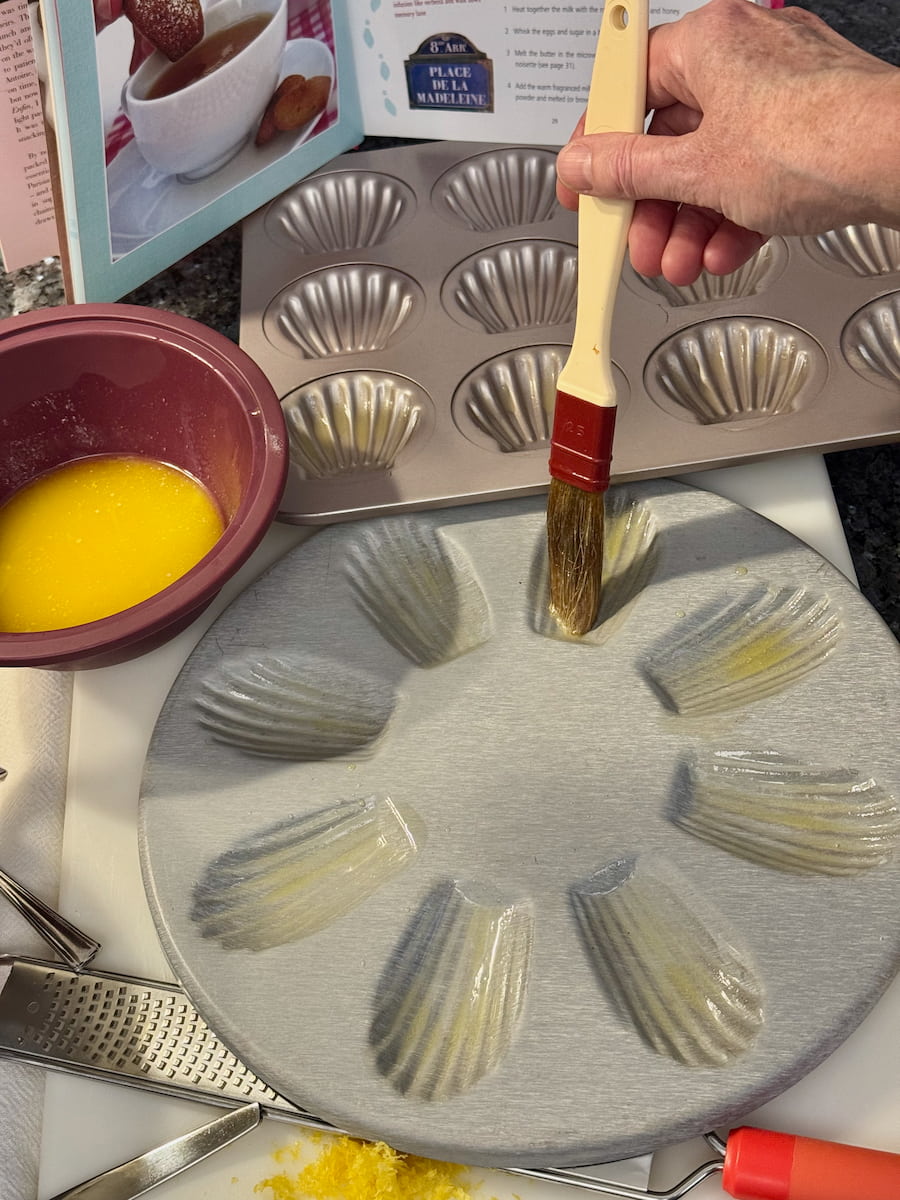
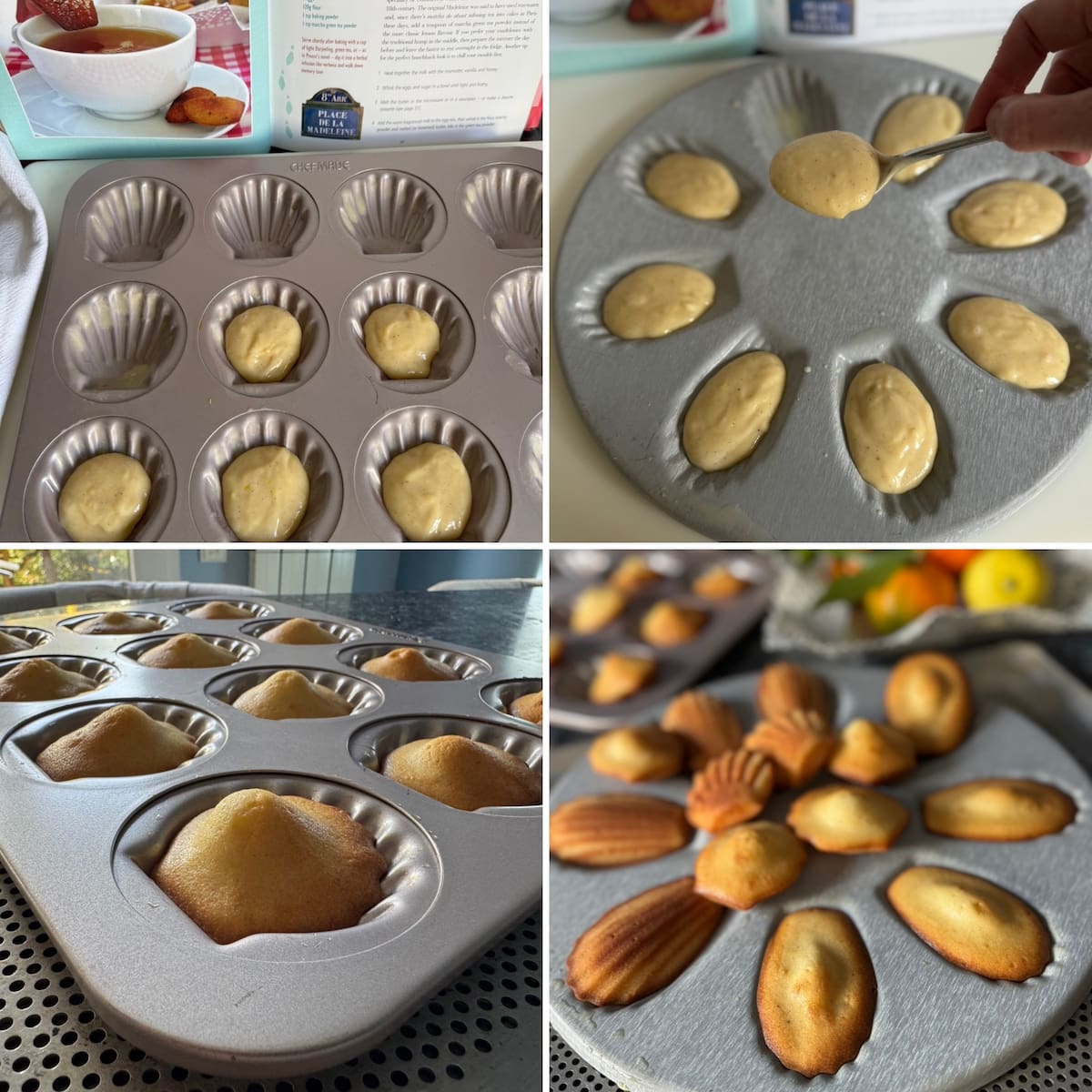
That signature madeleine hump isn't magic; it's science! By chilling both the batter and the scalloped tin before baking, you create a quick temperature shock once they hit the hot oven. This makes the centre rise while the edges stay delicately crisp.
My top tip to get that madeleine cake bump? Chill the the batter and tin in the fridge for 2 hours, or even overnight for the best "humpback" effect.

Why this is our Best Madeleine Recipe
Unlike many traditional versions, this recipe uses less sugar and a spoonful of honey (I love using acacia or lavender honey). The honey keeps the texture soft and adds a subtle floral sweetness - without being cloying. As I mention for these healthy honey flapjacks, while refined sugar is rated 100 on the sweetness scale, honey is at 130 - which means we can use less and still achieve natural sweetness.
The madeleine's batter comes together in minutes - no stand mixer needed - and you can infuse it with different flavours:
- Classic lemon (as below) or replace with the zest of an orange or clementine.
- Rosewater, as in the original French madeleine
- Or even matcha, from my cookbook recipe in Teatime in Paris.
Fun fact: The earliest madeleine recipes were flavoured with rosewater.
Are Madeleines French or Italian?
Madeleines are proudly French, immortalised by writer Marcel Proust in À la recherche du temps perdu (In Search of Lost Time).
His nostalgic description of dunking a madeleine into tea turned this humble teacake into a symbol of comfort, memory, and elegance.
It's also the signature cake for a French afternoon tea at the Ritz, as it's in Proust's favourite tea salon next to the chimney in Paris's Place Vendôme.
What is a "Madeleine de Proust"?
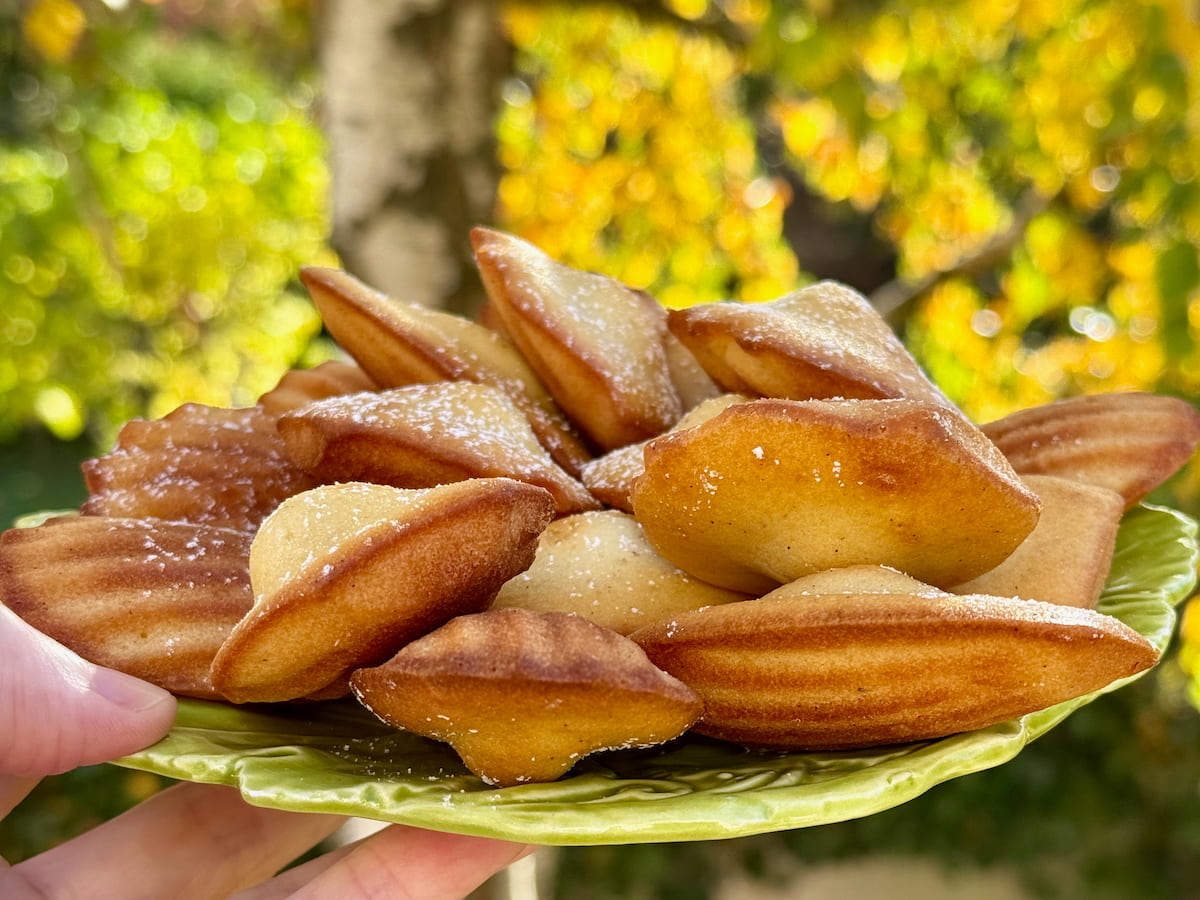
In France, a "madeleine de Proust" has become an everyday expression for anything - usually a taste or a smell - that suddenly brings back a vivid childhood memory.
It comes from the most famous passage in Proust's above novel, where the narrator dips a small shell-shaped cake (a madeleine) into his tea. With the first bite, he's instantly transported back to Sundays at his aunt's house in Combray, and a flood of warm memories returns.
So when French people talk about leur madeleine de Proust, they don't just mean the cake. They mean that comforting flavour that takes you straight back to a happy moment in the past, just as these little lemon madeleines might do for you.
And here's a personal twist: my French mother-in-law's name is Madeleine - and funnily enough, she gave me her traditional metal madeleine tin, the one you'll see in my photos below.
How Do You Eat Madeleines?
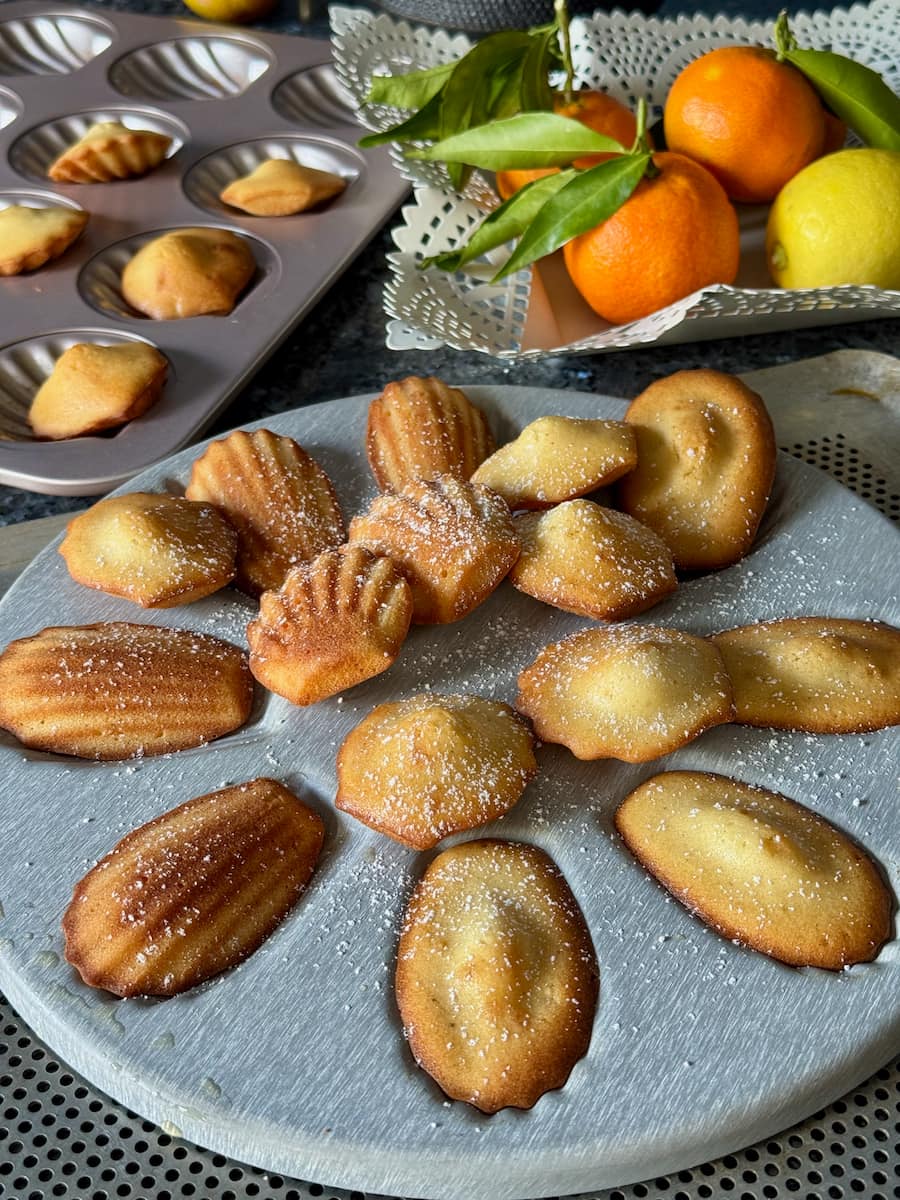
French people typically enjoy classic madeleines at breakfast or at teatime (le goûter). They're best eaten slightly warm, ideally within a few hours of baking, when the edges are crisp and the centre soft. Serve them:
- Plain, with a cup of Darjeeling or green tea. Many French people dunk them into café au lait - just like Proust did. And (personal note) they're served in hospitals after surgery or on the TGV trains, in individual packs with that hump to go with your tea.
- Filled with lemon curd or dipped in white chocolate with lemon (as in the recent Bake-Off final!) or fill with this deliciously homemade orange curd.
- Or stacked in a tower for a showstopping dessert table. Coming soon.
Lemon Madeleine Ingredients
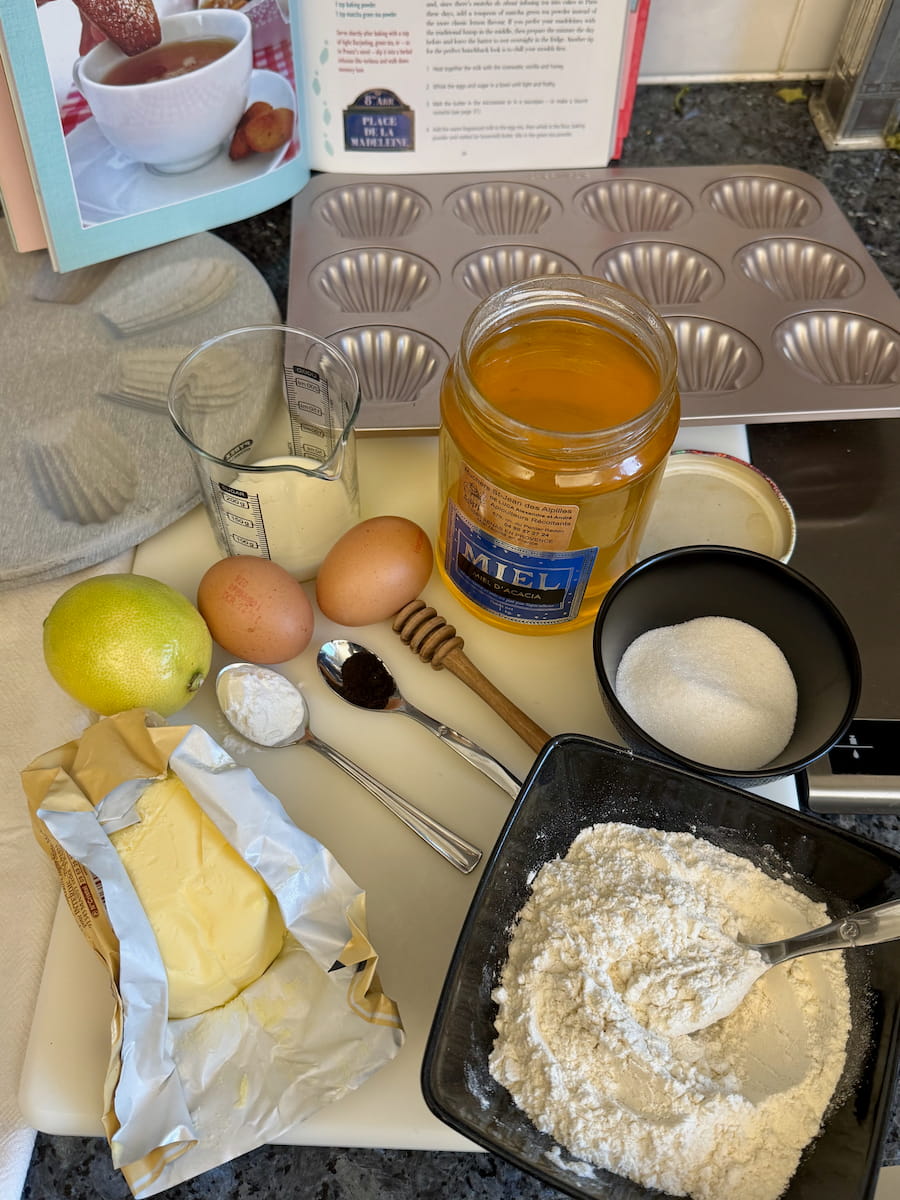
These classic ingredients to make madeleines are usually found in the pantry. (Full ingredient list in the recipe card below)
- Organic eggs: room temperature eggs are preferable, but not strictly necessary.
- A touch of runny honey for softness.
- Butter, plain flour, baking powder, and vanilla powder (for these vanilla flecks) or vanilla extract for the classic genoise sponge base. Small amount of whole milk.
- I use less sugar than the classic recipe - which brings out the subtle lemon flavour.
- Lemon zest: choose unwaxed and zest them finely.
Tips to Make Perfect French Madeleines
- Use metal scalloped tins if you like the slightly crispy edges. (I like these Madeleine pans.) Otherwise use silicone - they don't brown them as much.
- Chill both batter and buttered moulds to get the perfect hump.
- Avoid overbaking - 10-12 minutes bake time at 200°C/400°F is just right.
- Use good-quality lemons - unwaxed and organic for the finely grated zest.
- Butter the madeleine tins well. Avoid cooking spray - it's actually bad for you.
- For a floral twist, replace lemon with rosewater (1 teaspoon max).
Where to Find the Best Madeleines in Paris
- Le Comptoir du Ritz, THE place where Marcel Proust loved his teatime with the French Madeleine, dunking them in tea at the famous Palace in Place Vendôme. For more, see my article on French Afternoon Tea at the Ritz Paris. They now have 2 boutiques in the city where you can enjoy them in a huge range of flavours.
- Mado à Paris, opposite the Tuileries Gardens with modern takes on the classic.
- Stohrer, Rue Montorgueil - the city's oldest pâtisserie.
- Pâtisserie Gilles Marchal in Montmartre makes a delicious lemon version and more.
More French Delights for Teatime
For more teacakes à la française, enjoy these easy French recipes for teatime:
- Friands or Financiers - these small butter cakes are richer than madeleines with even more butter and made with almonds.
- French Butter Cookies - Palets Bretons are the thick salted butter biscuits from Brittany and absolutely irresistible.
- Rochers Coco, also known as coconut macaroons (without condensed milk).
- Cannelés - the crispy yet spongy vanilla and rum cakes from Bordeaux - try them.

Lemon Madeleines with Honey

Equipment
- scalloped madeleine tins (either metallic non-stick or regular)
Ingredients
- 2 eggs organic
- 60 g (2½oz/ ⅓ cup) sugar
- 30 ml (2 tbsp) whole milk
- ½ teaspoon vanilla powder or vanilla extract
- 1½ tablespoon honey runny (e.g. Acacia)
- 150 g (5½oz/ 1¼ cups) plain flour all-purpose
- 1 teaspoon baking powder
- pinch salt (fleur de sel)
- 100 g (3½ oz/7 tbsp) unsalted butter melted
- 1 lemon, zest only organic/unwaxed
Instructions
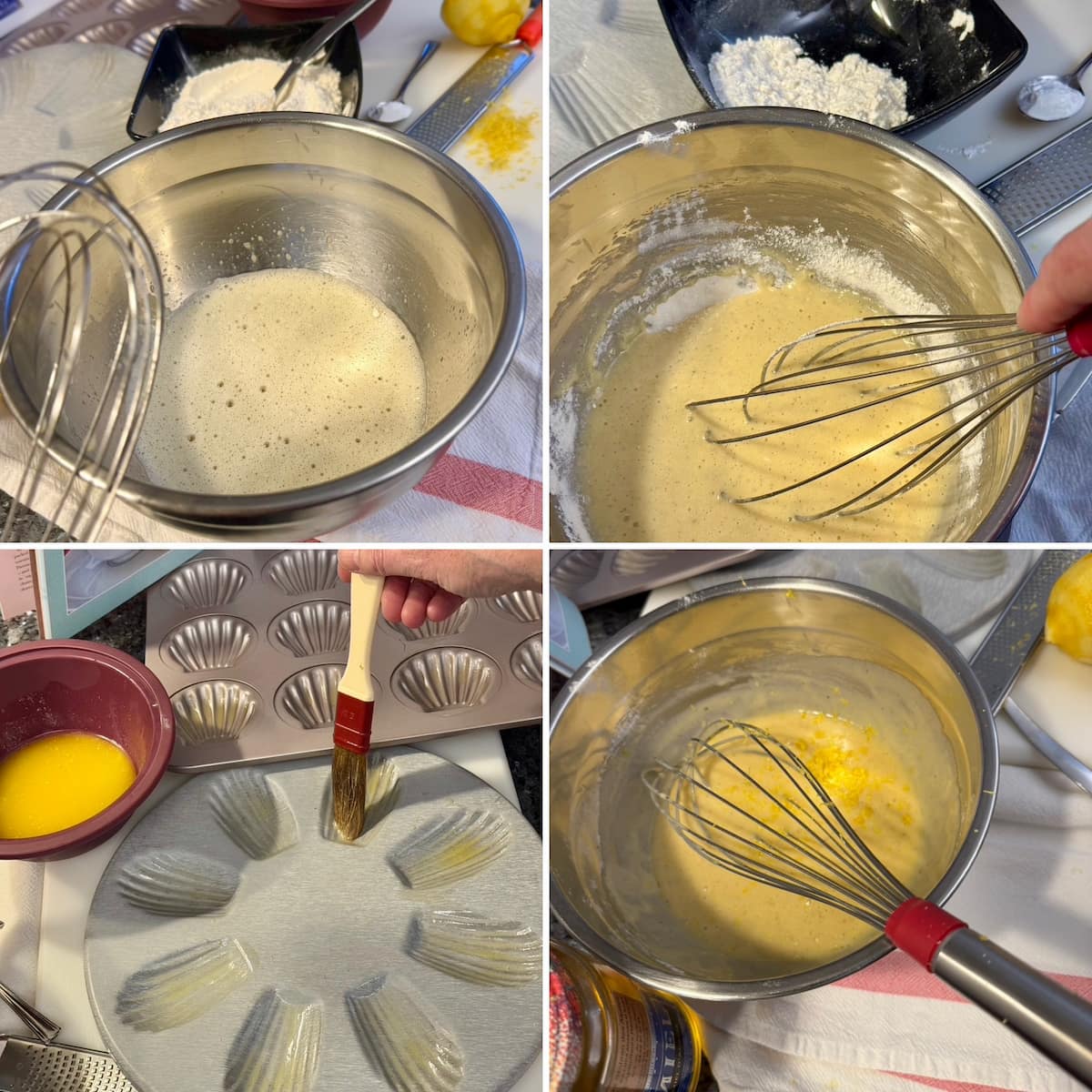
- Whisk the eggs and sugar in a large bowl until light and frothy - either by hand or using a stand mixer. Whisk in the milk, vanilla and honey then gradually mix in the flour, baking powder and salt until the batter is smooth.
- Melt the butter (either in the microwave for 40 seconds or in a saucepan) and brush the scalloped Madeleine moulds with melted butter (even if using a non-stick pan). Whisk the rest of the melted butter into the flour mixture with the fresh lemon zest.
- Leave the madeleine batter covered in the fridge to chill for at least 2 hours or overnight. Also chill the buttered moulds in the fridge.
- Preheat the oven to 200°C/400°F (180°C fan/Gas 6) and heat the baking tray.
- Spoon the chilled batter into the chilled, prepared madeleine tin (or use a piping bag).
- Place the tin on the hot baking tray and bake for 10-12 minutes or until golden. Remove from the tin and cool on a wire rack for 5 minutes.
Notes
- Orange: replace the lemon with the zest of one fresh orange or clementine (again, organic). Fill inside with this homemade orange curd.
- Rose: Replace lemon zest or simply add 1 teaspoon rosewater.
- Chocolate: Substitute 20g all-purpose flour with unsweetened cocoa powder.


Betty
I don’t know why I haven’t tried making madeleines before - perhaps as I thought their bump was difficult to do. Love this recipe Jill - thank you for sharing from your book. The lemon is beautiful.
Jill Colonna
It's a great pleasure, Betty. And even more thrilled you made these lemon madeleines as well as soup (just seen your other review, thank you!) Agreed - to make the madeleine bump is easier than it looks! Happy holiday baking x
David Scott Allen
I can’t wait to try your madeleine recipe, Jill. I have always used Julia Child’s recipe and the thing I like best about it is her pan prep, as I don’t have nonstick tins. I know I will be trying these soon. Thanks!
Jill Colonna
I don't know her recipe, David, but can imagine it's good! As for the pans, many people flour the tins too but I just butter them well - either non-stick or regular. Hope you like this version. J x