

How to make the lightest, fluffy cheese scones, with my best ever tricks in making your scones rise. Easy recipe using plain flour with suggested best cheeses and how to serve them. Also on video.
Best scones ever! I've always made dry or crumbly scones boooo so a very huge THANK YOU for sharing your awesome recipe, and the tips were so helpful. - Emma

Quick and Easy Cheese Scone Recipe
There's something incredibly comforting about serving warm, light and fluffy cheese scones with melted butter and a pot of tea. It's Oh-so-British!
As my girls were growing up as both French and British living in France, their British part has them often crave the best ever cheese scones. They simply associate them with their nostalgic family trips to Scotland; it's their Madeleine de Proust, so to speak. However, in France, they are not made in Parisian bakeries. What? Quoi?
So we make them at home - especially as they're so quick and easy to rustle up a batch - and they're perfect for baking with kids in the kitchen.
See more of my Scottish recipes,
including this gluten-free shortbread.

Best Flour to Use for Scones
It's best to use plain all-purpose flour for this recipe, so you can control how much baking powder goes in. This savoury scone recipe also includes an egg.
What makes a good cheese scone? It's light, high and fluffy. I started off many years ago using the classic bero cheese scones recipe in the Be-Ro Flour Cookbook. Over the years I have slightly tweaked it with all my tips included, simply to ensure they have a lovely height.

How to Make Cheese Scones Rise & Fluff
These are my top 3 tricks to making the best, high rise fluffy scones:
- Don't be shy on the baking powder. I use a sachet of French levure chimique (11g which is no more than a level tablespoon). If using self-raising flour, use just a teaspoon
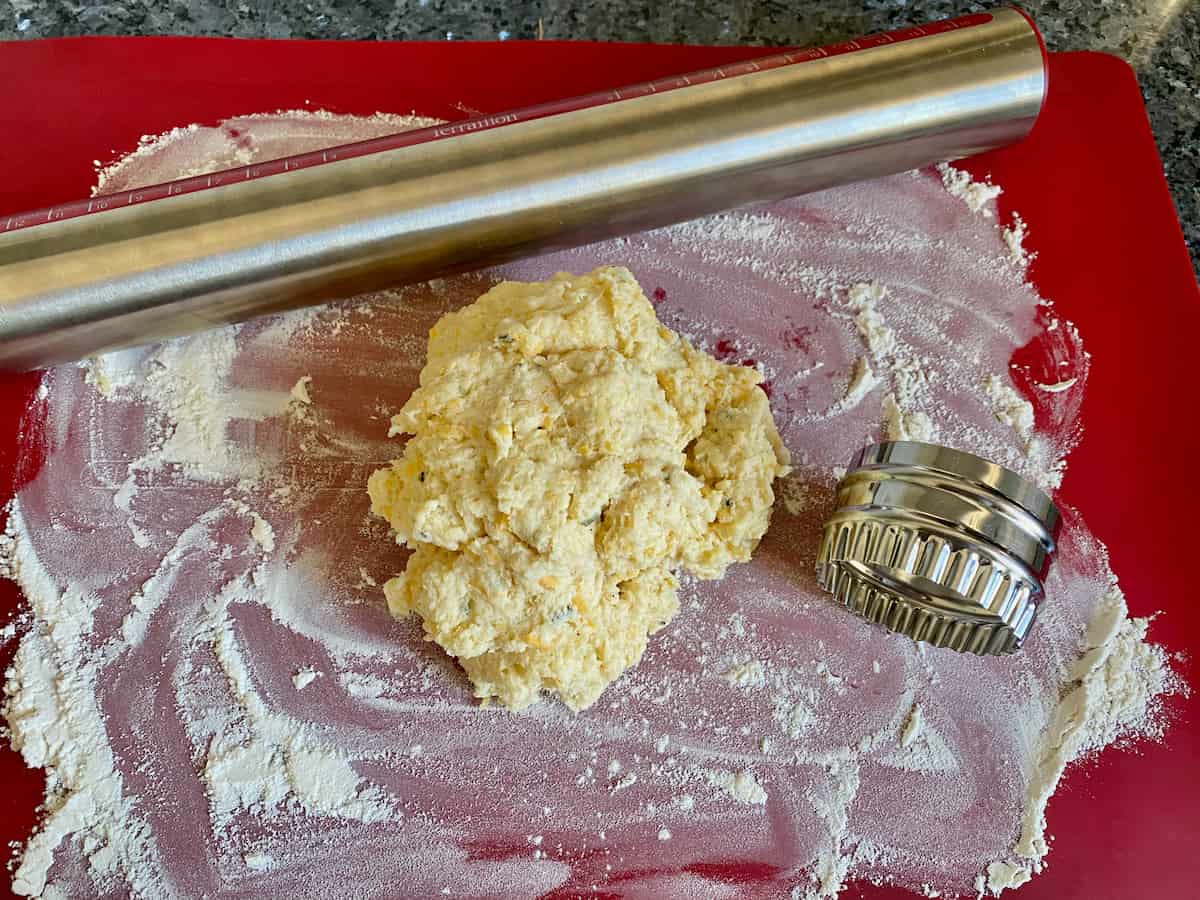
- Scone dough should be wet. It's messy but I assure you, it works. Too dry makes them crumbly
- Don't work the dough too much - including not rolling it out too flat. Keep it quite thick, cutting them with a scone or pastry cutter (such as these wave scone cutters).
What Kind of Cheese is Best for Cheese Scones?
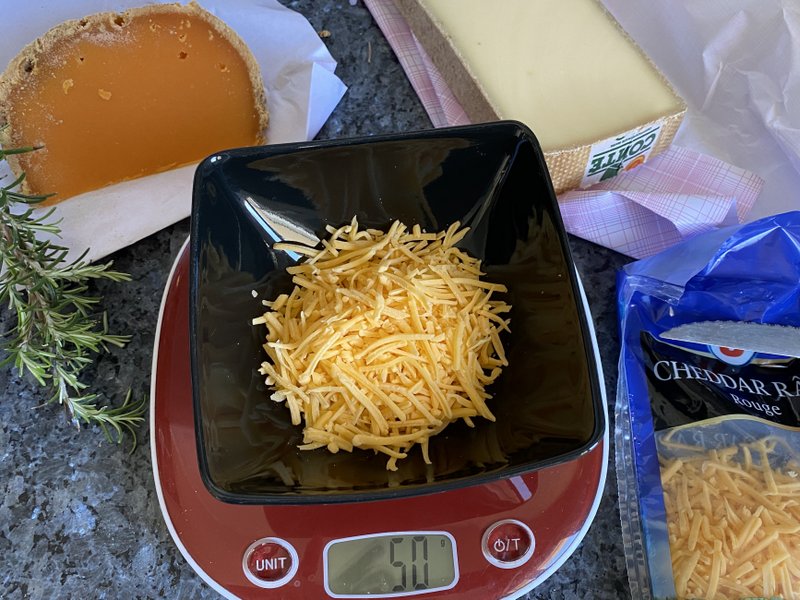
For cheese scones, the best ever are cheddar cheese scones. Use a good mature or sharp cheddar (orange will give it a lovely colour but it's not necessary) as the flavour shines through. Better still, buy a block of good quality and grate your own with a box grater or attachment.
Otherwise good cheeses for savoury scones is a mixture of cheddar and other aged ones. Grate half of aged parmesan or an extra msharp gouda or mimolette with cheddar to add extra punch. The more mature the better!
As we don't have the easiest access to the best mature cheddar in France, I use a half and half mix of mature cheddar (the best I can find) with good French Comté cheese (preference 12-18 months mature). I guess that gives these a Scottish-French Auld Alliance!
Variations - Extra Ingredients
It's easy to customise your own cheese scones. While this recipe contains fresh herbs, it's easy to replace the flavours or use the following add-ins with a tablespoon of these extra ingredients. See the recipe card below for quantities:
- Thinly sliced spring onion
- Fresh chives, dill or parsley
- Chopped bacon or ham
- Broken walnuts
- Sun-dried tomatoes (drained).
Likewise, add a good pinch of spice with cayenne pepper, a tsp mustard powder or smoked paprika. However, I strongly advise against using garlic powder - the flavour is nothing like real garlic and it leaves a strange aftertaste.
Fluffy Cheese Scones - Egg Wash with Milk
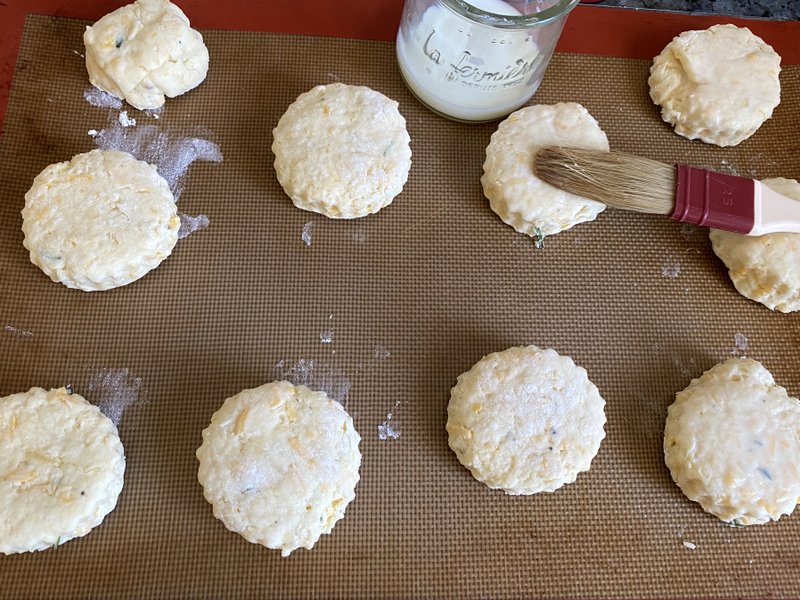
For a royal scone look, brush the tops of the scones with a milk and egg yolk wash. A wash is simply to give them a glazed, shiny appearance once baked.
If you don't have any extra eggs to hand, however, you can brush the tops of the scones with milk only (alas, for the pictures here, we ran out of eggs as they were rationing them at the market at the start of the pandemic).
Topping Ideas
Before they go in the oven, top the scones with more grated cheese and/or a sprinkling of poppy seeds and sesame seeds.
The result? The cheese scones have a lovely, finished shine that gives that slight crunch to the outside. Split open warm, they're soft, light and fluffy inside - ready to spread with quickly melting butter!
Can I Freeze Scones?
The bonus is that cheddar scones freeze very well. When cool, store in a ziplock bag or sealed airtight container. Freeze up to 6 weeks to conserve their best cheesy flavour.
Either defrost thoroughly or remove 15 minutes before heating in a warm oven for about 15 minutes.

What To Serve With Cheese Scones
Cheese scones are best split in half while warm. Just spread on a little salted butter and watch it melt. So what do you eat with them? They're delicious as part of a classic British style teatime served with finger sandwiches - ideally eaten before the sweet cakes.
Savoury scones are also a real winter treat served as a light lunch with comforting bowls of soup. Here are some accompanying ideas that go well with cheese:
- French pea soup (potage Saint-Germain) - either with fresh, frozen or split peas
- Fresh Vegetable Soup - no stock needed, just the freshest seasonal veggies
- Roasted Tomato and Garlic Soup
- Pastina Italian Soup
- Crème du Barry Cauliflower Soup (can be made without the yolks and replace cauliflower with any fresh or frozen vegetable you have at hand.)
- Broccoli cheese soup
- Top with cheese spread (Cervelle de Canut), a fluffy herby dish from Lyon
- Smoked Garlic and Rocket (arugula)
- Sweetcorn and Red Pepper Chowder
- Leek and Potato Soup (Potage Bonne Femme)
Having never gotten on with buttermilk scone recipes, I tried this recipe and it is AMAZING, scones come out perfect every single time. I've made them about 5 times in a fortnight. Can't recommend enough 12/10 thank you! - Leanne
Need more cheesy recipes?
Enjoy cheese waffles, high-protein cottage cheese waffles,
broccoli cheese soup, parmesan crisps, and potato gratin Savoyard.

Fluffy Cheese Scones

Equipment
- cookie or scone cutters 6cm/2½ inch (plain or wave)
Ingredients
- 250 g (9oz/ 2 cups) Plain (all-purpose) flour T55
- 11 g (1 tablespoon scant) Baking powder (use only 1 teaspoon if using self-raising flour)
- 1 teaspoon Bicarbonate of soda (baking soda)
- pinch salt & black pepper
- 50 g (2oz/ ¼ cup) Unsalted butter, unsalted (at room temperature, in cubes)
- 100 g (3½oz/ 1 cup) Cheese, finely grated (Cheddar, French Comté, Mimolette)*
- 1 tablespoon Rosemary, finely chopped (or fresh chives, thyme, dried Herbes de Provence)
- 1 large egg (@60g) organic, free-range
- 100 ml (3½fl oz/ ½ cup) Milk (whole or semi-skimmed)
Scone Glaze or Wash
- 1 egg yolk (optional)
- 1 tablespoon milk
- 1 teaspoon sesame or poppy seeds (optional)
Instructions
- Heat oven to 220°C/425°F (200°C fan/Gas 7). Line a baking tray with parchment paper or a silicone mat.
- Mix together the flour, baking powder/soda, salt, pepper, and rosemary (or other herbs) in a large bowl. Either rub in cold butter using your fingertips but if you have a mixer, this is even better (butter at room temp). Mix just until the butter looks like breadcrumbs in the flour then add the cheese. Add the egg and milk and mix until fully combined, pushing down with a silicone spatula if the dough sticks to the side of the bowl. The result should be a sticky, wet dough. If you find it's too dry, add a little bit more milk.
- Roll out on a lightly floured surface to about 2 cm thick (nearly an inch). Don't press on the dough too hard - keep them high. Using a scone/cookie cutter (6cm/2.5"), cut out medium-sized rounds. Alternatively, to save time or if you don't have cutters, roll into a circle (use a plate as a guide) and cut into triangles with a sharp knife.
- Place on the baking tray and brush with the egg wash - mixture of egg yolk and a little milk to glaze (yolk is optional but recommended for an extra shiny glaze).
- Bake for 10-15 minutes until golden brown and leave to cool slightly on a wire rack.


