

French Crêpes (French Pancakes) are thin, delicate pancakes made with flour, milk, eggs and butter. This is our best family French crêpe recipe - the one we've used for years, where even the first crêpe works.
No resting time, no lumps, just classic sweet crêpes for breakfast, teatime or dessert.
I have been making these crepes forever. Jill's crepes are not only easy to make but versatile. I always make a dozen and freeze them for later. I fill them with fruit or make simple meals with them. Thank you Jill for your wonderful crepes. - Michele
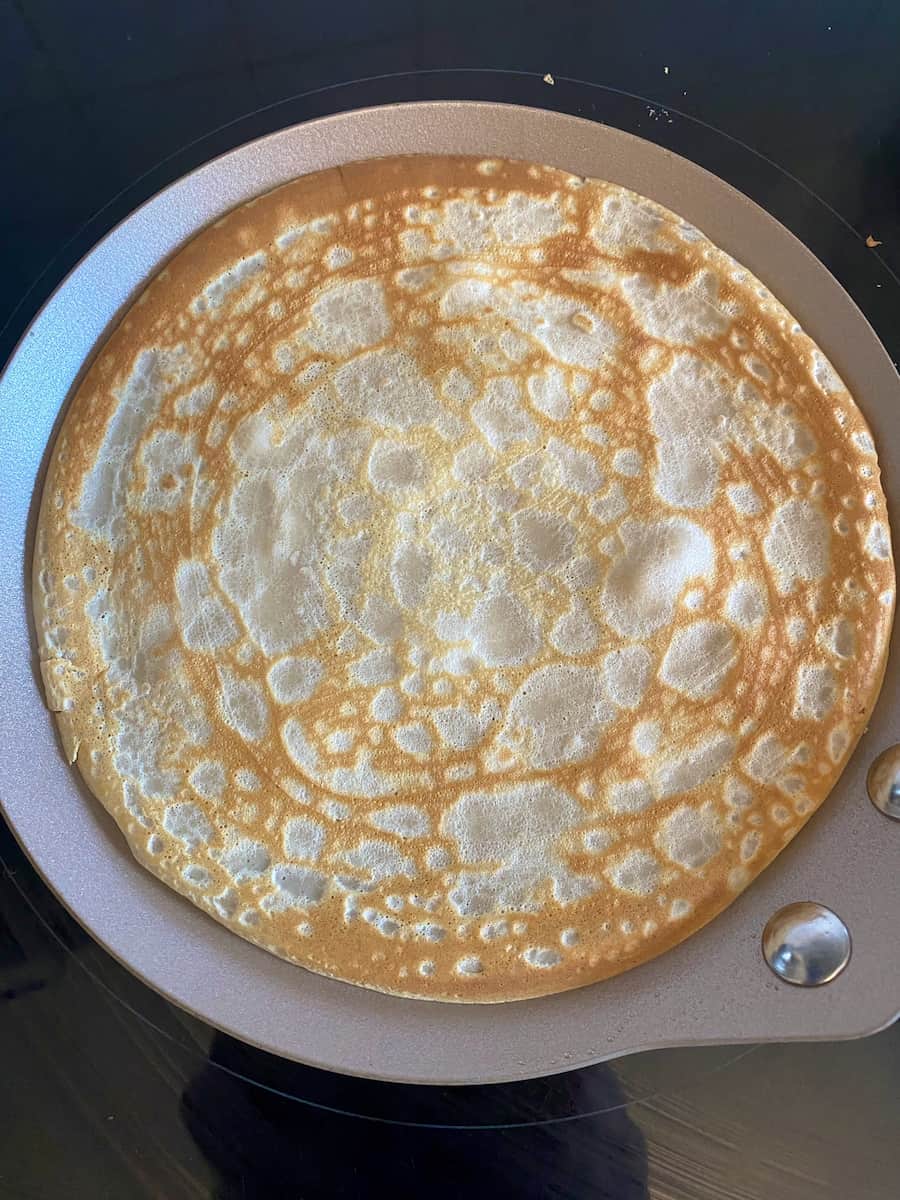
Are French Pancakes the Same as Crêpes?
Crêpes are French pancakes, but they're very different from the American-style fluffy pancakes made with baking powder served with maple syrup. French crêpes don't rise; instead, they cook into thin, delicate layers that stay soft and pliable.
There are two types of French pancakes:
- sweet crêpes (this recipe)
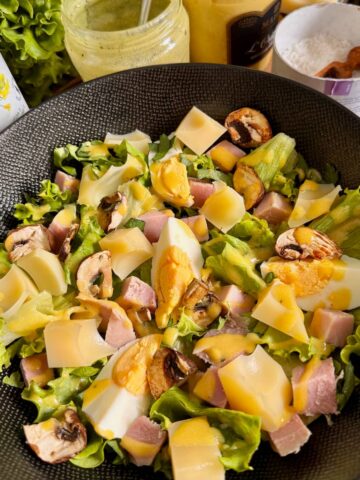
- savoury galettes, traditionally made with buckwheat flour (sarrasin or blé noir, gluten-free), served with butter - or a classic ham, cheese and egg (la complète).
In short, French crêpes are thin, slightly sweet pancakes, rolled or folded rather than stacked.
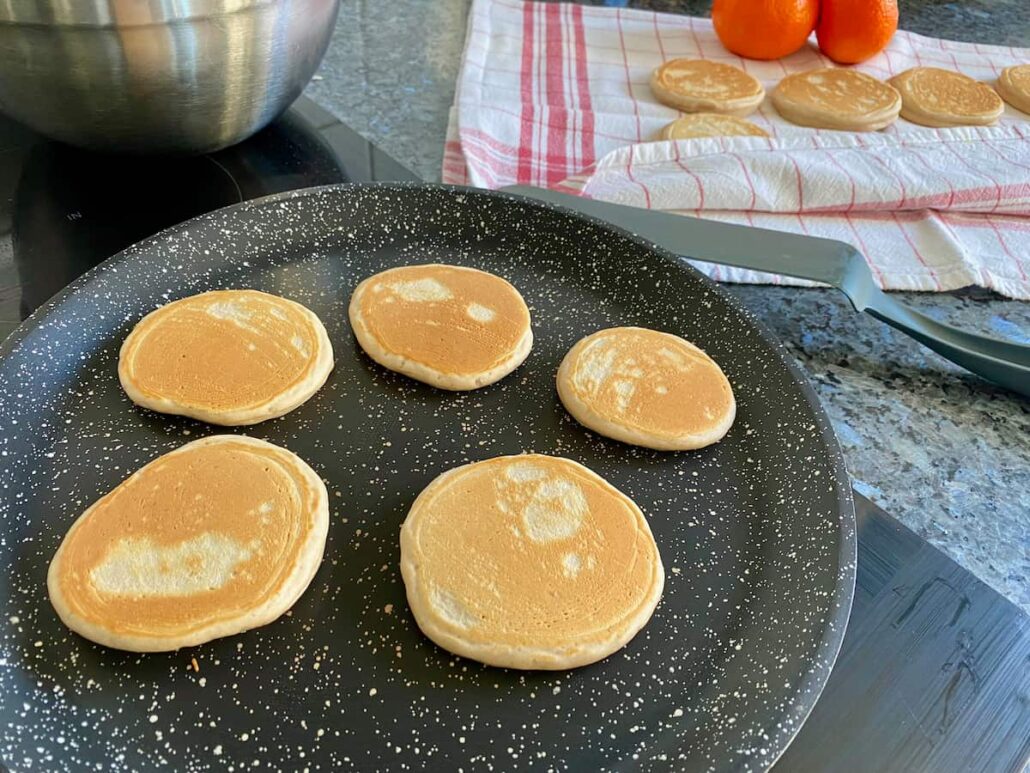
If you prefer thicker pancakes, try Scotch Pancakes (drop scones) instead. I add optional chestnut flour - a small Scottish-Corsican nod for my husband, who's mad about chestnuts (châtaignes). Unlike thin French crêpes, these are spread with both butter and jam.
What are French Crêpes Made Of?
Sweet French crêpes use just four simple ingredients: milk, flour, eggs and butter. A little sugar and a pinch of salt enhance the flavour - nothing more.
There's no baking powder and no need for resting time. Occasionally, I add orange or lemon zest, but the toppings or fillings usually do all the talking for flavour.
French Pancake Recipe: How to Avoid Lumps in the Batter
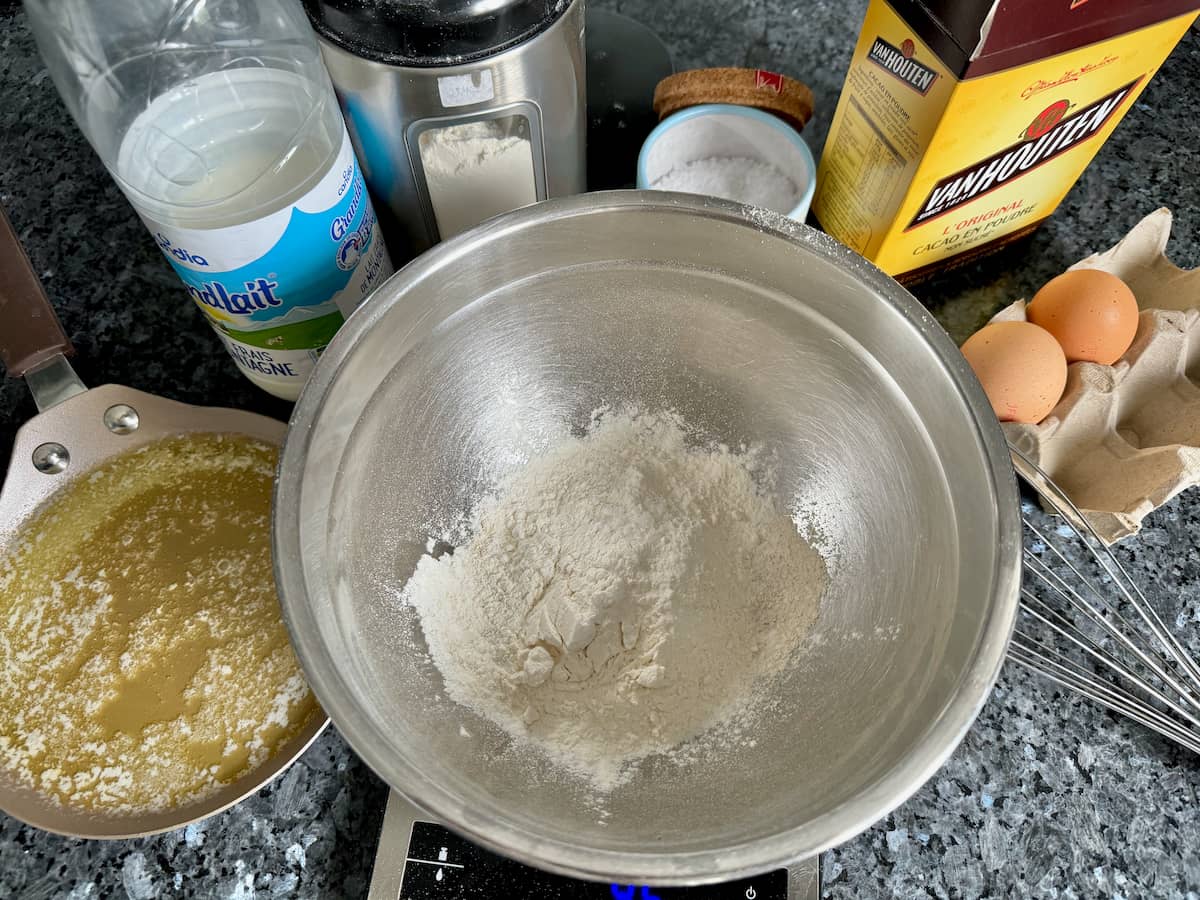
This classic French crêpe recipe relies on method, not gadgets. With just butter, flour, eggs and milk, it's quick - but the mixing order matters.
The secret to a smooth, lump-free batter:
- Start with flour, icing sugar and salt
- Make a well and add the eggs
- Whisk in only a quarter of the milk first to form a thick paste
- Gradually add the remaining milk, then the melted butter (and zest, if using)

This method traps air naturally, so there's no need to rest the batter. It will look runny - that's exactly what you want for thin French crêpes.
Follow the recipe card below for pan heat and flipping.
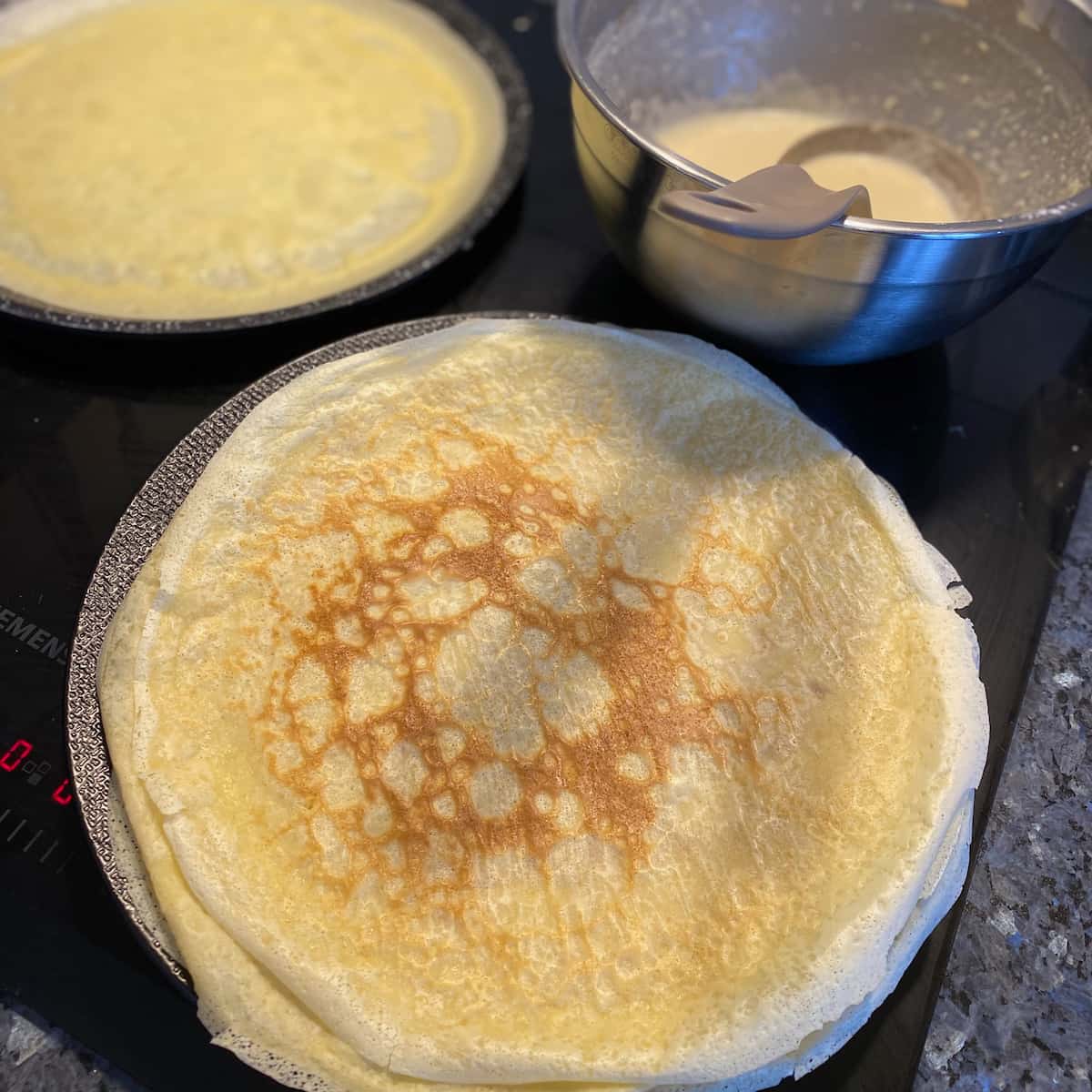
What are the Main Pancake Traditions in France?
In France, crêpes aren't just for Mardi Gras (Shrove Tuesday or Fat Tuesday). They're also traditionally flipped on La Chandeleur (2 February), or Candlemass, marking the return to longer days. It was traditionally the first day back to work in the fields after a harsh winter.
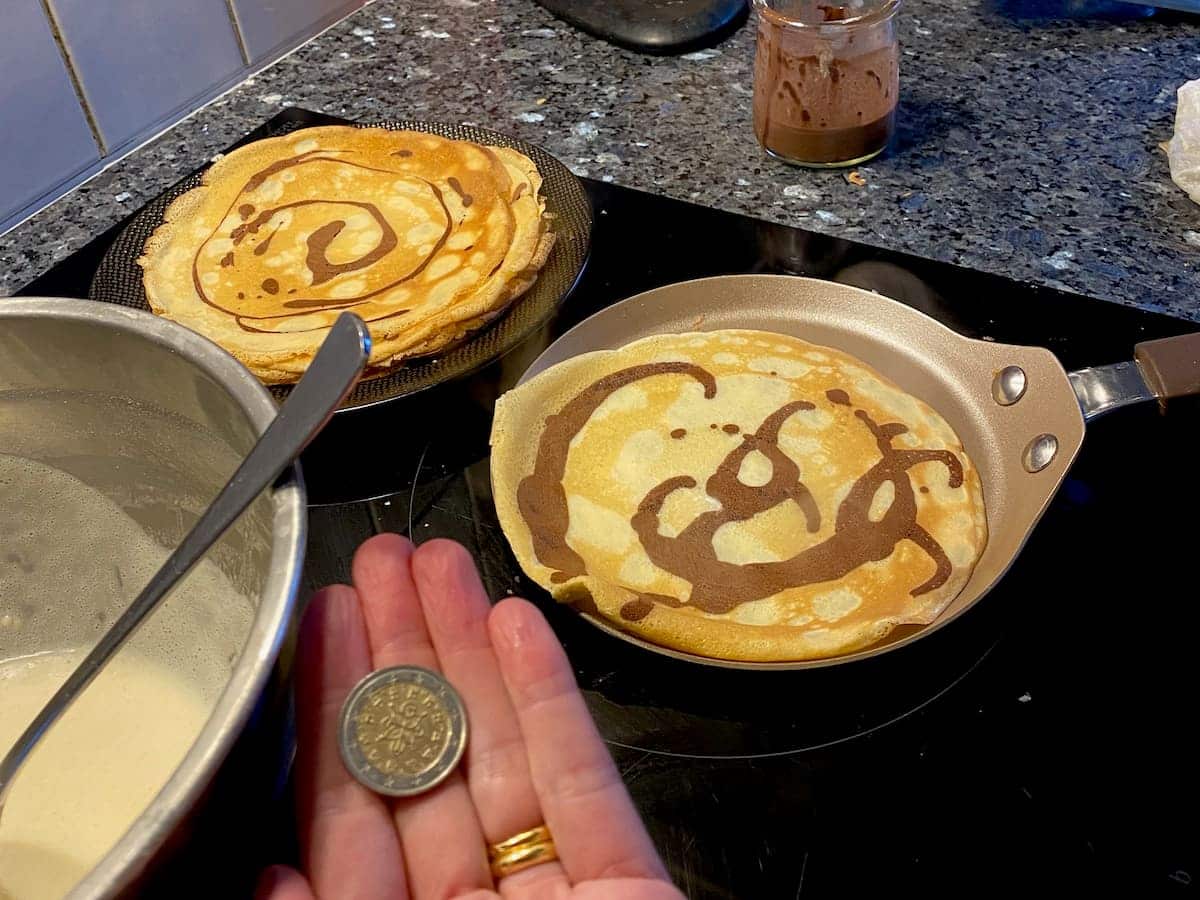
Tradition since the 14th century says that catching the crêpe while holding a coin ensures prosperity (according to Larousse Gastronomique, cited in Le Menagier de Paris, 1393). Another one is that the first crêpe was kept in a drawer (this always reminds me of porridge traditions in Scotland.)
That said, we eat French crêpes all year round - no waiting required.
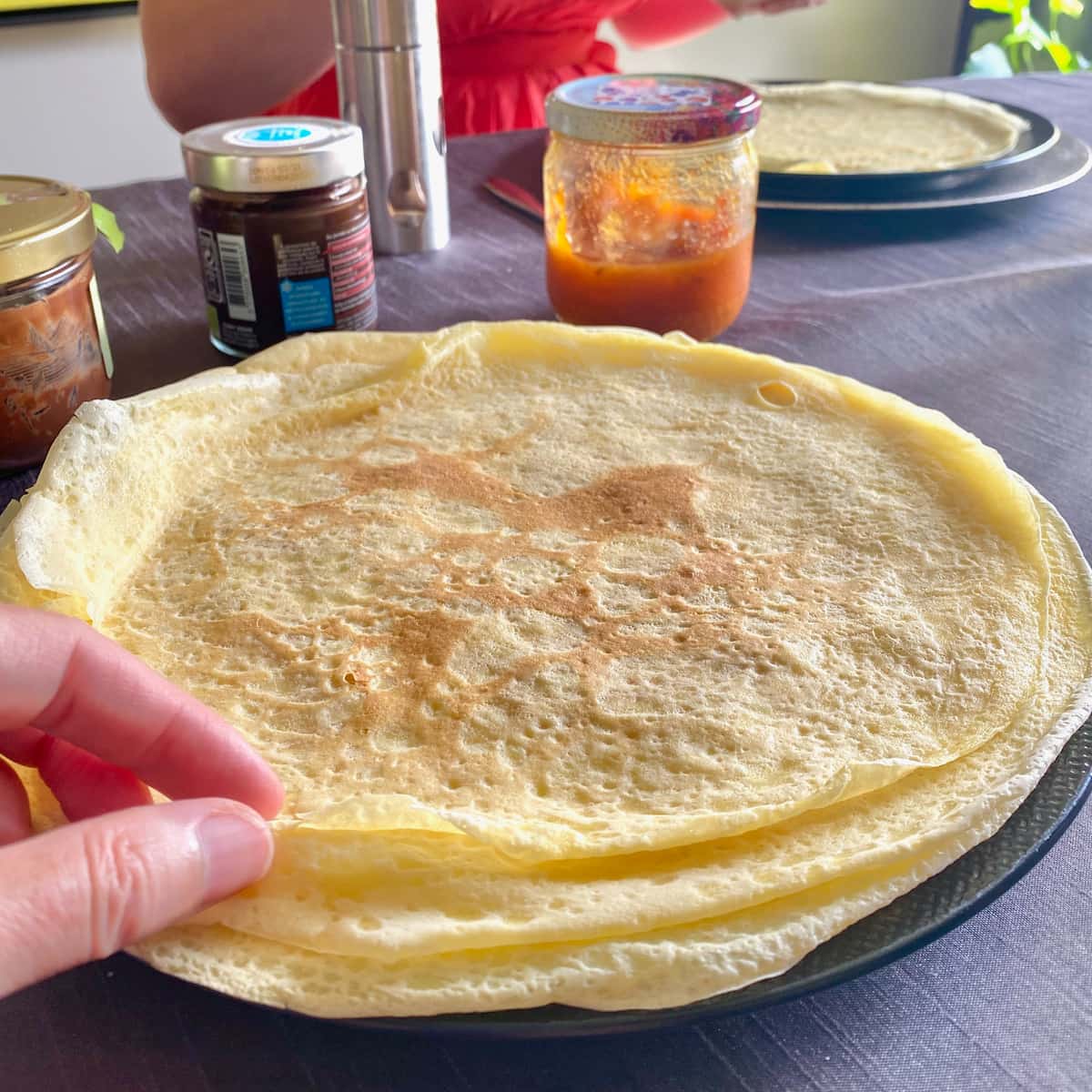
Do You Eat Crêpes Hot or Cold?
In France, crêpes are usually eaten warm, straight from the pan or skillet.
At crêperies, sweet crêpes are served flat or folded, often with ice cream or Chantilly cream. At home or from Paris crêpe stalls, they're rolled or folded for easy eating. Even still, I often make a ridiculous mess!
At ours? Just a little sugar and lemon juice. Simple is often best!
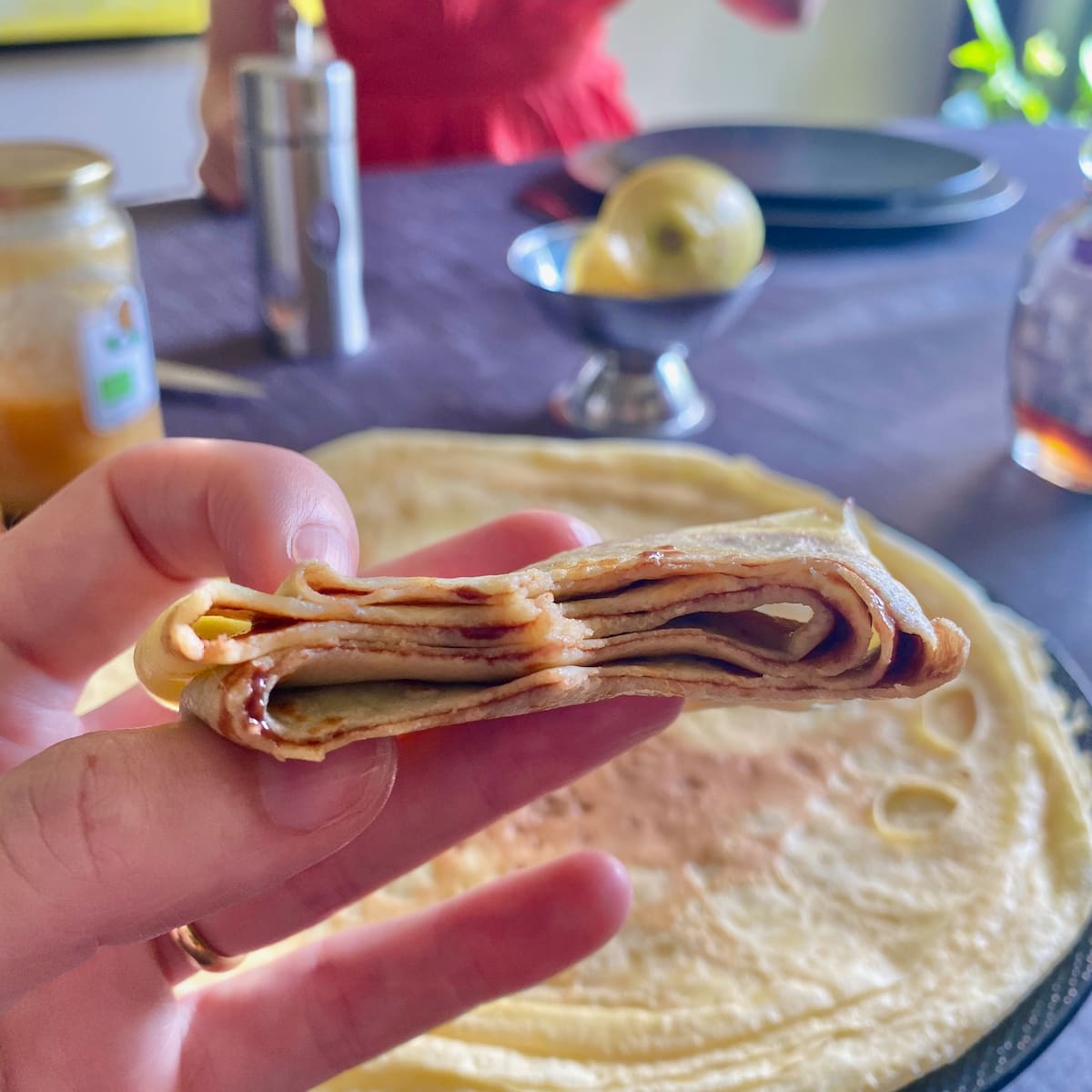
Classic French Crêpe Fillings
Popular sweet crêpes fillings in France are a thin layer of:
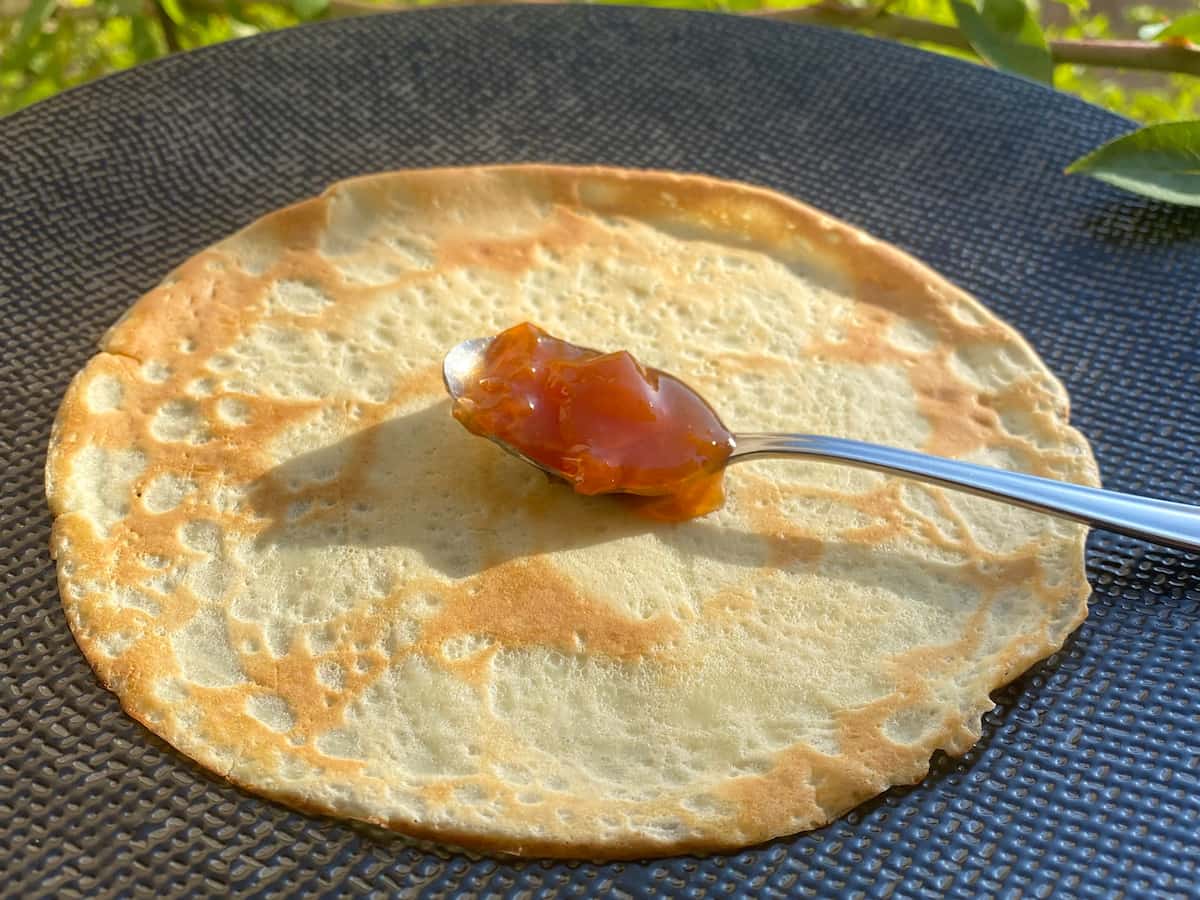
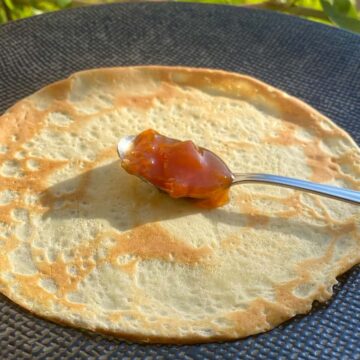
- Jam (confiture) - try with homemade apricot jam or spicy plum jam
- Chocolate & hazelnut spread (nutella if you prefer)
- Warm dark chocolate sauce (the runnier kind you'll find in French crêperies)
- Warmed salted butter caramel sauce - my personal best!
- Apple compote (apple sauce)
- Sweet chestnut and vanilla spread (crème de marron)
- Sugar with a squeeze of lemon or orange or clementines
- Orange curd or marmalade for something à la British
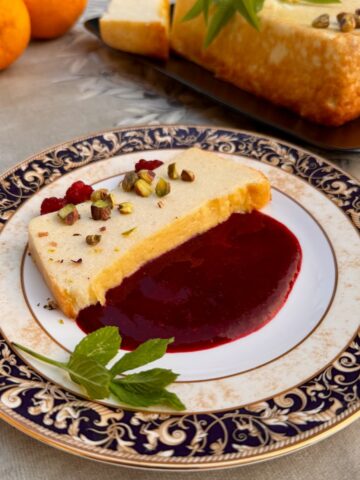
- Or drizzle over raspberry coulis for dessert.
According to our local market crêpier, Monsieur Guss in Saint-Germain-en-Laye, the most ordered French pancake is plain sugar (crêpes au sucre).
Looking for another thin French pancake?
Try my chocolate crêpes, served with an intense bittersweet chocolate sauce - deliberately runnier than most, just like you'll find in French crêperies.
French Pancakes (Crêpes)

Equipment
Ingredients
- 40 g (1.5oz/ 3 tbsp) butter melted
- 250 g (9oz/ 2 cups) plain (all-purpose) flour
- ½ teaspoon salt (fleur de sel)
- 2 tablespoon icing/powdered sugar
- 3 medium eggs organic/free-range
- 500 ml (18fl oz/ 2 cups) whole milk (or semi-skimmed for skinny crepes)
- ½ tablespoon lemon or orange zest optional
Instructions
- Stir together the dry ingredients: sift the flour, powdered sugar and salt into a large bowl. Make a well in the middle and break the eggs into it.
- Add only about a quarter of the milk to the eggs and, using a hand whisk, beat the mixture well until you have a smooth, thick paste. This ensures no lumps. Gradually add the rest of the milk.
- Add the melted butter and zest, if using and whisk vigorously to let in as much air as possible into the batter (this way no need to leave it to rest). The mix will look quite runny but this is perfectly normal.
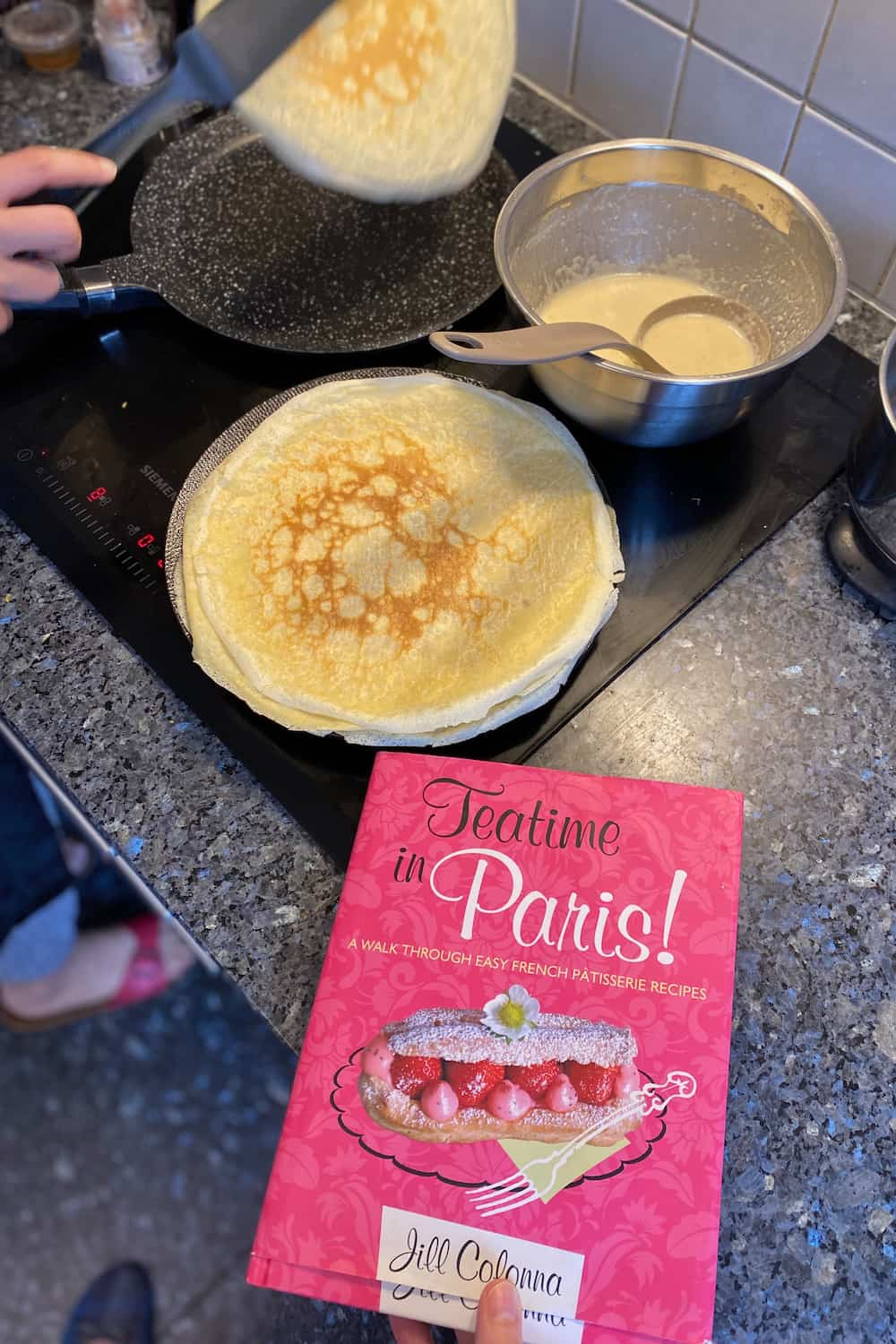
- Ladle one small quantity of the batter into a very hot crêpe pan that has been wiped with butter on kitchen paper. Swirl the batter around the pan quickly, as thinly as possible, covering the surface of the pan. Cook over a medium-high heat for about 2-3 minutes until bubbles form on the surface. Using a spatula or your fingertips, quickly flip the crêpe over and cook for another couple of minutes.
- Turn down the heat slightly (but still at medium) and repeat the process, topping up with wiping of butter in the pan, until you have about 12 crêpes (depending on pan size), stacking them aside on a large plate.
Notes
This was a blog post originally published on 17 February 2012 but is now completely updated to include the full recipe from my cookbook, 'Teatime in Paris' (2015).


Danila
A lovely, reliable recipe ! I used it for Chandeleur this year and the crêpes turned out exceptionally good (and also so easy to make). I also really enjoy how the recipe comes with the story and tradition behind it, which makes baking them even more special
Jill Colonna
So happy you like this crêpe recipe, Danila - and thank you for your kind words. I love to share the stories behind French recipes, as there's often something interesting around food here!
zelds
We make a 6 layer crepe and custard slice filling stack cake. the 7th crepe bets put on top. it cools at room temperature after which itgoes into the fridge. it gets served in wedges.
Jill Colonna
Sounds very decadent as a crêpe cake - how wonderful! Thanks for sharing and glad you like these x