

Creamy corn polenta is one of the quickest side dishes you can make. In Corsican kitchens, where Italian heritage still shapes the cooking, it's served soft and buttery alongside slow-simmered stews.
This simple version, enriched with Parmesan and butter, is a naturally gluten-free dish and makes a lighter alternative to pasta or rice.

Corn Polenta in Corsican Cooking
Maize or corn polenta is firmly rooted in Corsican kitchens. In La Bonne Cuisine Corse by Christiane Schapira, the only polenta recipe listed is Polenta de farine de maïs (Pulenta de farin' di granonu) - baked simply and topped with tomato sauce and cheese.
Many Corsican families still prepare polenta in different forms, depending on region and season. On my husband's side of the family (the Colonna clan), they make corn polenta - and serve it creamy alongside hearty winter stews.
Corsica is French today, but for centuries it was ruled by Pisa and later Genoa. That Italian influence still shapes the island's mountain cooking - especially inland, around villages near Corte, where my husband's family comes from.
When people think of Corsican polenta, they often mean with chestnut flour. Chestnut trees, often called the "Bread Tree" (l'arbre à pain), thrives in areas where wheat struggles to grow and so once sustained entire communities. See the Chestnut Guide.
Recently, my belle-maman (I love how Mother-in-law has a much better name in French!) brought us a packet of pre-cooked maize semolina from Savoie. We made it creamy rather than baked, skipped the tomato and served it with my Corsican veal stew with olives. The natural sweetness of the corn balanced the salty sauce beautifully. I finish it with chopped parsley, as we love our greens!
It's simple food from the mountains; de la terre.
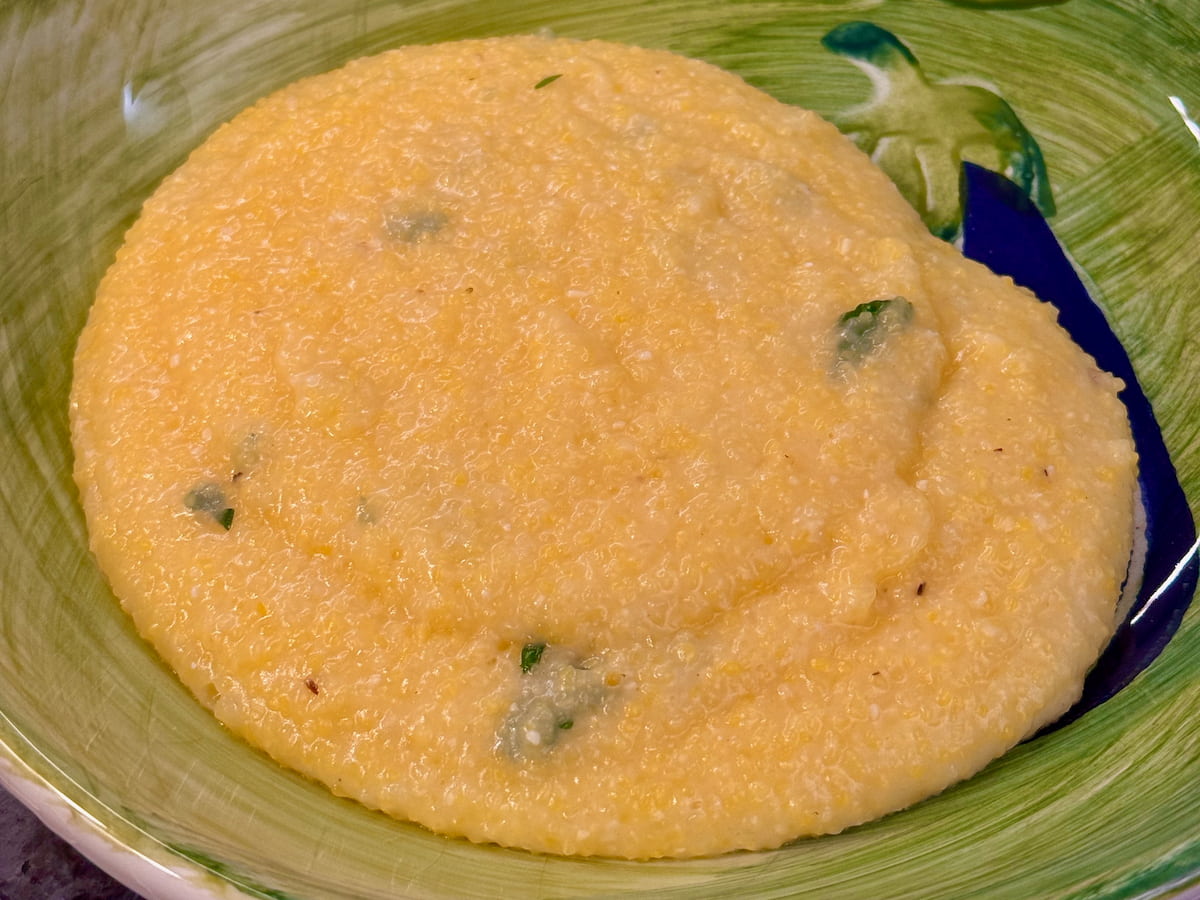
What is Corn Polenta?
Corn polenta is made from ground maize, also called cornmeal. In Italy, "polenta" also refers to the finished dish. In shops you may see it labelled as cornmeal, maize semolina, or semoule de maïs, although products specifically labelled "polenta" are often the easiest choice.
The grind affects the final texture. Fine polenta produces a smoother, creamier result, while coarse polenta is more rustic. I prefer a medium grind, somewhere in between.
If you enjoy corn-based dishes, you might also like my cheesy cornbread with roasted vegetables, also made without added sugar.
Is Polenta the Same as Semolina?
No. Although they look similar, polenta and semolina come from different grains. Polenta is made from ground maize (corn), while semolina comes from durum wheat.
The two ingredients behave differently in recipes and have distinct flavours:
- Polenta has a gentle corn flavour and is naturally gluten-free.
- Semolina has a milder wheat flavour and is often used in pasta, couscous (with tajine) and desserts such as French Semolina Cake (Gâteau de Semoule), where it creates a soft texture somewhere between a cake and a pudding.
What is the Secret to Creamy Polenta?
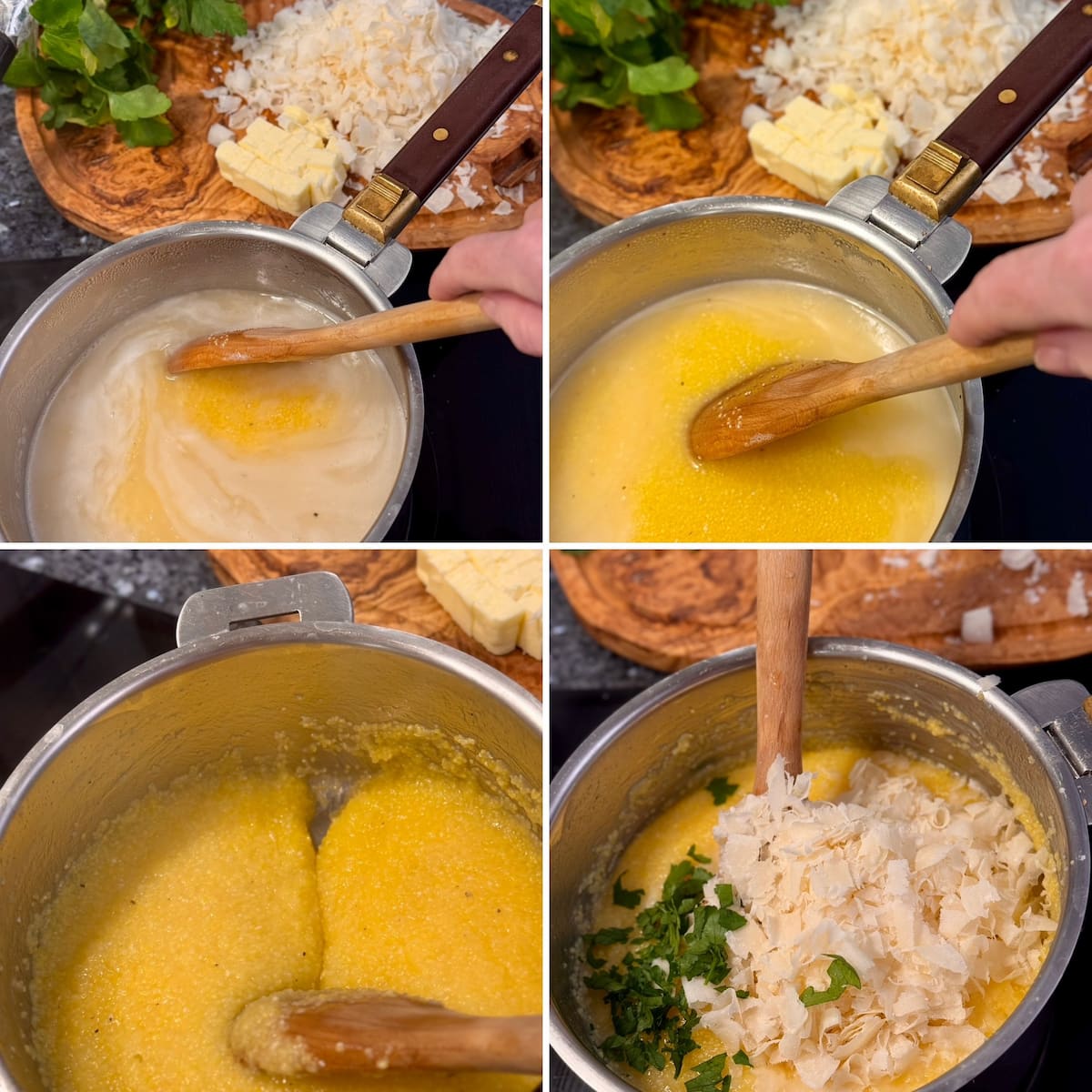
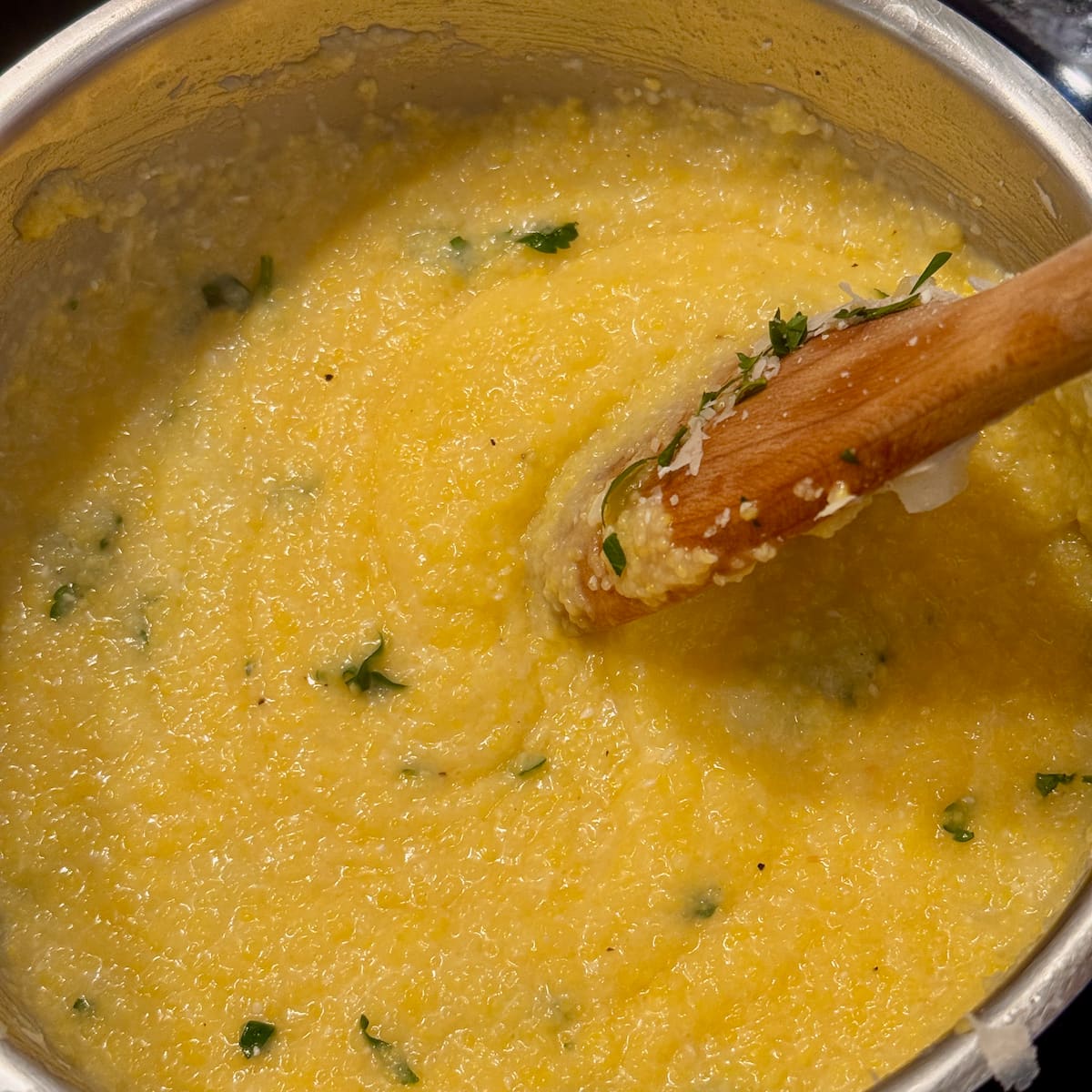
For a creamy polenta, the key to the recipe is balance:
- Use enough liquid (around 1 part polenta to 5 parts liquid).
- Stir constantly while it cooks.
- Finish with butter and cheese.
If your polenta isn't creamy, it usually needs a splash more liquid - and a bit more stirring.
What Part of Italy Eats Polenta?
Polenta is traditional in northern Italy - particularly Lombardy, Veneto and the Alpine regions. It's also widely eaten in Corsica, where Italian culinary heritage meets French influence.
Because Corsica was historically linked to Genoa, polenta also became part of the island's mountain cooking. It remains common in rural villages and family kitchens.
What's Best Served with Corn Polenta?
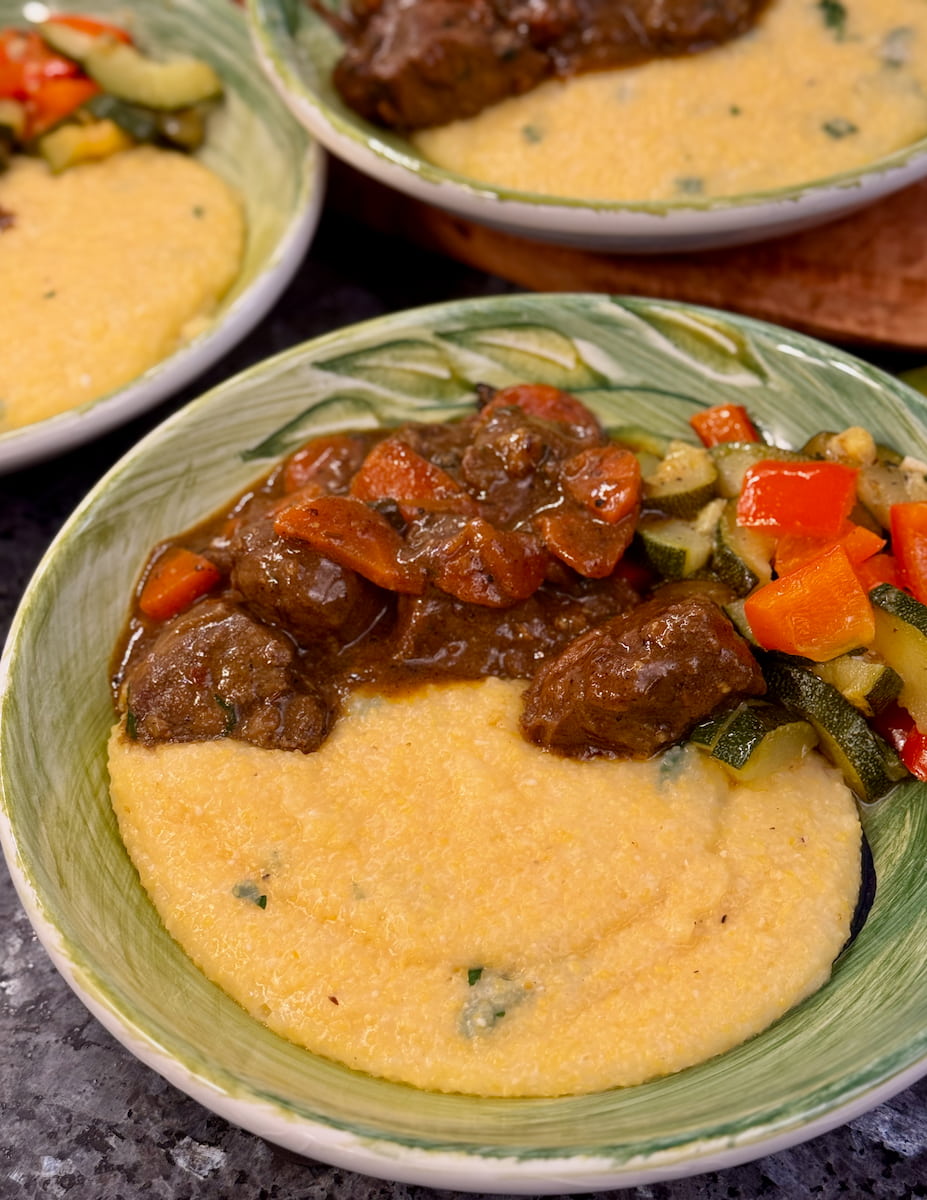
Creamy corn polenta pairs beautifully with dishes with saucy dishes or slightly sticky roasted vegetables. The extra butter and cheese pair especially well with meat dishes, such as:
- Slow-cooked stews such as Corsican veal stew. Also good with Boeuf Bourguignon, Coq au vin or a pork roast with apples for something different.
- Braised or grilled meats and sausages - and roast chicken
- Tomato sauce
- Roasted vegetables - makes a lovely vegetarian dish with a French Tian de légumes, roasted asparagus or sautéd mushrooms.
It's particularly good with Corsican-style dishes or Italian stews, where savoury sauces benefit from something cheesy and buttery to absorb them.
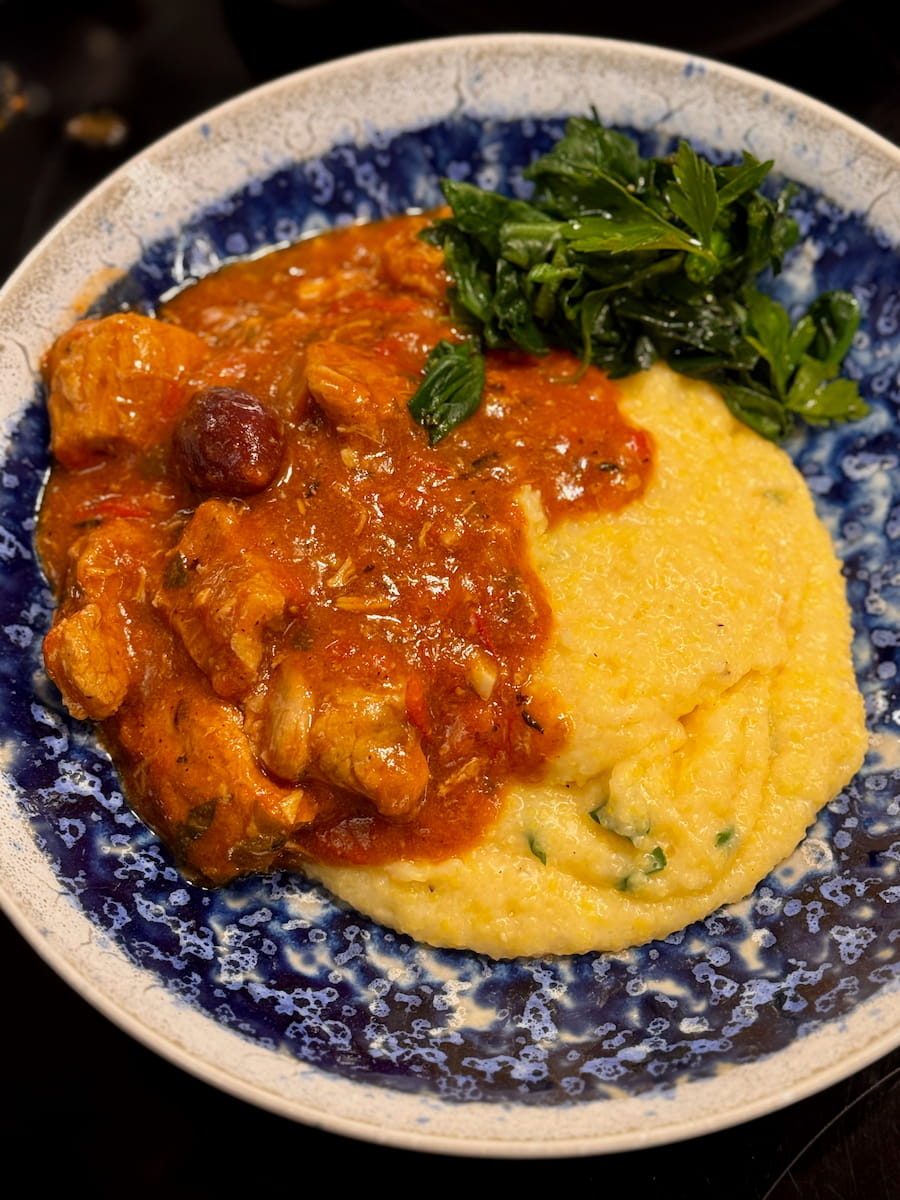

Creamy Corn Polenta with Parmesan

Equipment
Ingredients
- 200 g (7 oz / 1 ⅓ cups cornmeal Precooked, coarse (see NOTES)
- 1 litre (1¾ pints/ 4¼ cups) water
- 100 g (3½oz/ 1 cup) Parmesan cheese (Reggiano) grated from a block
- 50 g (2oz / 3½ tbsp) butter
- ¼ teaspoon sea salt and black pepper to taste
- 1 tablespoon fresh parsley leaves finely chopped
Instructions
- Bring the water to a gentle boil in a heavy saucepan with salt and pepper. Rain in the polenta while stirring constantly to prevent lumps.
- Reduce the heat and stir for 5-10 minutes until thick and creamy (best to follow your packet instructions as cooking times can slightly vary). The polenta is ready when it pulls slightly away from the sides of the pan.
- Remove from the heat and stir in the butter and Parmesan until smooth and glossy. Season more to your taste, stir in chopped parsley and serve immediately while soft and creamy.

Joanna T.
Why did I think polenta was a difficult dish? Thanks to you, now I know better and so happy I tried it. It's so comforting and delicious even on its own--thank you, Jill!
Jill Colonna
So happy you tried this polenta dish, Joanna. Thanks so much for your feedback. It's good on its own but I have to admit I prefer it topped with roasted vegetables or a comforting stew.
David Scott Allen
I didn't know about chestnut flour being used for polenta. How is that? I do love corn polenta and, in fact, we are having roasted mushrooms on polenta this week for dinner and I will use your recipe. Like you, I go for the medium grind; I like a little texture but not too much or too little -- like Goldilocks! Thanks for sharing.
Jill Colonna
That's hilarious, David, as I was swithering to say I was Mummy bear on the post that I like it just in between! Yes, chestnut flour is used so much in Corsica and the polenta with it is slightly sweet, just like the corn. I love how you've already planned your dinner this week around it - so thrilled you'll be making this! Love to Mark x