

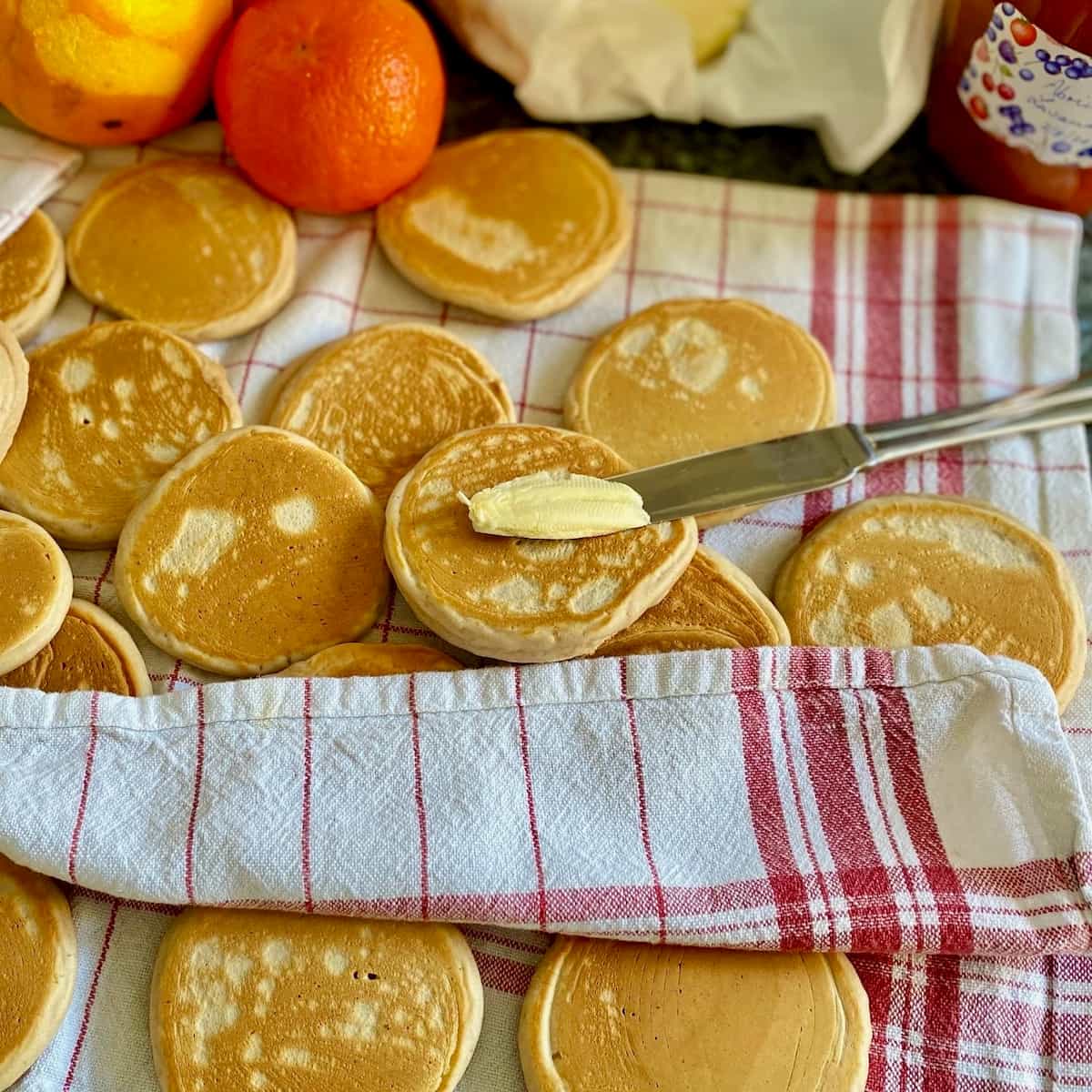
Scotch pancakes, also known as Scottish drop scones, are small pancakes traditionally cooked on a griddle. Unlike large American pancakes, the batter is much thicker and dropped by spoon onto the pan, creating soft, fluffy rounds that are usually spread with butter or jam.
What are Scotch Pancakes Made Of?
Scotch pancakes can be made with plain flour or self-raising flour. When using plain flour, baking powder provides the lift, while self-raising flour already contains it. Both work well, as long as the batter stays thick enough to drop from a spoon.
Made with just simple, basic ingredients, Scotch pancakes contain just flour, sugar, an egg, milk and a pinch of salt. While this easy recipe includes an optional Corsican twist with chestnut flour, you can just as easily make classic Scotch pancakes using plain flour alone.
So they're great to make on a budget with everyday pantry staples. A typical Scottish recipe, Queen Elizabeth II particularly loved them when at Balmoral Castle - so there's a lot to be said about simple fare!
Scotch Pancakes and American Pancakes: What's the Difference?
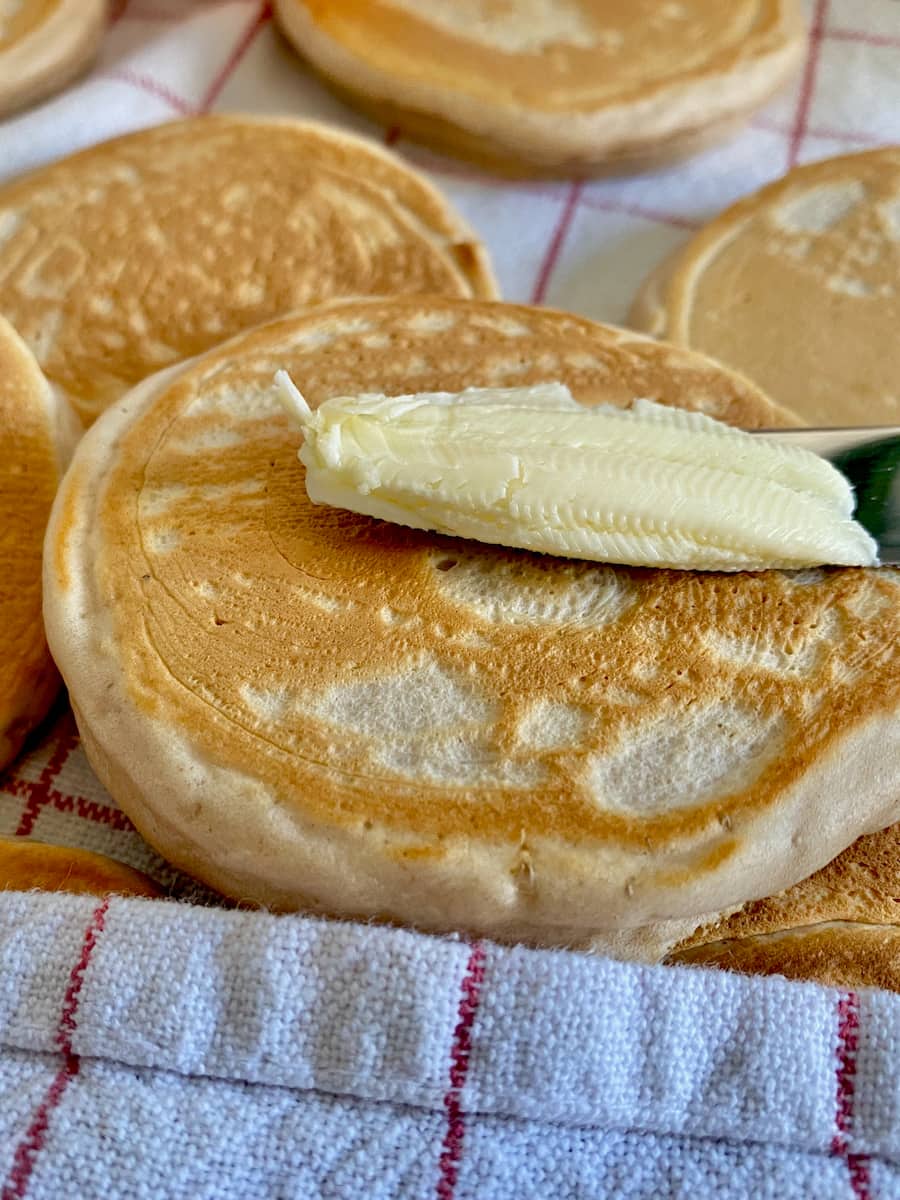
Scotch pancakes are smaller than American pancakes, with a firmer crumb and no stacked presentation - they're made for butter and jam or curd, not maple syrup.
They're also known as Drop Scones, as the batter is particularly thick (not runny like American pancakes) or griddle cakes in the UK.
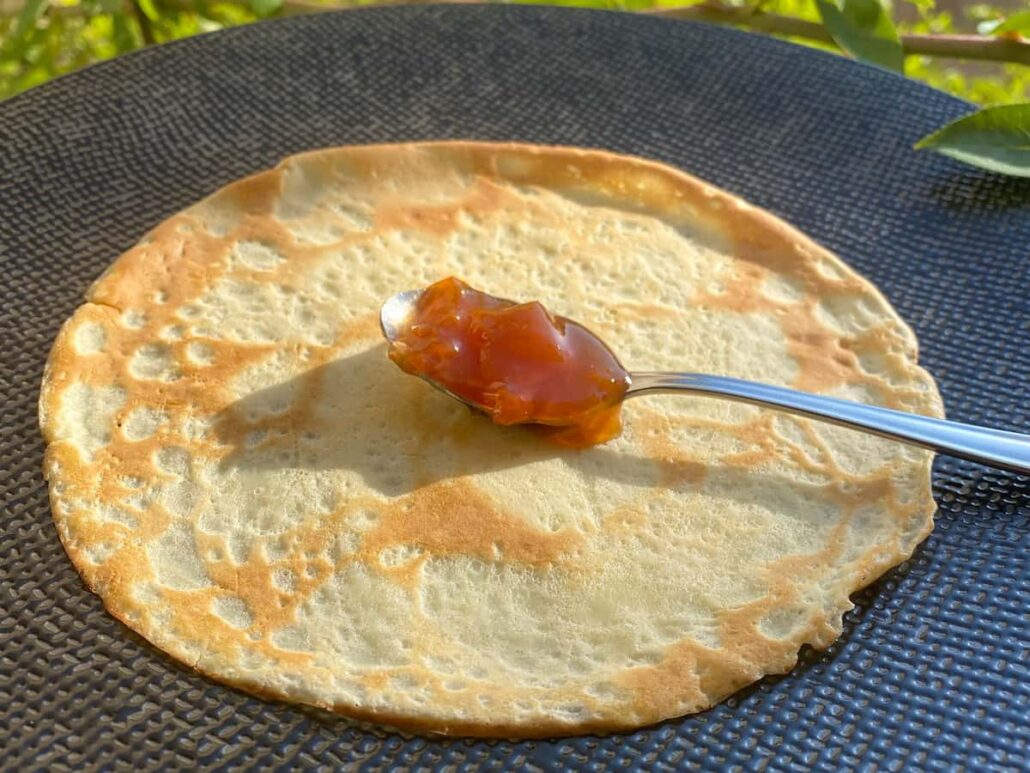
American pancakes don't have a direct equivalent in France, as French pancakes, or sweet crêpes are much thinner and don't use a raising agent.
Why is it Called a Scotch Pancake?
Said to have originated in my homeland of Scotland, Scotch pancakes are what my family always called them. According to my Collins Scots Dictionary, in Scotland:
A Pancake is a round flat cake cooked on a griddle, smaller and thicker than an English pancake and usually eaten cold with jam, butter, etc. In England it is known as a drop scone or a Scotch pancake.
Collins Scots Dictionary (1995)
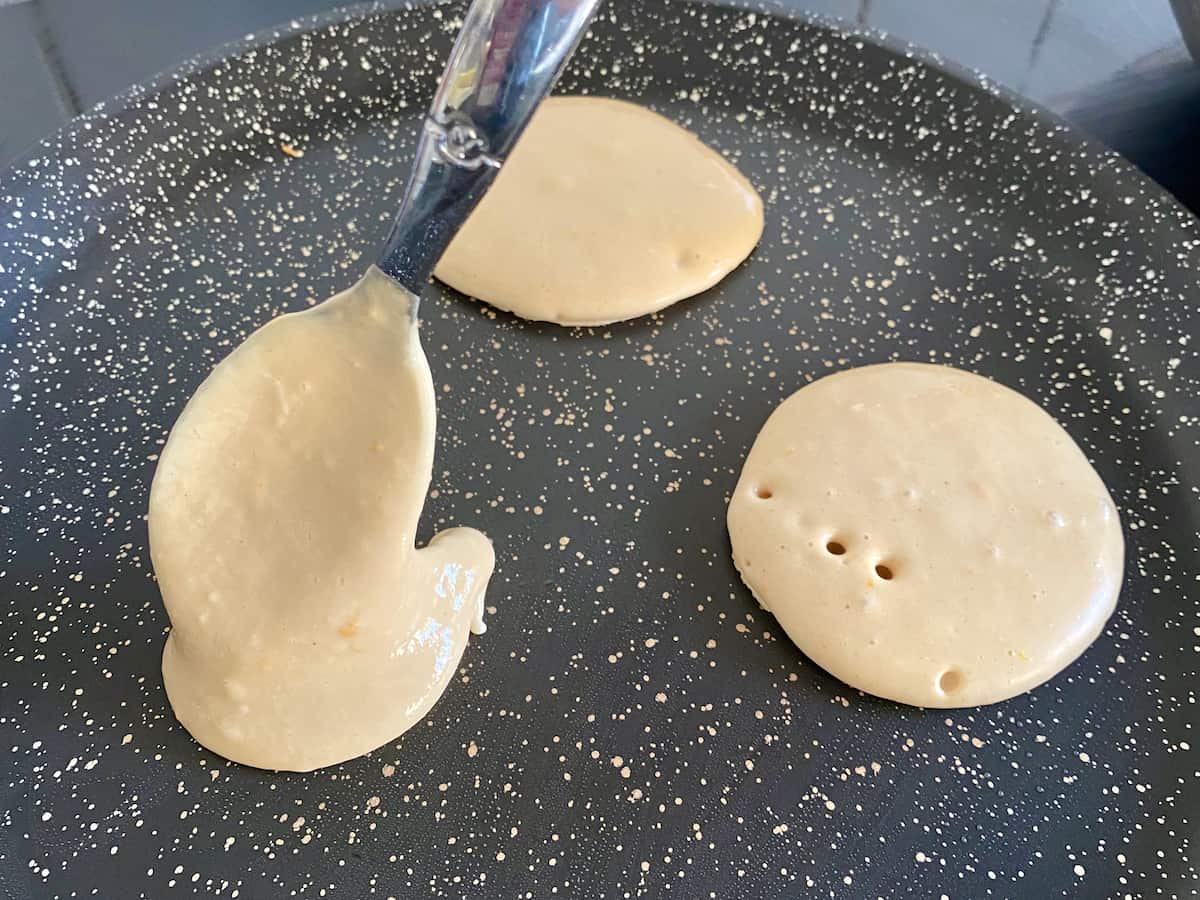
Their other name drop scones comes from the thick pancake batter, which simply drops from a spoon onto the hot griddle or pancake pan.
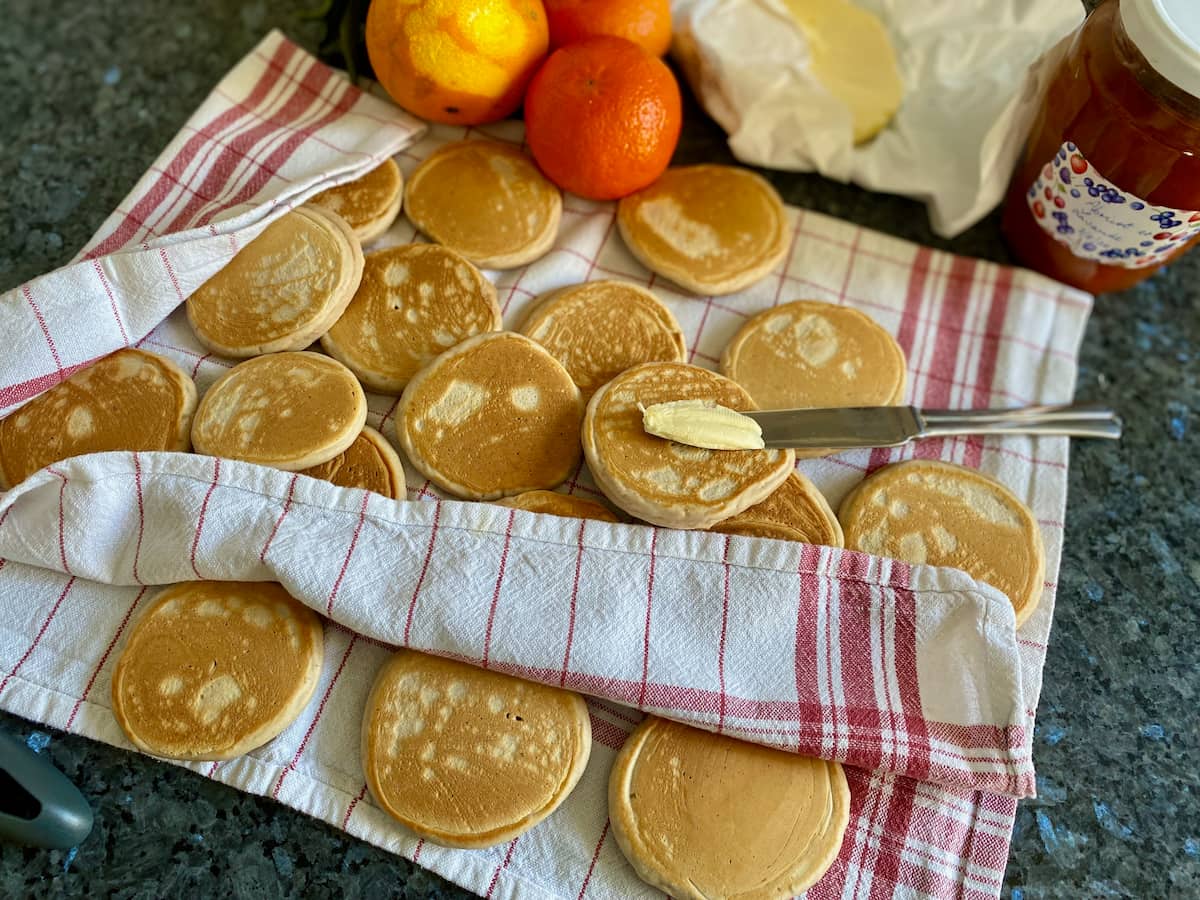
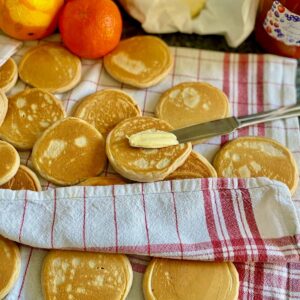
These traditional Scottish pancakes are what my Gran seemed to live on; quick to rustle up and always on the go. Every visit to her Edinburgh home meant the girdle (yes, that's what we call it in Scotland) sitting proudly on the stove, with a tea towel on the table filled with warm Scotch pancakes.
She always served them simply - warm, soft, and spread with lashings of butter. Jam or honey only appeared occasionally.
Are Scotch Pancakes the Same as Scones, Pikelets and Crumpets?
Scottish pancakes or drop scones are not the same as scones that we also make in Scotland - see my savoury cheese scones recipe.
They are also not the same as pikelets in the UK, as they are thin crumpets with holes.
Although, I see that Scotch pancakes as we know in the UK are the equivalent of what are called pikelets in Australia and New Zealand.
Plain Flour - Or Add Chestnut Flour
To keep my Corsican hubby happy, I developed this Auld Alliance version, merging Scotland and Corsica in a simple Scotch pancake. I replaced a little plain flour with a small amount of chestnut flour - a traditional rustic flour in Corsican cooking - adds flavour and texture without overpowering the pancakes.
Chestnut flour adds a nutty, rich texture and goes beautifully when paired with orange. Nothing else tastes quite like it. If you can't find chestnut flour, simply use more plain flour - or substitute with buckwheat or wholemeal flour for a rustic flavour.
For more recipes using chestnut flour, check out the chestnut page.
How Do You Eat Scotch Pancakes?
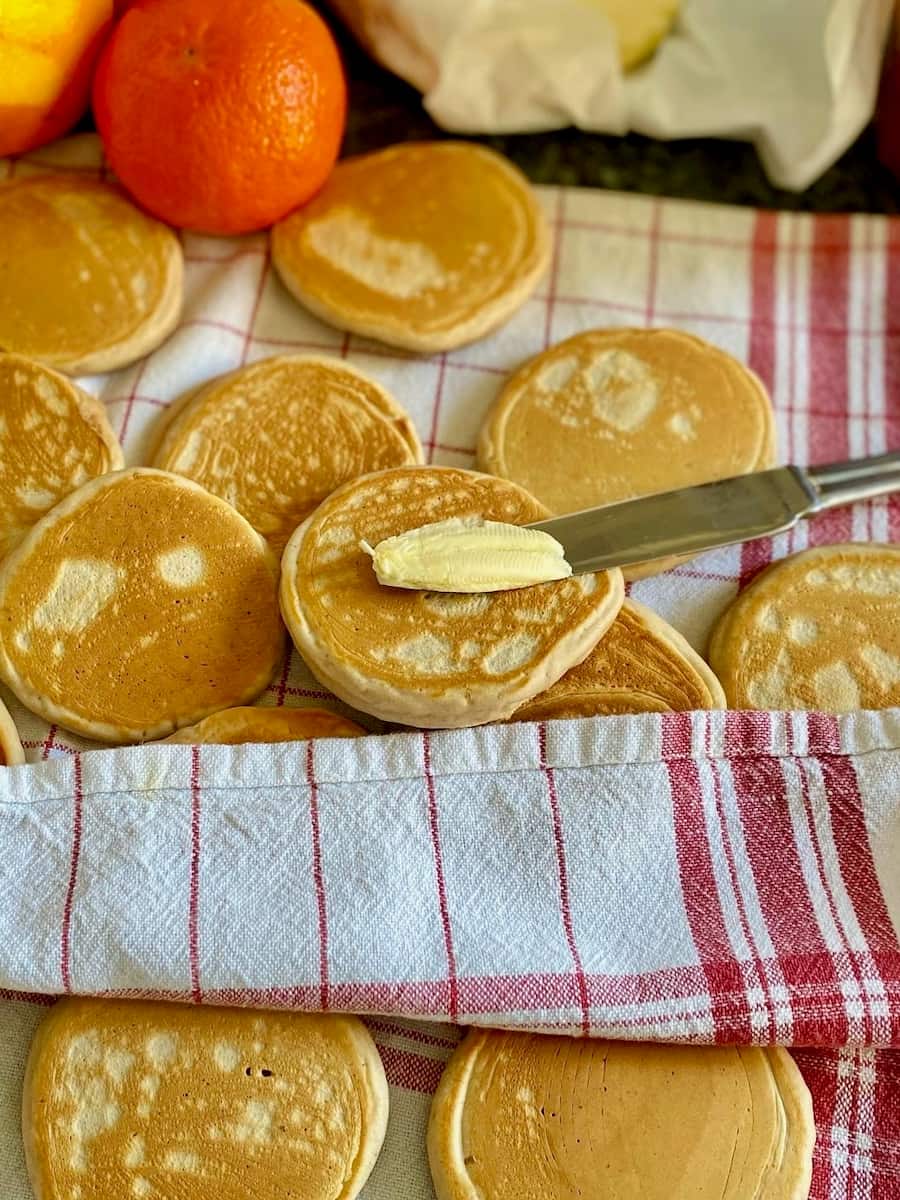
Scotch pancakes are best served slightly warm, ideally soon after cooking, with a simple scraping of butter. They can be eaten cold, but their texture is at its best when gently warmed.
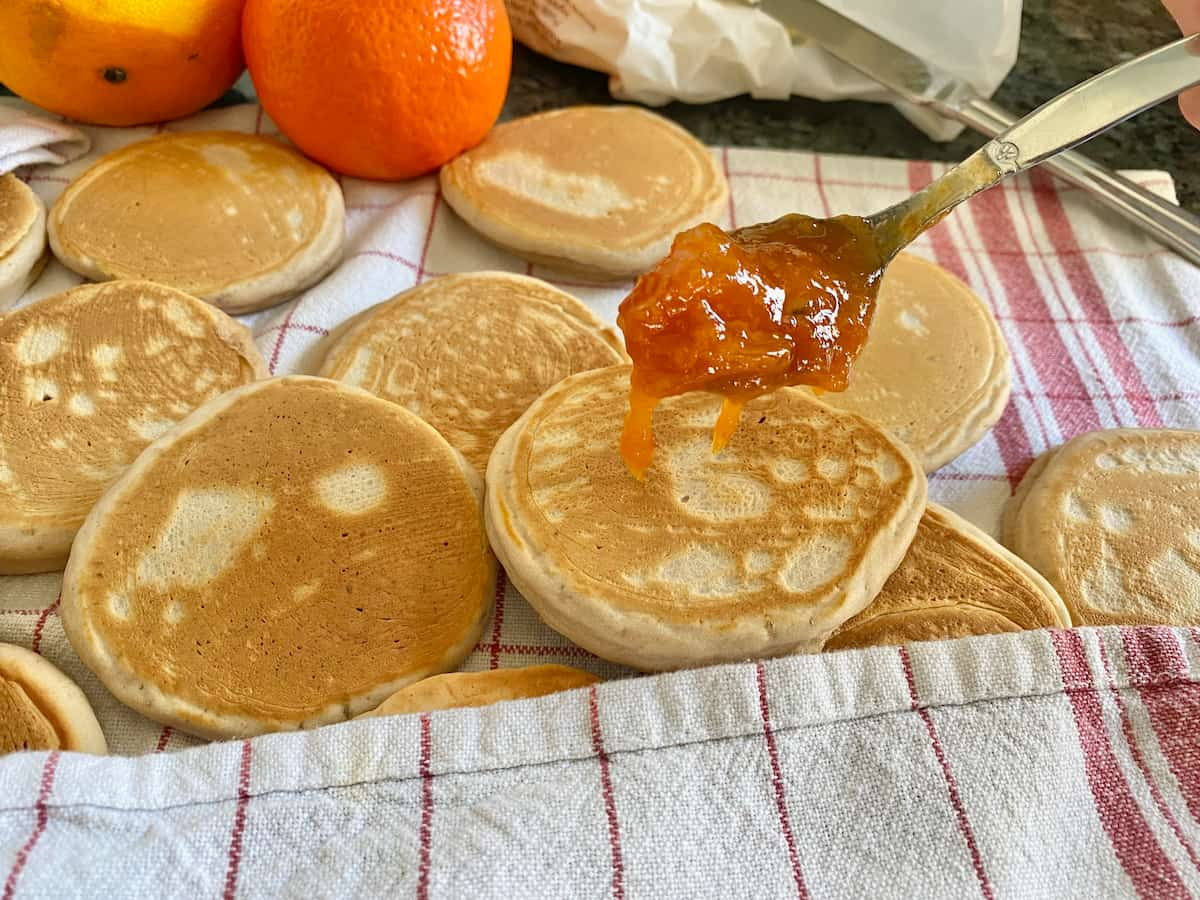
They also pair beautifully with jam (try apricot Jam), honey or lemon or orange curd. If you're feeling a little French touch coming on, try them with crème de marrons, especially alongside seasonal citrus such as clementine oranges.
Gran, however, always preferred them plain - warm, soft and wrapped in a tea towel, with nothing more than melted butter with a pot of tea.
More Pancakes For Shrove Tuesday
If you're planning a proper Pancake Day spread, here are a few more fail-safe favourites:
- Classic French crêpes for breakfast or dessert
- Chocolate crêpes for the ultimate French dessert
- Savoury buckwheat pancakes (galettes de sarrasin)
- Cottage cheese pancakes with pumpkin
If you enjoy traditional Scottish baking, you may also like my gluten-free shortbread and more Scottish recipes, now in a whole collection.
Scotch Pancakes

Equipment
- non-stick crêpe/pancake pan or griddle (Scottish girdle)
Ingredients
- 125 g (4½ oz/ 1 cup) plain/all-purpose flour (or self-raising flour)
- 2 teaspoon baking powder (omit if using self-raising flour)
- 25 g (1oz/ 3 tbsp) chestnut flour OPTIONAL (otherwise more plain flour)
- good pinch salt (fleur de sel)
- 25 g (2 tbsp) caster sugar
- 1 large egg organic
- 150 ml (4oz/ ⅔ cup) whole milk
- ½ teaspoon grated orange zest organic (unwaxed) OPTIONAL
Instructions
- Stir together the dry ingredients in a large bowl: flour(s), sugar, baking powder and salt.
- Make a well in the centre. Whisk in the egg, orange zest (if using) and gradually add in the milk until thick and smooth. Adding one at a time in this order will avoid any lumps in the batter.
- Lightly grease a griddle/pancake pan or heavy frying pan over moderate to high heat with a little butter.
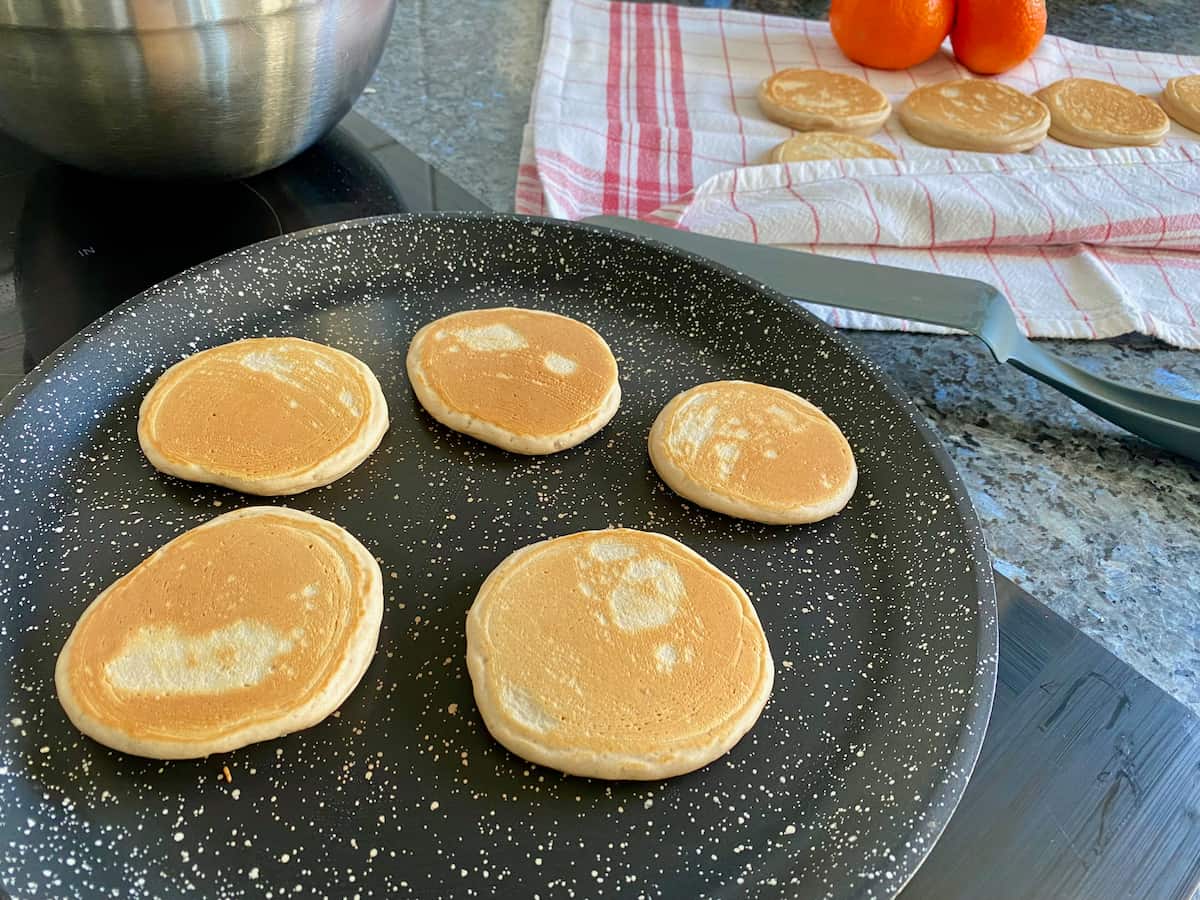
- Cook in batches. When the pan is very hot, drop the equivalent of a large tablespoon of batter (or use an ice cream scoop, small ladle) and space apart. Cook for 2-3 minutes or until bubbles rise to the whole surface.
- Flip the pancakes over using a spatula or fish slice and cook for about a further minute until golden brown. Transfer the pancakes to a clean tea towel to keep their moisture, as you continue to cook the rest.Repeat as above until all the batter is finished.
Notes
This recipe was originally published 2 March 2011 but is now completely updated.



Rona Myatt
Love the orange addition! Wondering, could I use buckwheat flour in place of the chestnut/wholeameal, or would that make it “heavy”?
Jill Colonna
Absolutely, Rona. Buckwheat in place of chestnut will be ideal, as I've made the proportion quite small along with the normal flour quantity. As they are both strong and heavy 'rustic' flours, this will give it that extra 'je ne sais quoi'. Enjoy!
Choclette
I have some chestnut flour left over from my castagnaccio> love the idea of adding it to drop scones. Might just have to give this a go. Fab recipe and photos as always Jill.
Jill Colonna
Oooh we love castagnaccio too - and the chestnut flour, Choclette. Thanks!
Christina
Haven't made drop scones in forever! Thanks for reminding me that I need to make them again, Jill. Yours look lovely, and I'll just take mine with that butter, thank you very much! 🙂
Jill Colonna
To be honest, I had't made them in a long time either - especially as Antoine prefers his crêpes (recipe in my book). However, I'd forgotten how good these are, especially with chestnut flour.
Imgoog
I have never used chestnut flour, these pancakes sounds amazing. Thank you for the recipe!
Jill Colonna
Once you try chestnut flour, I can imagine you'll be hooked. Pleasure with the recipe. Use about a quarter with normal flour and it gives a lovely rustic nutty flavour to quiches etc.