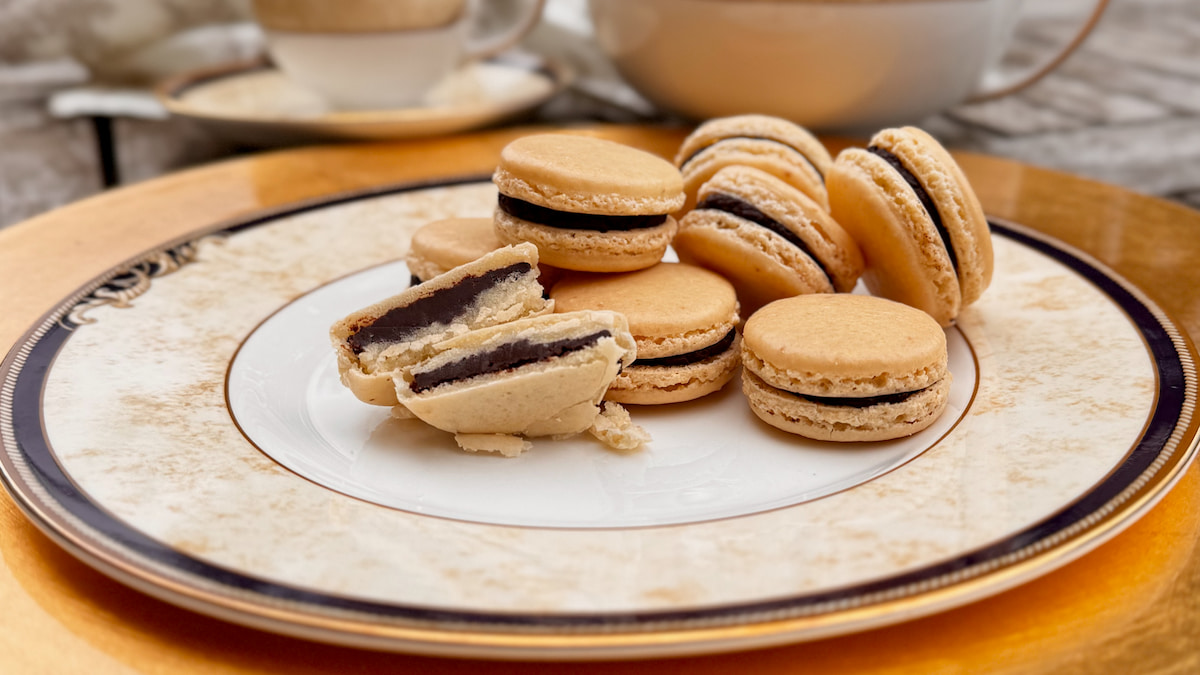
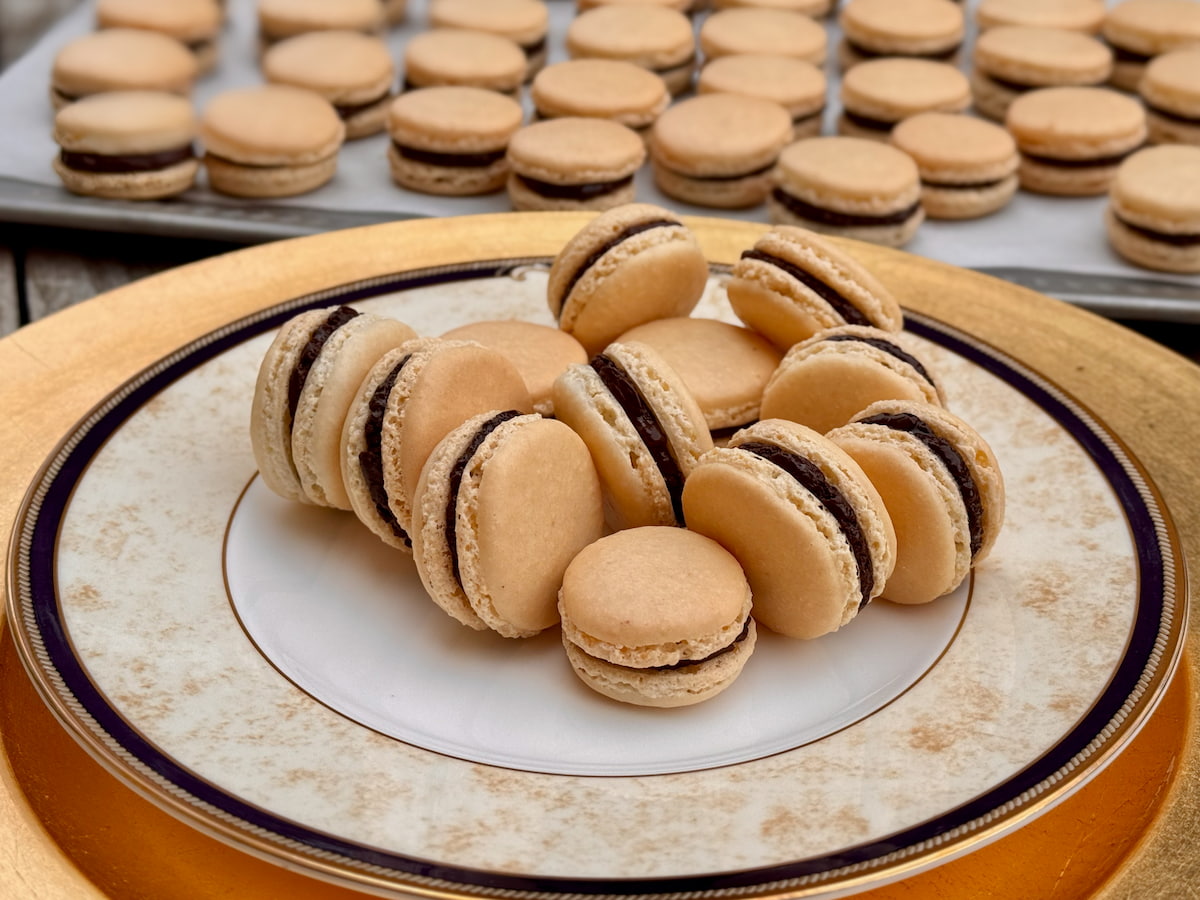
French macarons need just four shell ingredients, a firm meringue, a careful fold and a short rest before baking. This beginner French macaron recipe is the one I'd give a friend making their very first batch: plain almond shells using the simple French meringue method (no sugar syrup, no thermometer), filled with a silky dark chocolate ganache.
I'm Jill Colonna, and I've been making French macarons since 2006. My first book, Mad About Macarons (2010), was one of the first macaron cookbooks published in English. Many of the macaron tips I still use today first appeared in that book. Now the recipes are back with me, so here's my method straight from the source.
- What Makes This a Good Beginner Macaron Recipe?
- What Ingredients Do You Need for French Macarons?
- Equipment You'll Need
- Plan Ahead: Yolks First, Macarons Later
- French Macaron Recipe: What to Look For at Each Stage
- Easy Chocolate Ganache Filling for Macarons
- More Beginner Macaron Tips
- Where to Next: More Flavours
What Makes This a Good Beginner Macaron Recipe?
When you're new to French macarons, every extra variable is something else that can go wrong. So this recipe keeps the shells plain - no cocoa, no colouring, no fruit powders - so you can see exactly what the batter is doing at each stage. The filling is just as simple: dark chocolate, cream and a little butter.
There's a flavour reason too. Macaron shells need their sugar - it's what gives them structure, shine and those ruffled feet. So rather than adding more sugar to the filling, I let good dark chocolate bring everything back into balance. You taste the chocolate, not just sweetness - just like the best macarons in Paris.
Once this batch works for you, it becomes the base for every other flavour.
What Ingredients Do You Need for French Macarons?
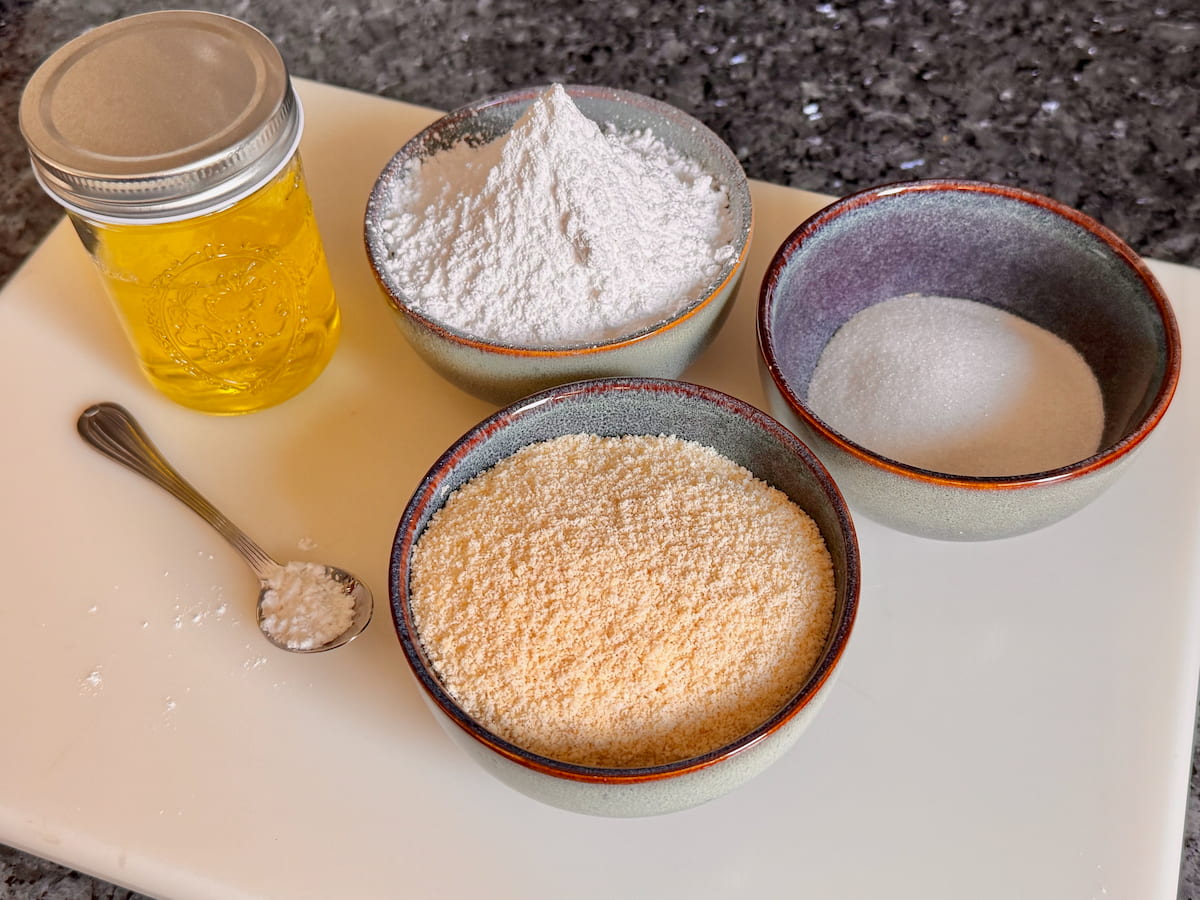
The shells just need four ingredients: egg whites, ground almonds, icing sugar and caster sugar. Quality and accuracy matter more than anything fancy, so here are the questions I'm asked most.
Can I use granulated sugar instead of caster sugar?
Yes. Caster (superfine) sugar dissolves more quickly into the meringue, which is why I prefer it. In the US, where it's harder to find, either use regular granulated sugar as it is, or pulse it a few times in a food processor to make it finer.
Almond flour or almond meal?
Almond flour. You want finely ground blanched almonds - pale and powdery, not flecked with brown skins like almond meal. Bob's Red Mill is reliable in the US; in France and the UK, organic ("bio") ground almonds are excellent. Smell an opened packet before you start: almonds go stale, and you'll taste it in the shells.
Do I need to age the egg whites?
It helps, but it isn't compulsory. I separate my eggs one to three days ahead and keep the whites covered in the fridge, as slightly aged whites whip up more readily. Just bring them back to room temperature before you start. And please skip carton egg whites - they're far less predictable.
Do I need cream of tartar?
It's optional, but it's good reassurance. A little cream of tartar helps steady the meringue, which is useful when your eggs are very fresh or the weather is humid. I prefer aged whites, which whip up beautifully on their own and don't need it, but if you're nervous about your first batch, add it.
Why weigh everything in grams?
Macarons rely on precise ratios. A cup of ground almonds can vary by many grams depending on how you fill it, and that's enough to change the batter. A digital scale costs less than a box of Paris macarons and makes every batch more reliable.
Equipment You'll Need
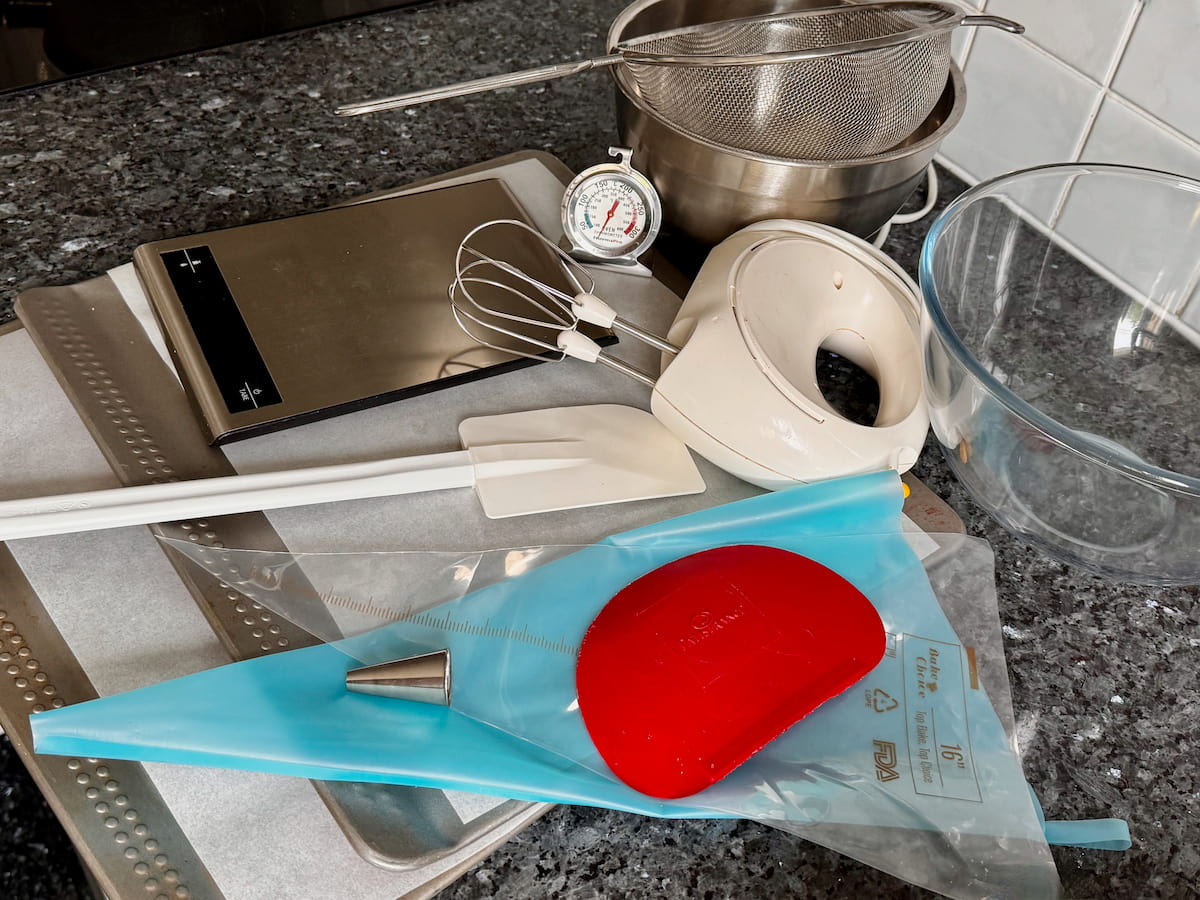
You don't need professional pastry equipment, but here are a few basic essentials:
- Digital scales accurate to 1 g - the one tool I'd never bake macarons without
- Electric hand whisk or stand mixer
- Medium-fine sieve
- Large flexible spatula
- 2-3 flat, sturdy baking trays
- Baking parchment or silicone mat
- A large piping bag with a plain 8-10mm piping tip
- An oven thermometer - very revealing!
I bake on parchment rather than silicone mats, as I get better feet and drier bases - see my macaron mat vs parchment tests.
Want every shell the same size? Join my Macaron Starter List and I'll send you my printable 2.5 cm piping template when it's ready, to slip under your parchment.
Plan Ahead: Yolks First, Macarons Later
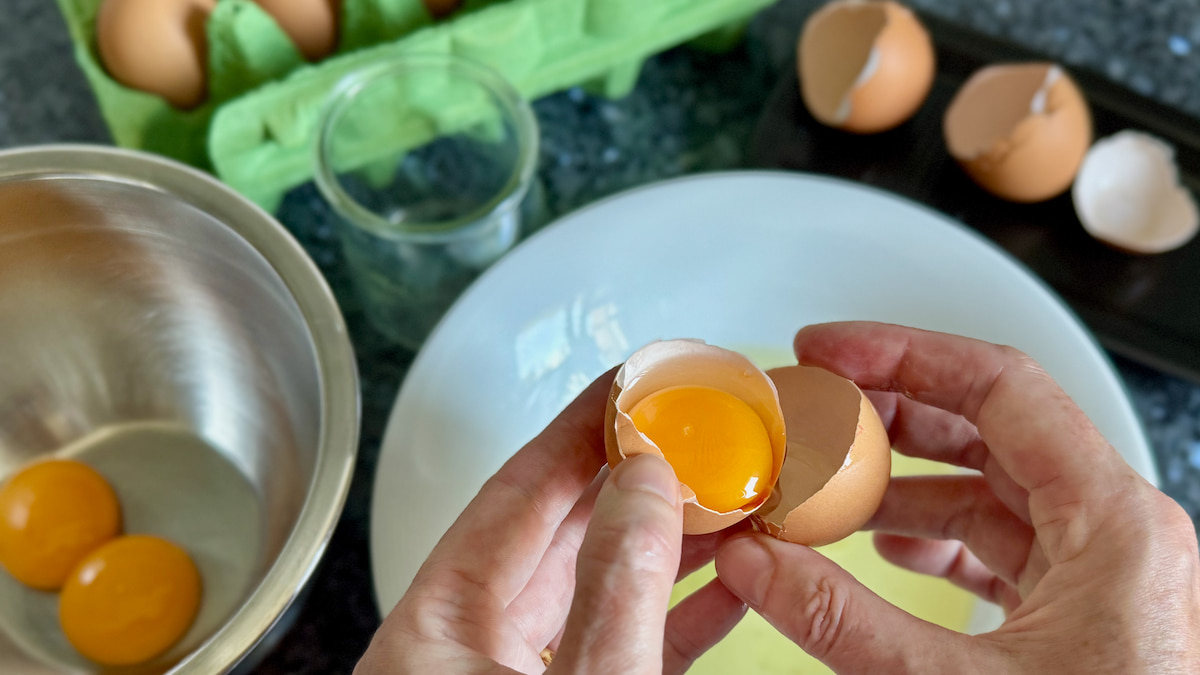
Macarons only use the whites, so I always plan my yolks first. 1-3 days before making macarons I separate the eggs, and use the fresh yolks first - making a French crème caramel, a crème brûlée, homemade ice cream or mayonnaise - while the whites rest in the fridge for a day or two, ready for macarons. One dessert today, macarons tomorrow, and nothing wasted.
If you'd like more ideas, my Master Crème Caramel e-book has five classic French custard desserts with over 30 flavour variations, all made with fresh egg yolks.
French Macaron Recipe: What to Look For at Each Stage
The full quantities and steps are in the recipe card below. Here's what each stage should look and feel like - and that, far more than the clock, is what tells you you're on track.
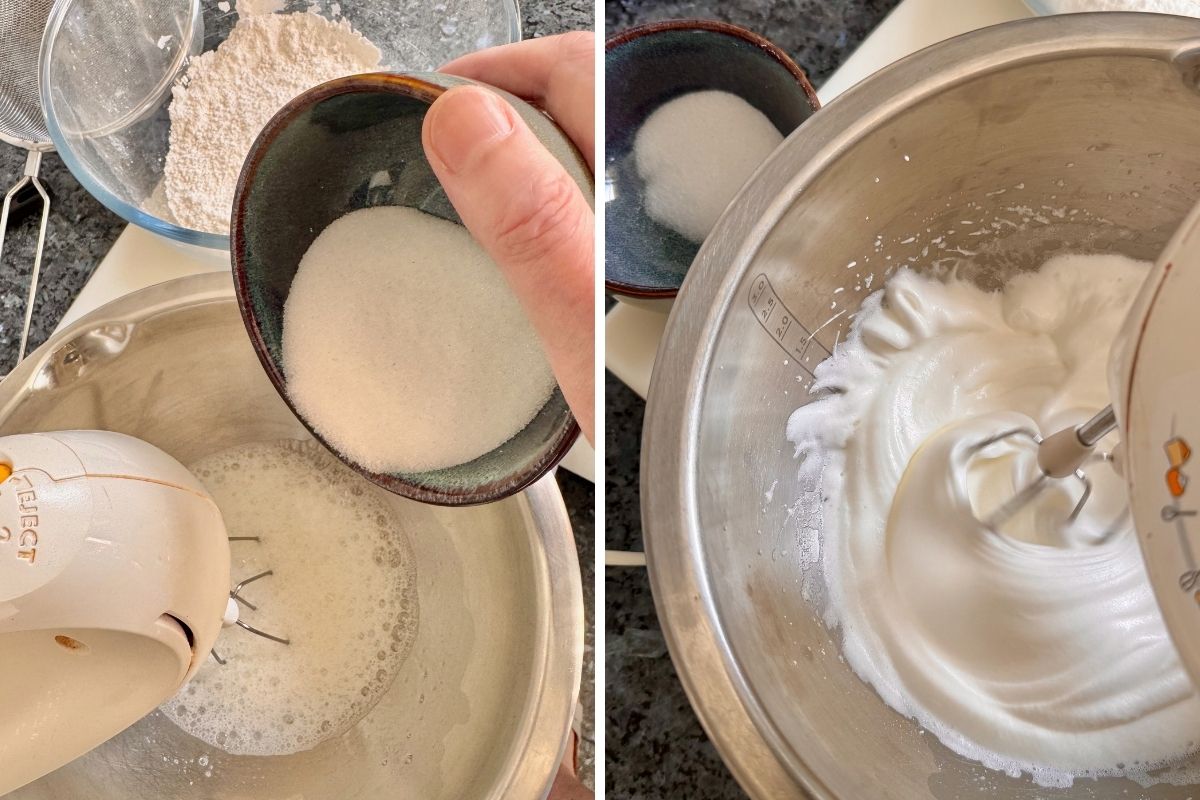
How do you know when French Meringue is ready for macarons?
Once the egg whites are foamy, add the caster sugar gradually and keep whisking until the French meringue is firm, smooth and glossy. You're looking for something between firm and stiff rather than dry. Then fold in the sifted almond flour and icing sugar together.
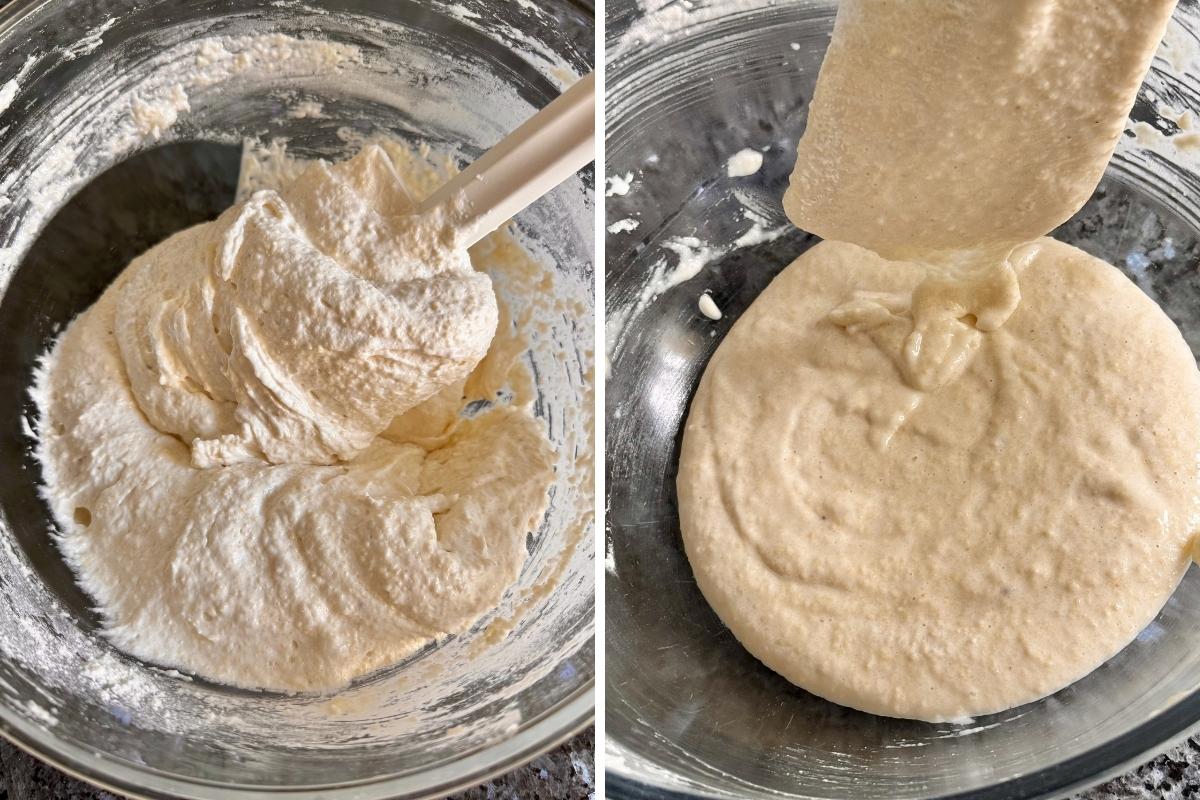
How to know when the macaron batter is ready
This is the stage everyone worries about, and it's called the macaronage. Once you've folded the dry ingredients into the meringue, the batter looks thick and dull. Now you smear it against the side of the bowl with your spatula, turning the bowl as you go, to push some of the air out. Gradually it turns glossy and starts to flow.
Here's my favourite test: lift the spatula and use the falling batter to draw a letter O on the surface - O for macarOn, not macarOOn! If the ribbon flows without breaking and the O slowly melts back into the batter within about 10-15 seconds, stop. Put the spatula down.
If the batter breaks off in clumps, fold a little more. If it pours like single cream and the O vanishes instantly, it's gone too far - and you can't put the air back.
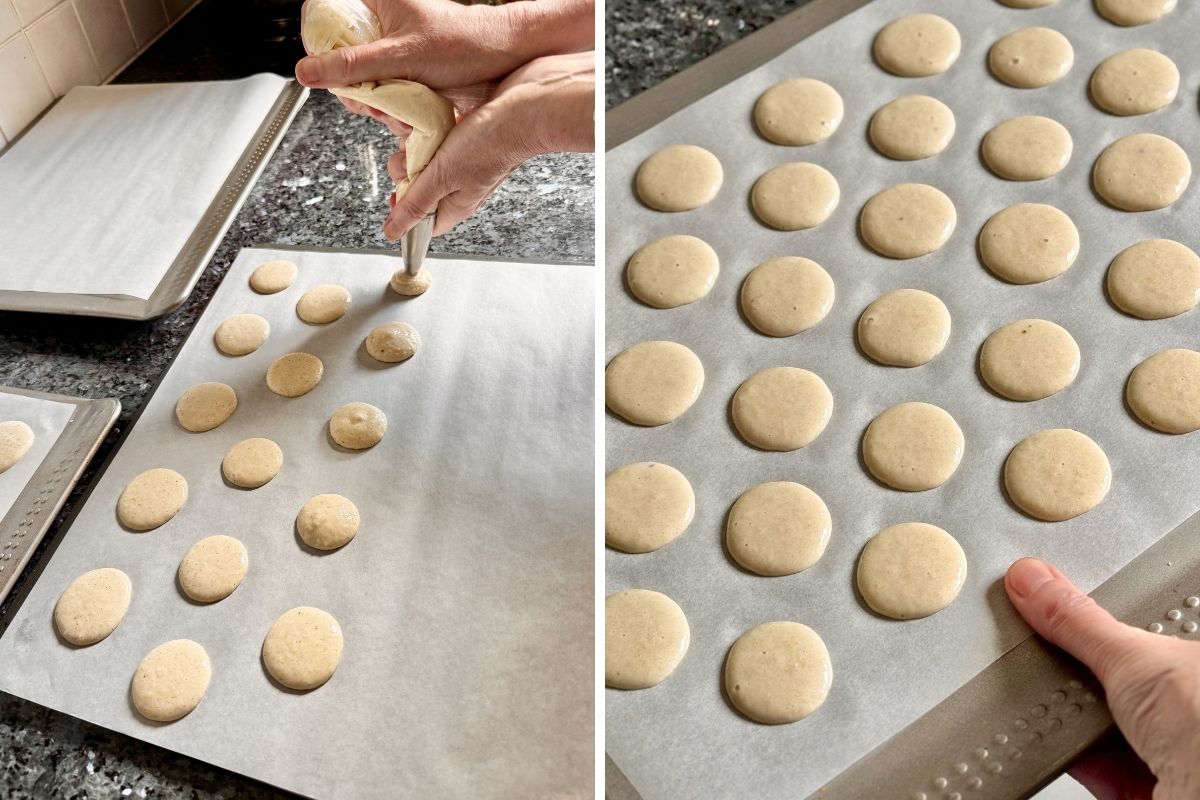
Piping the shells: smaller than you think
Pipe straight down, hold the bag still and keep the pressure steady. Stop squeezing when each round reaches about 2.5 cm (1 inch), then flick the tip away. The batter will settle and spread slightly, so leave a little space between them. Staggered rows fit more on each tray.
Then rap the tray firmly on the worktop 2-3 times. Any little peaks will settle, and any bubbles that rise to the surface can be popped with a cocktail stick.
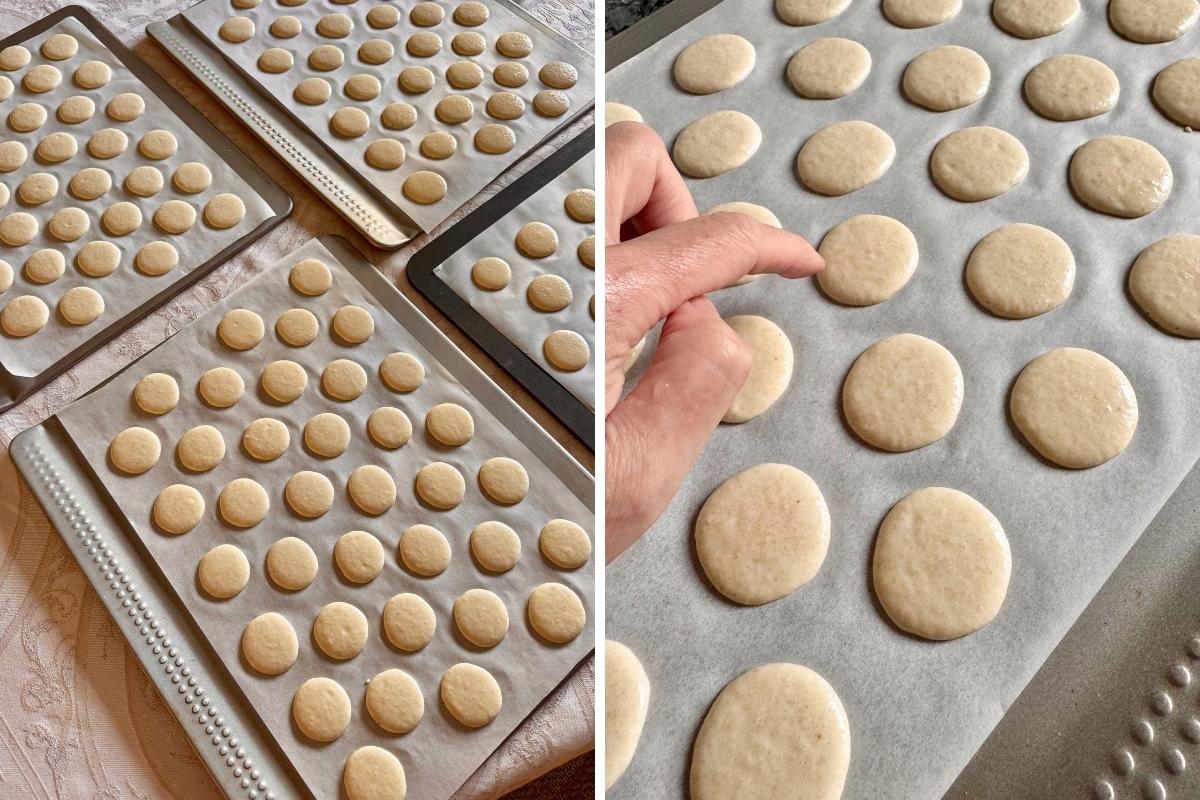
How long to rest the shells before baking?
Usually 30-60 minutes - but go by touch, not the clock. The shells are ready when the tops have turned matt and feel dry when you touch one very lightly. On a humid day, this can take much longer.
That dry skin matters: in the oven, it encourages the batter to rise upwards and form those ruffled feet, instead of cracking across the top.
What temperature do you bake macarons at?
I bake mine one tray at a time on the middle shelf at 150°C / 300°F for about 15 minutes. One tray at a time is non-negotiable, as every tray then gets the same heat.
About 8 minutes in, open the oven door for just a few seconds and close it again. It lets out the steam the shells release as they bake, which helps them set evenly.
To check they're done, give one top a gentle nudge. If it slides around on its feet, it needs baking longer. If the top and feet don't move and firm, they're ready.
That said, no two ovens behave alike - I've baked the same batter in two new ovens and needed different settings in each. Reading your own oven is part of my video course, out 3 November.
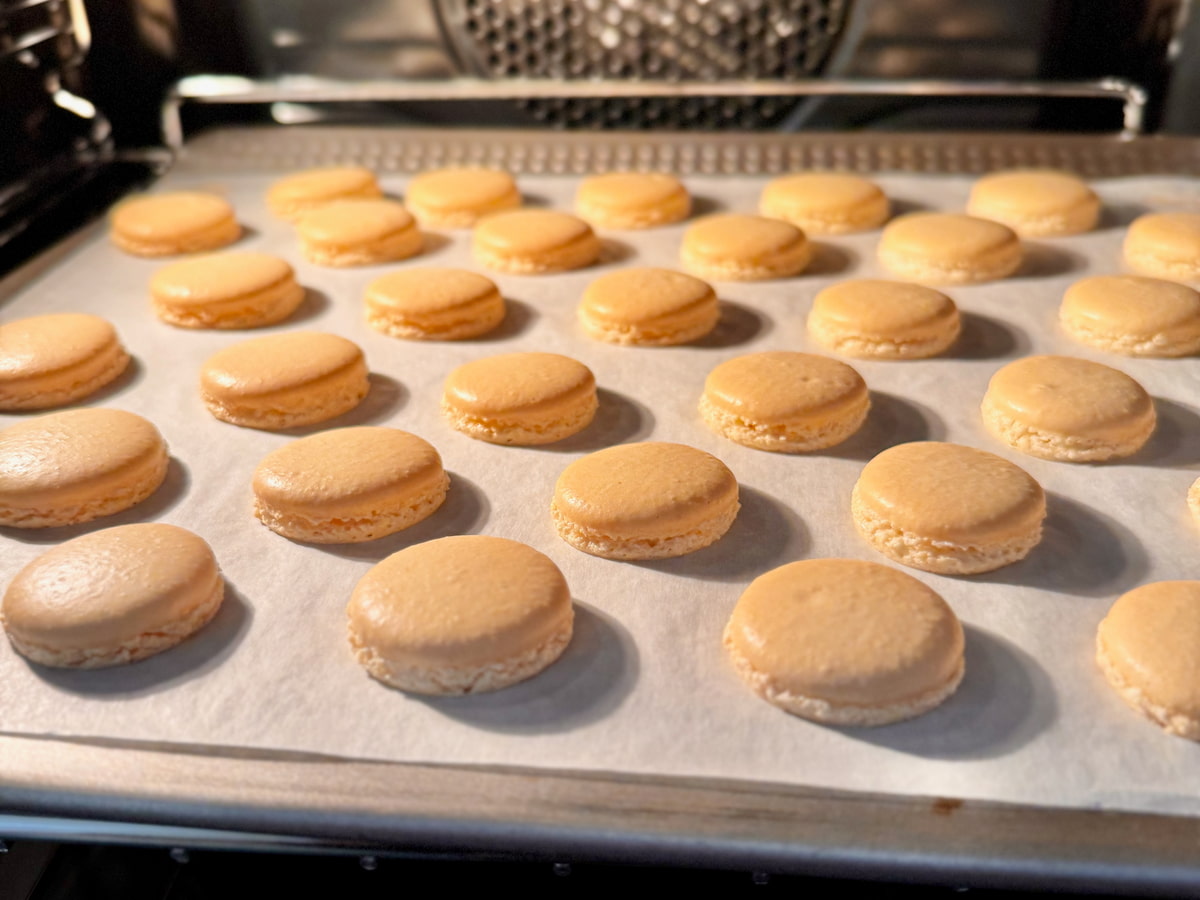
Let them cool before lifting
Slide the parchment off the hot tray, shells and all, so they stop cooking underneath. Once they're completely cool, they'll peel away cleanly. If they cling, they needed a little longer in the oven, so give the next tray an extra minute or two.
Easy Chocolate Ganache Filling for Macarons
A dark chocolate ganache is the best filling to start with: forgiving, rich and naturally balanced against the sweet shells.
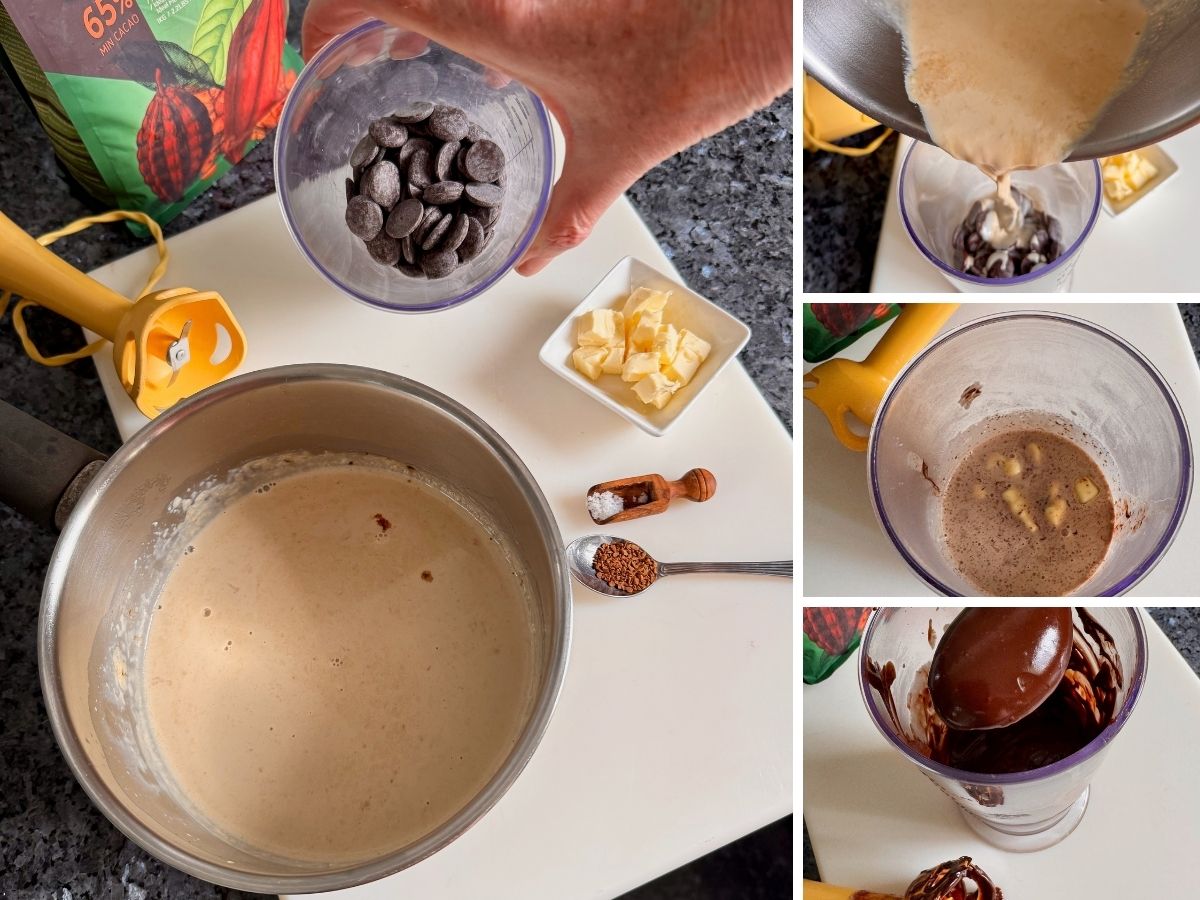
Which chocolate is best? A dark chocolate with 64-65% cacao. It melts smoothly with an equal weight of cream and isn't overly bitter. Higher percentages can make the ganache stiffer.
How do you make it smooth? Let the hot cream do the work. Pour it over the chocolate in a tall jug, then leave it alone for about a minute while the chocolate melts. Stir gently from the centre outwards until it turns glossy, then stir in a little soft butter for extra shine. Although optional, a few seconds with a stick blender emulsifies it, gives the silkiest finish, and the tall jug saves you from chocolate splatters!
Why is my ganache too runny to pipe? It just needs time. Leave it at room temperature for about 45 minutes, stirring now and then, until it holds its shape - rather like soft peanut butter.
Fill and Mature
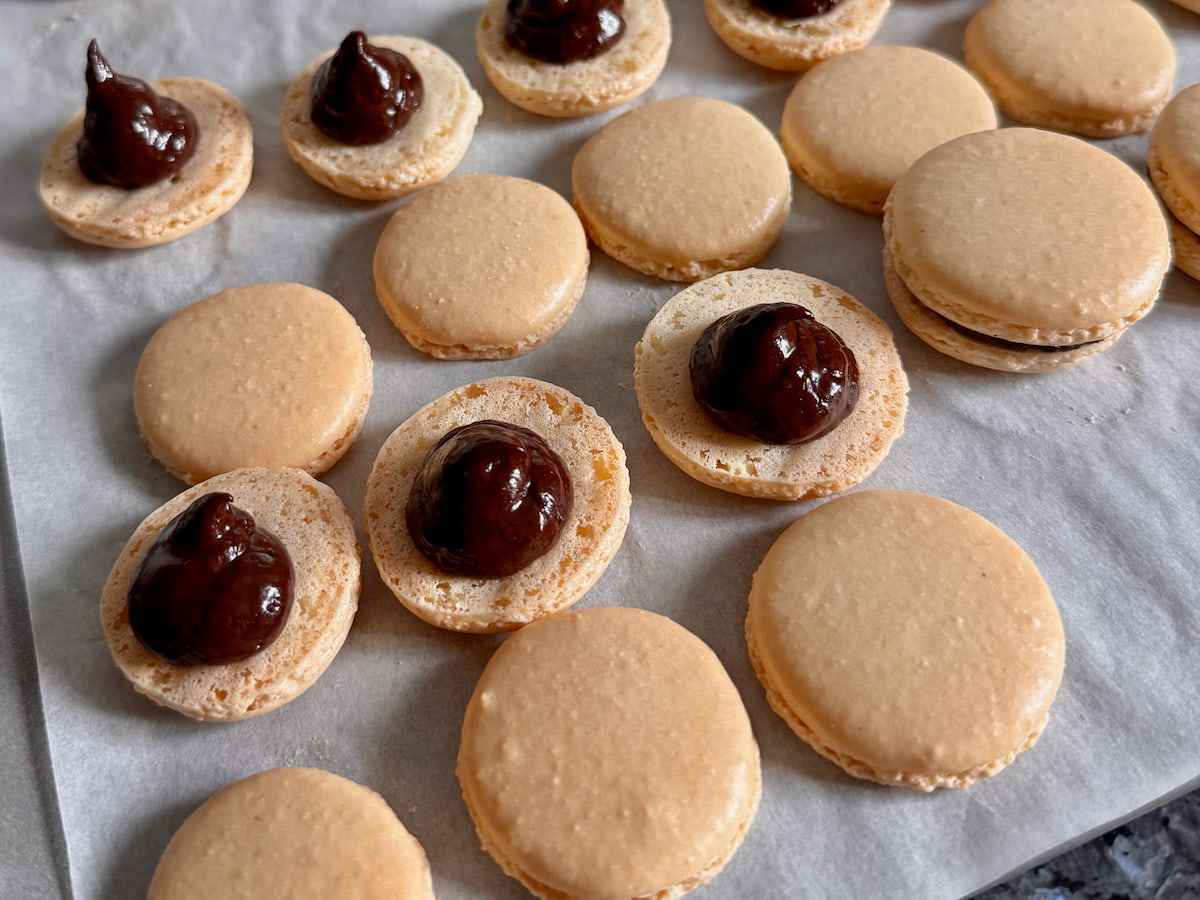
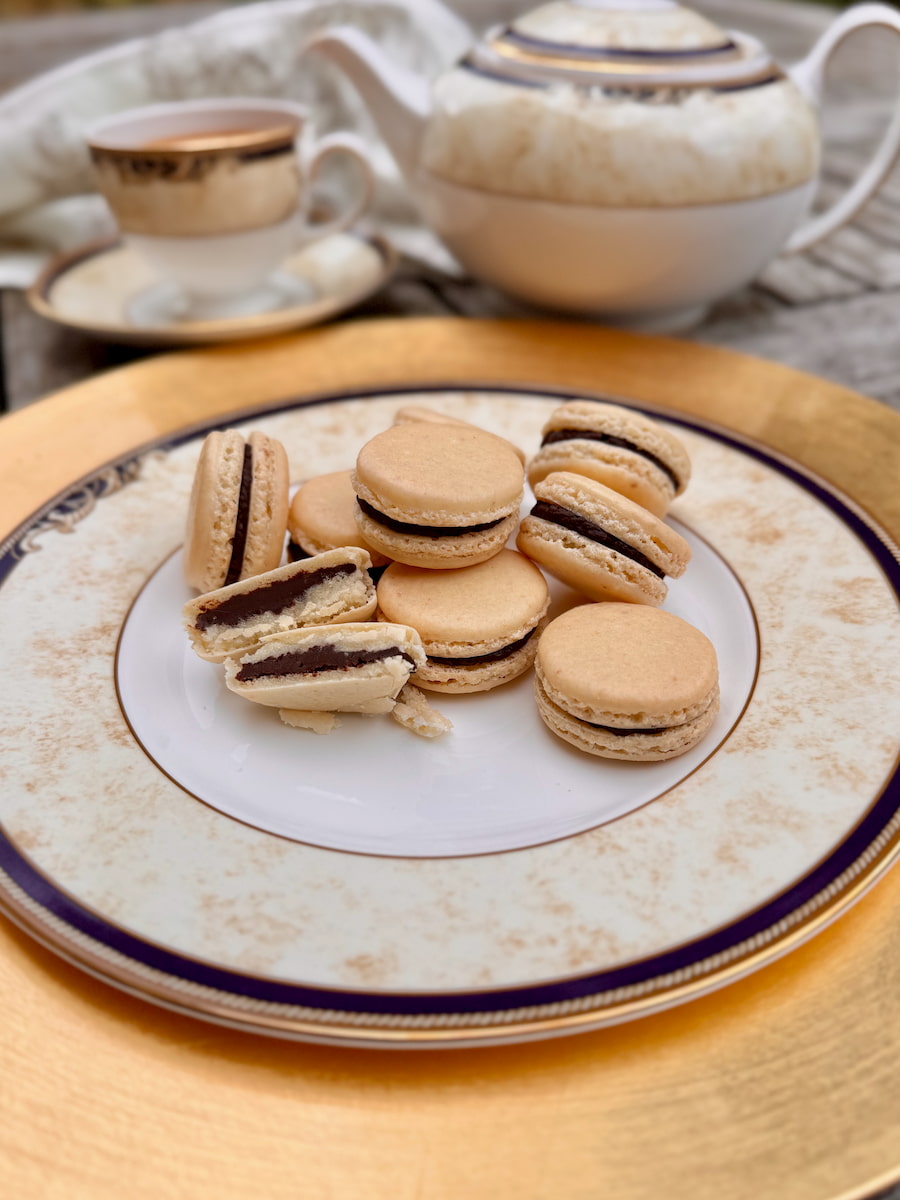
Pair your shells by size, pipe a little ganache onto one of each pair, and press the other on top with a gentle twist so the filling just reaches the edge.
Then put them in an airtight container in the fridge and leave them alone - at least 24 hours, and ideally 36 for chocolate. It's the hardest step of all, but it's the one that turns a crisp shell into the tender, melt-in-the-middle macaron you find in Paris.
More Beginner Macaron Tips
How many macarons does this make - and can I halve it?
This batch makes about 70 shells, which is 35 filled macarons at 2.5 cm.
Yes, you can halve it: weigh 50 g of egg whites and halve everything else. For whatever amount of egg white you have left after a yolk recipe, a scaling chart saves all the arithmetic.
Can I make macarons ahead?
Yes - that's one of their joys. Filled macarons keep for up to 5 days in the fridge in an airtight container, and freeze for up to a month. For the best texture, fill the shells on the day you bake them, so the filling can start softening them straight away. More storage tips are in my French Macaron Guide.
Can I colour the shells?
You can, but for a first batch I'd leave them plain - it's the best way to learn what the batter should look like. When you're ready, use a little powder or gel colour (never liquid), added at the very end of whisking the meringue. I prefer natural shades and cocoa - sometimes freeze-dried fruit -which give softer colours that let the flavour lead.
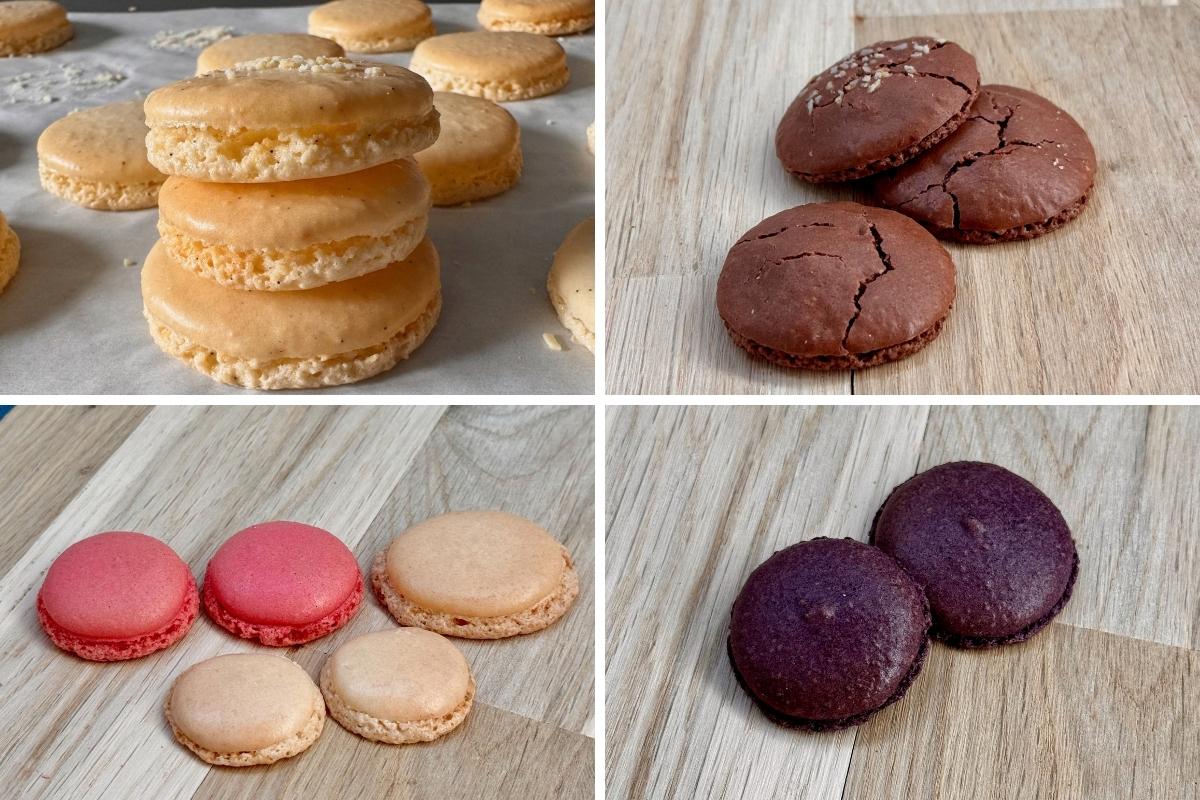
What if my first batch isn't perfect?
Welcome to the maca-wrong club - at first, mine weren't either! A cracked top or a little hollow doesn't mean failure, and the shells will still taste wonderful. They make brilliant trifles, baked peaches and ice cream gluten-free desserts. For the most common problems and their causes, see the quick fixes in my French Macaron Guide.
Take notes as you go then try again. Your second batch will already be better, because you'll know what the batter looked like the first time.
Where to Next: More Flavours
Once you've made these, the shell recipe opens up a whole world of flavours.
On 3 November, I'm releasing Mad About Macarons: The Signature Collection - 26 of my favourite macaron flavours, new and updated from my first book. From lemon to my competition-winning spicy pistachio-coconut, a chocolate Mont Blanc, to Christmas mince pies - even mini savoury macarons for fun apéritifs. Join the Starter List to hear first.
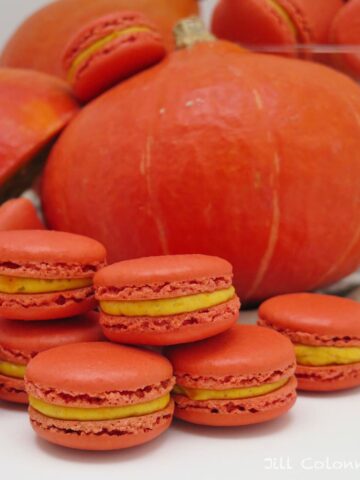
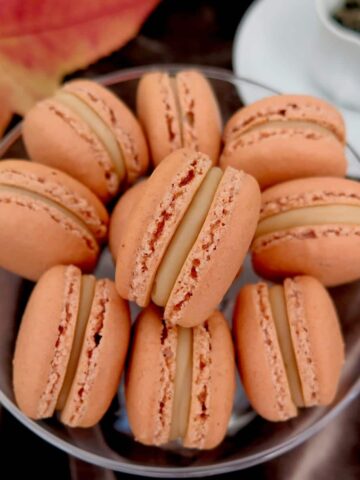
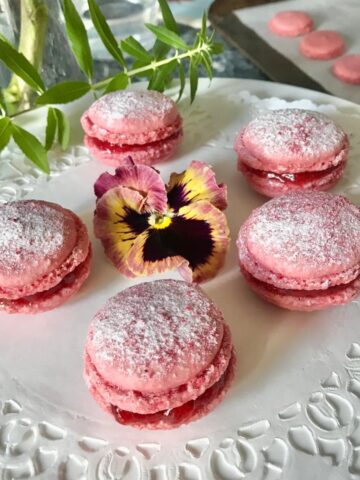
You'll also find raspberry macarons with white chocolate ganache, pumpkin spice macarons, and salted caramel macarons here on the website.
Watch the Video - Coming Soon
I've filmed this beginner recipe step by step, so you can see the meringue, macaronage, piping and baking up close. The video will appear here on 3 November.
I'd love to see your first batch! Leave a comment and a star rating below, or tag @madaboutmacarons on Instagram.
Beginner French Macarons

Equipment
- pastry scraper optional
- Piping bag reusable silicone (40cm/16')
- plain tip (8-10mm/½')
- flat baking sheets (no lip, lined with parchment paper or silicone mat)
Ingredients
Macaron shells
- 100 g egg whites at room temperature
- 65 g caster (superfine) sugar
- 120 g blanched almond flour extra-fine
- 180 g icing (powdered) sugar
Dark chocolate ganache
- 150 g dark chocolate 64% cacao, chopped
- 150 g whipping or heavy cream 30-35% fat
- 20 g unsalted butter softened
Instructions
Shells
- Line 2-3 flat trays with parchment or a silicone mat. Fit a piping bag with the small plain tip.
- Sift the almond flour and icing sugar together; discard any coarse pieces.
- Whisk the egg whites slowly until foamy, adding the cream of tartar if using.
- Gradually whisk in the caster sugar until the meringue is firm and shiny.
- Fold in the dry ingredients. Press the batter against the side of the bowl until it flows in an unbroken ribbon that settles back within 10-15 seconds.
- Pipe 2.5 cm (1-inch) rounds in staggered rows. Rap each tray firmly and pop any bubbles.
- Rest for 30-60 minutes, until the tops are dry to a light touch. Preheat the oven to 150°C / 300°F.
- Bake one tray at a time on the middle shelf for about 15 minutes. After 8 minutes, open the door briefly to release steam.
- If the top doesn't move on its feet and feels firm, it's ready. Slide the parchment off the tray and cool completely before lifting.
Ganache
- Heat the cream until steaming, then pour it over the chocolate in a tall jug.
- Wait 1 minute, then stir until smooth. Stir in the butter until glossy. Alternatively, blend in the butter with a stick blender in a tall jug.
- Leave at room temperature for about 45 minutes, until pipeable.
Assemble
- Pair the shells by size, pipe ganache onto half, and top with the other half.
- Refrigerate in an airtight container for 24-36 hours.
Notes
Want More Macaron Help?
For my beginner recipe, troubleshooting fixes, fillings, tips and Paris favourites, start my complete French Macaron Guide